

10 Iconic ’80s Rock Anthems That Defined a Generation

via Megadeth / YouTube
The 1980s didn’t just produce hit songs—it produced moments. Rock anthems from that decade were built to be loud, physical, and shared, whether blasting from car stereos, echoing through packed arenas, or rattling the walls of neighborhood bedrooms. These were songs designed to be felt as much as heard, with riffs that hit hard and choruses that demanded a shout-along response.
What set ’80s rock apart was its sense of scale. Everything sounded bigger: the guitars were sharper, the drums more thunderous, and the hooks impossible to ignore. Many of these anthems carried a rebellious streak, while others leaned into excess, escapism, or raw adrenaline. Together, they captured the restless energy of a generation that wanted music to sound bold, fearless, and unapologetically alive.
The songs on this list didn’t fade when the decade ended. They’ve endured through radio rotations, movie soundtracks, sports arenas, and late-night playlists, continuing to ignite the same reaction decades later. These anthems didn’t just define the sound of the ’80s—they defined how rock music could unite people in a single, electrified moment.
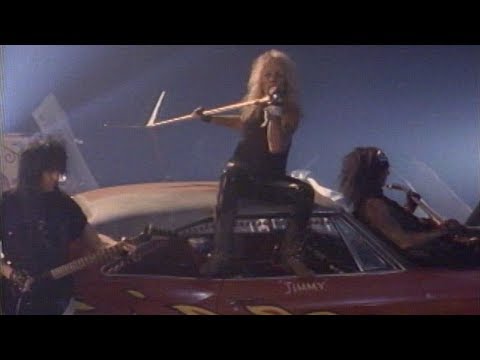
#10: “Dr. Feelgood” by Mötley Crüe (Dr. Feelgood, 1989)
By the end of the decade, Mötley Crüe had already secured their place as kings of the Sunset Strip, but “Dr. Feelgood” showed they still had something dangerous left to say. Released late in the ’80s, the song arrived with a darker, more controlled edge, signaling a moment when the band refined their sound without sanding off its grime.
Rather than racing forward, the track settles into a thick, menacing groove that lets each riff hit with purpose. That slower burn gives the song its weight, proving heaviness doesn’t always come from speed. The chorus still explodes with hooks and attitude, balancing muscle with undeniable accessibility.
The accompanying video turned “Dr. Feelgood” into a full-scale spectacle. Guns, fire, and Vince Neil’s larger-than-life presence pushed the song beyond radio rotation into pure event status. Decades later, it remains one of the band’s defining statements and a late-era ’80s anthem that refuses to age quietly.
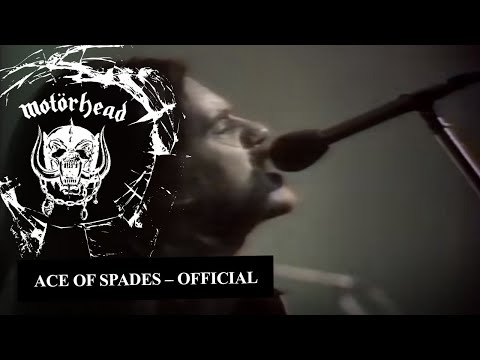
#9: “Ace of Spades” by Motörhead (Ace of Spades, 1980)
Landing right at the start of the decade, “Ace of Spades” wasted no time announcing Motörhead’s intent. There’s no buildup, no warning—just instant velocity and attitude. The song feels like a live wire, charging straight out of the speakers with raw urgency.
Lemmy Kilmister’s distorted bass dominates the mix, blurring the line between rhythm and lead, while “Fast” Eddie Clarke’s riff cuts like steel. Phil “Philthy Animal” Taylor’s drumming drives everything forward with reckless precision, creating a sound that feels permanently on edge.
Lyrically, the song embraces risk, chance, and living without safety nets. That outlook mirrored the unpredictability of rock as it crossed into the ’80s. Trends would shift, scenes would rise and fall, but Motörhead’s no-compromise approach stayed fixed—and “Ace of Spades” became the standard.
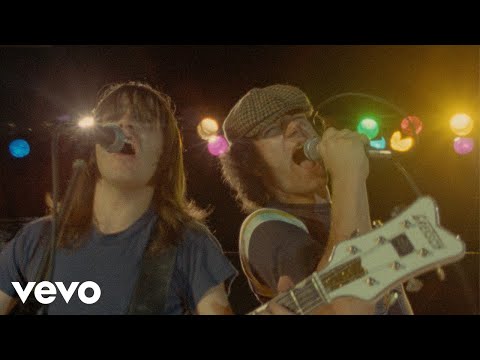
#8: “You Shook Me All Night Long” by AC/DC (Back in Black, 1980)
“You Shook Me All Night Long” emerged during one of the most pivotal moments in AC/DC’s career. Following the loss of Bon Scott, the band faced immense pressure to prove they could continue. Instead of playing it safe, they delivered a song that radiated confidence and renewal.
Angus Young’s instantly recognizable riff anchors the track, while the rhythm section keeps everything tight and infectious. Brian Johnson’s vocal debut feels effortless here, injecting fresh energy without breaking the band’s identity. It’s hard rock built for radio without sacrificing bite.
Positioned as the album’s release valve, the song balances the darker weight of Back in Black with pure celebration. It remains one of AC/DC’s most enduring crowd-pleasers, still igniting fist-pumps wherever it’s played, from stadiums to bar jukeboxes.
#7: “Youth Gone Wild” by Skid Row (Skid Row, 1989)
“Youth Gone Wild” arrived with urgency, not polish, and that rawness is part of its power. The song captured the restless edge of late-’80s metal, speaking directly to listeners who felt boxed in and ready to push back. It sounded immediate because it was.
Sebastian Bach’s vocal performance naturally draws attention, moving from snarling aggression to soaring melody with ease. His presence gives the song its emotional center, but the track works just as well because of its muscular riffing and tightly built structure.
Behind the scenes, strong songwriting keeps everything grounded. Thoughtful dynamics and layered arrangements elevate “Youth Gone Wild” beyond a momentary breakout hit. As a result, it stands as more than an ’80s snapshot—it’s a lasting anthem of defiance.

#6: “Paradise City” by Guns N’ Roses (Appetite for Destruction, 1987)
“Paradise City” became inseparable from Guns N’ Roses almost the moment it hit the airwaves. It’s the kind of song the band could never skip in a live set, not because of obligation, but because of the chaos it reliably unleashes. From arenas to radio, it grew into a signature that fans expect and demand.
The song’s foundation is deceptively simple, built around a riff that keeps everything moving forward with relentless momentum. That groove carries most of the track, but the real payoff comes late, when the tempo surges and the band suddenly floors it. The shift feels explosive, turning a swaggering anthem into a full sprint.
That final acceleration is what seals the song’s legacy. It captures Guns N’ Roses at their most unhinged and confident, riding the line between control and collapse. Decades later, “Paradise City” still sounds built for maximum volume, and its crowd reaction remains as feral as ever.
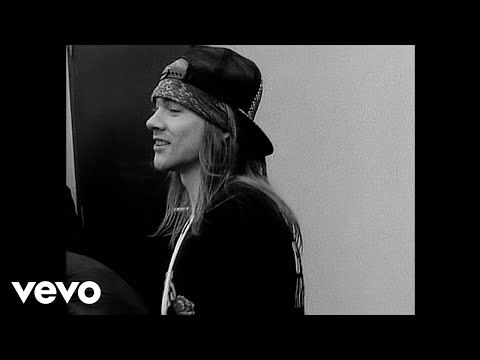
#5: “Peace Sells” by Megadeth (Peace Sells… but Who’s Buying?, 1986)
“Peace Sells” announces itself before a single lyric is sung. That opening bass line is instantly recognizable, even to listeners who might not know Megadeth by name. Its cultural reach was cemented further through years of association with MTV’s news segments, giving the song an unusual level of mainstream exposure.
Musically, the track showcases Dave Mustaine’s distinctive riffing style, built on tight, chugging rhythms that constantly feel like they’re shifting underfoot. That tension gives the song its personality, locking listeners into a groove that feels controlled but restless. It’s thrash with a sharp sense of structure.
When the song breaks free from its central pattern, it hits even harder. Faster passages, slicing solos, and a snarling chorus elevate “Peace Sells” from a genre standout to a full-fledged anthem. Its bite hasn’t dulled with time, and its message still cuts just as sharply.

#4: “Rock You Like a Hurricane” by Scorpions (Love at First Sting, 1984)
By the mid-’80s, Scorpions had fully embraced a heavier, more direct sound, and “Rock You Like a Hurricane” became the clearest expression of that shift. While the band had roots in progressive and krautrock traditions, this song left no doubt about their new direction. It was lean, aggressive, and built for maximum impact.
Everything about the track is precision-engineered. The riff hits hard and stays locked in, twin guitar harmonies add muscle, and the chorus is designed to be shouted back at full volume. There’s nothing wasted here, just pure focus on power and immediacy.
The result was a song that expanded the band’s global reach and defined their ’80s identity. “Rock You Like a Hurricane” became a cornerstone of hard rock radio and live performance, proving that Scorpions’ evolution wasn’t a detour—it was a takeover.

#3: “Crazy Train” by Ozzy Osbourne (Blizzard of Ozz, 1980)
“Crazy Train” may not represent Ozzy Osbourne at his most complex, but its role as his defining anthem is undeniable. The song became an instant calling card, announcing his solo career with confidence after his departure from Black Sabbath. Its accessibility played a major role in that transition.
The opening riff is the key. Simple, bright, and instantly recognizable, it grabs attention within seconds. That hook owes everything to guitarist Randy Rhoads, whose classical-influenced style brought a new melodic sensibility to heavy metal without sacrificing intensity.
Rhoads’ influence on Ozzy’s solo sound can’t be overstated. Though his life was tragically short, his work on “Crazy Train” helped shape a blueprint that countless players would follow. The song remains a testament to that partnership and a permanent fixture in rock history.

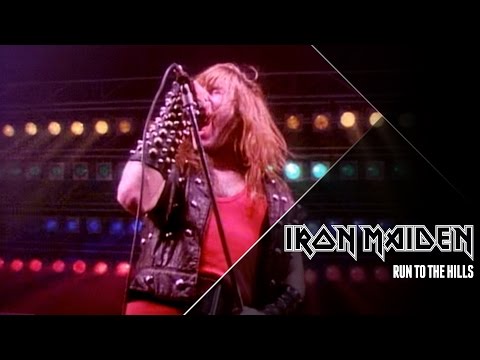
#2: “Run to the Hills” by Iron Maiden (The Number of the Beast, 1982)
“Run to the Hills” wasn’t meant to be obscure, and Iron Maiden never pretended otherwise. It arrived as a full-blown heavy metal anthem, designed to be immediate, fast, and unforgettable. For countless listeners in the early ’80s, this was the song that opened the door to a heavier world, making metal feel thrilling rather than intimidating.
Steve Harris’ galloping bass line drives the song with unstoppable momentum, pushing everything forward like a charging force. The rhythm gives the track its urgency, but the real transformation comes from Bruce Dickinson, newly installed behind the mic. His soaring, ferocious delivery added a dramatic edge that redefined what an Iron Maiden frontman could sound like.
Whether embraced as a classic or dismissed as overplayed, “Run to the Hills” refuses to loosen its grip. It remains one of the band’s most recognizable songs, still igniting crowds with the same intensity it did over forty years ago. Gateway track or not, its place in metal history is locked in.
#1: “Master of Puppets” by Metallica (Master of Puppets, 1986)
“Master of Puppets” shattered the idea that an anthem had to simplify itself to reach a wider audience. Metallica didn’t trim their edges or soften their approach—instead, they doubled down. The result was a song that was long, complex, and uncompromising, yet somehow destined for mass recognition.
Every section of the track feels carefully engineered. Crushing riffs, shifting tempos, and intricate arrangements unfold with near-classical precision, yet never lose sight of momentum. The band’s attention to structure keeps the song cohesive, proving that complexity doesn’t have to come at the expense of impact.
Its continued presence in popular culture only reinforces its stature. “Master of Puppets” remains a defining moment not just for Metallica, but for heavy metal as a whole—a song that demanded the world meet it on its own terms. Decades later, it still feels untouchable, and nothing has replaced it at the top.