
How Neil Young Changed Miles Davis’ Musical Direction
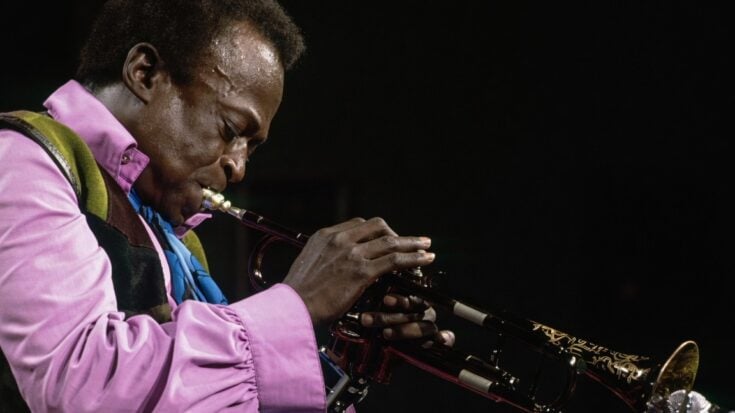
via "Miles Davis" / YouTube
In 1970, Neil Young and Miles Davis seemed to belong to completely separate musical worlds. One built his reputation through folk and rock, leaning on raw guitar tones and stripped-down songwriting. The other had already reshaped jazz multiple times, moving from bebop to modal experimentation with a restless sense of curiosity.
Despite those differences, both artists were heading into uncertain territory. Young was beginning to move away from the softer sound that first defined him, choosing a louder and more aggressive approach with his band. Davis, at the same time, was drifting further from traditional jazz, bringing in electric instruments and studio techniques that challenged longtime listeners.
That parallel shift set the stage for an unexpected connection. When they ended up sharing the same stage in 1970, it was not just a strange booking decision. It became a moment where rock and jazz briefly overlapped, giving Davis a new kind of audience and reinforcing the direction he had already begun to explore.
Two Artists Breaking Away From Expectations
Young’s transition was already underway before 1970. After working within the tight harmonies of Crosby, Stills, Nash & Young, he started pushing toward a heavier sound with Crazy Horse. The music became looser, louder, and more focused on feel than polish, trading precision for something more immediate and emotional.
Davis was making an equally bold move, though from a very different foundation. Having worked alongside figures like Thelonious Monk, he understood the structure of jazz deeply enough to dismantle it. He began layering rhythms, stretching song lengths, and introducing electric textures that blurred the line between jazz and something else entirely.
Both artists were reacting to a changing musical landscape. Audiences were becoming more open to experimentation, and genre boundaries were starting to soften. Even so, the gap between jazz and rock still felt wide, which made their eventual intersection feel less like a natural progression and more like a collision.
https://twitter.com/NathanFrancis__/status/2047451789021053422
The Fillmore East Shows That Changed Everything
That collision happened at Fillmore East in March 1970. Promoter Bill Graham arranged for Davis to open for Young, creating a lineup that brought together two very different audiences in one space. It was a risk, both musically and commercially.
Davis did not treat the shows as a compromise. Instead, he leaned into his new electric direction, delivering sets that were loud, loose, and unpredictable. Rather than adjusting to the rock crowd, he forced the crowd to meet him on his own terms, presenting a version of jazz that carried the intensity of a rock performance.
The response surprised many. Instead of rejecting the sound, the audience embraced it. That reaction showed Davis that his evolving style could connect beyond traditional jazz listeners. Young’s presence helped bridge that gap, giving Davis access to a crowd that might not have encountered his music otherwise.
How Rock Energy Reinforced Davis’ New Direction
The timing of those shows lined up with the release of Bitches Brew, a record that already pushed his sound into unfamiliar territory. What the live performances added was a real-world test. Davis could see how his experimental ideas held up in front of an audience used to volume, repetition, and raw energy.
Young’s role in this shift was indirect but meaningful. By sharing a stage with an artist who embraced distortion and emotional intensity, Davis saw how those same qualities could exist within his own music. It was less about imitation and more about validation that these elements could translate across genres.
After that period, Davis continued moving deeper into electric jazz with greater confidence. The boundaries between styles mattered less than the impact of the music itself. The encounter with Young did not start that transformation, but it helped confirm that he was on the right path, giving him the push to take those ideas even further.