

David Bowie’s Guitarist Earl Slick Finds New Life With KillerStar
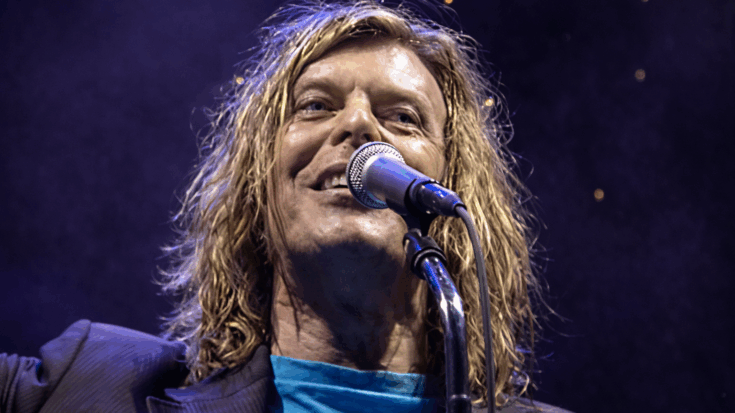
via "davidbowie" / YouTube
For decades, Earl Slick was closely tied to the orbit of David Bowie, a connection that shaped both his reputation and his career. As Bowie’s longest-serving guitarist, Slick became part of some of the artist’s most defining eras, starting with the Diamond Dogs tour in the mid-1970s and continuing across multiple albums and live performances. That legacy is impossible to separate from his name, no matter how far he moves forward.
Yet Slick has never been interested in living purely in the past. Over the years, he’s turned down numerous Bowie-related projects, carefully choosing when—and if—it made sense to revisit that chapter. Even when he participated in the 2016 celebration of Station to Station, it came from a place of respect rather than nostalgia, including a direct conversation with Bowie himself before the artist’s passing.
Now, with KillerStar, Slick finds himself in a different kind of spotlight. It’s a band filled with familiar faces from Bowie’s world, but the goal is not to recreate history. Instead, it’s about building something new, even if echoes of the past naturally follow them into every room.
Not a Tribute Band, But Something Close to It
KillerStar might look like a Bowie tribute project on paper, but that assumption doesn’t hold up once you hear the music. Fronted by Rob Fleming and drummer James Sledge, the group leans into original songwriting that carries its own identity. The presence of Bowie alumni—like Mike Garson and Donny McCaslin—adds texture, but not imitation.
Slick himself was drawn to the project precisely because of what it wasn’t. There were no plans to perform Bowie songs or replicate his sound. Instead, the band focused on Fleming’s material, which comes with its own quirks, structures, and unexpected turns. That creative independence was enough to convince Slick that this wasn’t just another nostalgic exercise.
Still, comparisons are unavoidable. With so many musicians tied to Bowie’s legacy, listeners can’t help but hear traces of that influence. The band acknowledges it without leaning on it, treating Bowie more as a shared influence than a blueprint.
Building a Sound That Stands on Its Own
KillerStar’s self-titled debut in 2024 introduced a mix of atmospheric art rock and harder-edged guitar work. It didn’t try to mimic Bowie classics like Heroes or Suffragette City, but there was an undeniable aura surrounding the music. That balance—familiar yet distinct—helped the album find an audience both inside and outside Bowie’s fanbase.
Encouraged by the response, the band quickly moved forward with a follow-up album, The Afterglow. Lineup changes came along the way, with Mark Plati stepping in on bass, but the core creative energy remained intact. The group seemed more focused, more confident, and ready to push further into its own sound.
This time around, Slick approached the recording process differently. Instead of laying down tracks remotely, he joined the sessions in London, bringing a more traditional studio energy into the mix. For a player who values feel and spontaneity, that shift made a noticeable difference in how the music came together.
The Afterglow and a Renewed Creative Spark
Recording The Afterglow in a studio environment allowed Slick to reconnect with the instinctive side of playing. Rather than getting caught up in technical details or home recording setups, he could focus entirely on the music. That approach paid off in moments like his slide guitar work on “There Has to Be a Reason,” which he recorded in a single, spontaneous take.
The collaboration between Slick and Fleming also brought unexpected results. Even when they weren’t playing together live in the same room, their guitar parts seemed to lock in naturally. Slick’s additions often introduced new melodic ideas, subtly reshaping songs without altering their core structure.
With new material in hand, KillerStar has already returned to the stage, including sold-out shows at London’s 100 Club. While touring logistics remain a challenge, there’s a clear sense that this project is far from a one-off. For Slick, it represents something more personal—a chance to keep evolving, not as Bowie’s guitarist, but as an artist still writing his own story.