

3 Classic Rock Songs That Started Albums Perfectly

via "Gold of music" / YouTube
There’s a quiet kind of pressure that comes with the first track on an album. Before the deep cuts, before the radio singles, that opening moment sets the tone for everything that follows. It can pull listeners in within seconds or leave them unconvinced before the record even gets going. For bands working in the album era, especially in the 1960s, that first impression carried real weight.
Back then, albums were meant to be experienced from start to finish. The opening song wasn’t just another track, it was the doorway into the artist’s world. Whether it came in loud and immediate or slow and deliberate, it had to signal intent. Some bands chose to hit hard right away, while others built atmosphere, but the goal was always the same: make it impossible to turn away.
Looking back, a handful of classic rock records got it exactly right from the very first note. Their opening tracks didn’t just introduce the album, they defined it. The songs ahead are perfect examples of how to start strong, setting a pace and mood that still holds up decades later.
“Whole Lotta Love” by Led Zeppelin from Led Zeppelin II (1969)
The moment the needle drops on Led Zeppelin II, there’s no easing in. “Whole Lotta Love” explodes out of the speakers with a riff that feels immediate and undeniable. It doesn’t build slowly or test the waters. It grabs attention right away, setting a tone that promises power, swagger, and a band fully aware of what it can do.
What makes the track such a strong opener is how every part of the band locks in at once. Robert Plant delivers vocals that feel raw and unrestrained, while Jimmy Page drives the song with a guitar sound that feels both heavy and precise. Behind them, John Bonham and John Paul Jones create a groove that doesn’t just support the song but pushes it forward.
As an opening statement, it works because it leaves no doubt about what’s coming next. The song doesn’t just introduce the album, it defines its energy from the first seconds. Even decades later, that opening riff still feels like a line in the sand, marking the start of something bold and impossible to ignore.

“Blowin’ In The Wind” by Bob Dylan from The Freewheelin’ Bob Dylan (1963)
Not every great album opener needs volume or force. “Blowin’ In The Wind” proves that a quiet beginning can be just as gripping. From the first strum of the acoustic guitar, the song creates space, inviting the listener to pay attention rather than overwhelming them.
The strength of the track lies in its simplicity. Dylan’s voice carries questions that feel larger than the song itself, touching on themes of peace, freedom, and human struggle. There’s no need for heavy instrumentation or elaborate production. The words do the work, and they land with a weight that feels timeless.
Opening an album this way sets a different kind of expectation. It tells the listener that what follows will matter, not just musically but thematically. The song frames the record as something reflective and purposeful, and that tone carries through the rest of the album in a way that still resonates today.

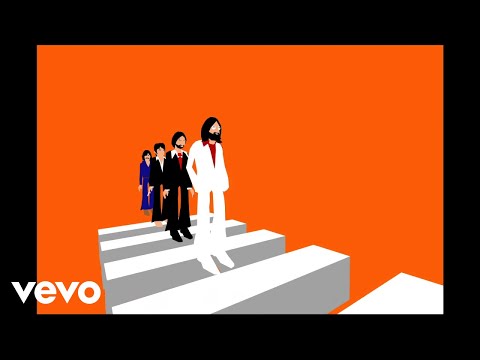
“Come Together” by The Beatles from Abbey Road (1969)
By the time Abbey Road arrived, The Beatles had already explored nearly every corner of popular music. Still, “Come Together” manages to feel fresh from the very first seconds. It opens with a groove that’s instantly recognizable, pulling the listener in without needing to rush.
John Lennon leads the track with a vocal that feels controlled but full of character. There’s a looseness to the delivery, yet every line lands exactly where it should. Around him, the band builds a sound that is tight, deliberate, and quietly confident, showing how much they had grown as musicians.
As an album opener, it sets a mood rather than making a loud statement. It signals that the record will unfold on its own terms, blending experimentation with structure. That balance is what makes the song such an effective starting point, drawing listeners in and keeping them there as the album moves forward.