

Billy Joel Songs He’d Love a Second Chance to Rewrite

via "DavidWilliamsENTERTAINMENT" / YouTube
Even after decades of success, Billy Joel has never been the type to treat his catalog as untouchable. His songs have filled arenas, defined radio eras, and stayed in rotation long after their release, yet he has often spoken about them with a kind of restless honesty. That mix of pride and self-criticism sits at the center of how he views his own work.
What makes it more interesting is that many of the tracks he questions are the same ones fans hold closest. Joel has pointed out lyrics he feels missed the mark, melodies he would reshape, or ideas that could have gone further. It is not about dismissing the songs entirely. It is about seeing them as unfinished in his own mind, even after they became part of popular music history.
That perspective says a lot about how he approaches songwriting. For Joel, success does not automatically mean satisfaction. A hit record can still carry small regrets, the kind only its creator notices. Looking back now, a few songs stand out as ones he might revisit if given the chance, not to erase them, but to refine what was already there.
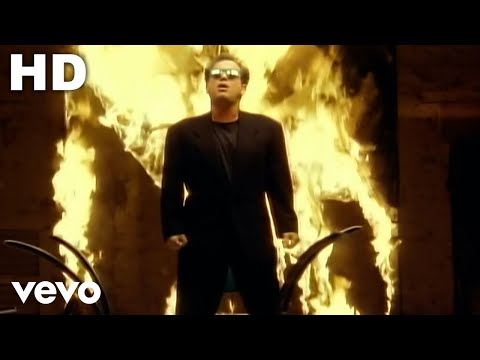
“We Didn’t Start The Fire” from Storm Front, 1989
Billy Joel never hid his mixed feelings about “We Didn’t Start The Fire,” even though it became one of his most recognizable hits. The song raced through decades of headlines, stitching together history in a rapid-fire list that listeners either found brilliant or overwhelming. It topped charts and became a cultural reference point, especially for people trying to make sense of the 20th century in under five minutes.
Behind that success, Joel has pointed out a flaw that still bothers him. He built the track by writing the words first, something he rarely does. For a songwriter who usually lets melody guide the process, that approach left the music feeling secondary. The result, in his view, sounded more like a recited timeline than a fully developed composition.
That is where the idea of rewriting comes in. The concept itself holds up, but Joel has said he does not think the music does it justice. A different structure, maybe a stronger melodic hook or more breathing room between the references, might have turned it into something he felt more connected to. Instead, it remains a hit he respects but never fully embraced.
“Just The Way You Are” from The Stranger, 1977
“Just The Way You Are” carries a different kind of tension. It is one of Joel’s most awarded songs, earning him major recognition and becoming a staple of late-1970s radio. The smooth arrangement and direct lyrics gave it a wide appeal, especially as a wedding favorite that still shows up decades later.
Joel himself had doubts from the start. He reportedly resisted recording it because it felt too soft for his taste at the time. Even after its success, performing it live became a challenge. He admitted that he would sometimes forget the lyrics on stage, not out of nerves, but because the song no longer held his attention the way others did.
The personal history behind it adds another layer. Written for his first wife, the song became tied to a relationship that eventually ended. Singing those words years later did not carry the same meaning, and that disconnect seems to have shaped how he sees the track now. Given the chance, he might not erase it, but he would likely reshape it into something less anchored to a moment that did not last.

“When In Rome” from Storm Front, 1989
“When In Rome” reflects a different kind of regret, one tied more to process than inspiration. By the time Joel was working on Storm Front, he had already built a long career filled with standout albums. Still, even seasoned artists fall into habits, and Joel later admitted that some songs felt like they were included simply to complete a record.
In interviews, he has been blunt about this period. He described certain tracks as “squeeze-outs,” songs written to fill space rather than to push creative boundaries. “When In Rome” falls into that category in his eyes, along with a few others from his catalog. It is not that the song is unlistenable, but it does not meet the standard he set for himself.
That honesty points to what he might change. Instead of rushing to round out an album, he has said he would have preferred to stop short or wait until stronger material came along. A rewritten version of “When In Rome” might carry more weight, more intention, and more of the spark found in his better-known work. As it stands, it remains a reminder that even a consistent songwriter can look back and wish he had taken a different approach.