

5 McCartney Lines Some Fans Wish Were Never Written
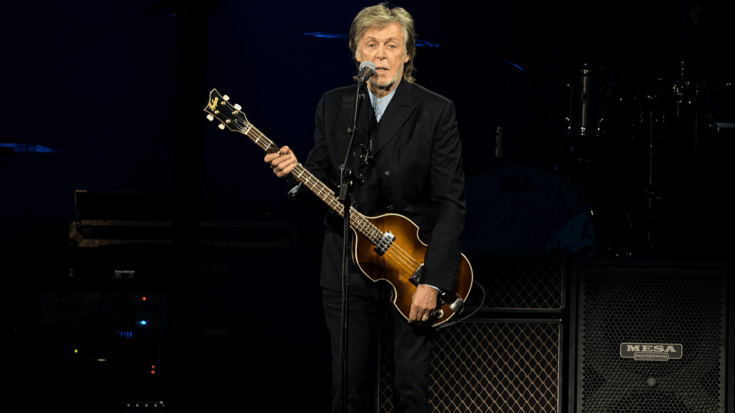
via "Midwest Concert Guy" / YouTube
Writing at the pace that Paul McCartney did in the 1960s left very little room for hesitation. Songs came quickly, often driven by instinct rather than careful revision, and that urgency became part of the charm. The catalog he helped build with The Beatles still feels alive because it was never overworked. It captured ideas in motion, before they had the chance to stiffen.
That approach paid off more often than not. Lines from songs like “Eleanor Rigby” and “The Fool on the Hill” still land with quiet force, proof that spontaneity can sometimes cut deeper than precision. Even industry figures like George Martin pointed out how much of the band’s enduring appeal leaned on McCartney’s melodic instincts and lyrical touch. He had a rare ability to write words that felt immediate yet strangely universal.
Still, that same looseness could occasionally backfire. When everything flows naturally, not every idea arrives fully formed, and some lines slip through that might have benefited from a second look. McCartney himself has admitted that mistakes were part of the process, and even embraced them as fuel for creativity. But every so often, those off-the-cuff moments linger in ways fans can’t quite ignore, which makes them all the more interesting to revisit.

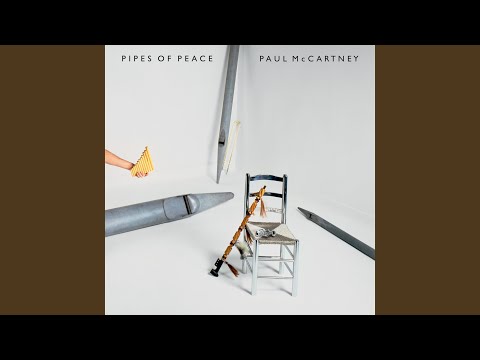
“The Other Me” by Paul McCartney (Pipes of Peace, 1983)
“I know I was a crazy fool
For treating you the way I did
But something took hold of me
And I acted like a dustbin lid.”
Regret has always been one of Paul McCartney’s more reliable themes, and when it works, it cuts clean. In “The Other Me,” he sets up a familiar confession, the kind that leans on guilt and self-reflection. The intent is clear from the start, and for a moment, it feels like he’s about to land on something quietly affecting.
Then comes the line about acting “like a dustbin lid,” and everything tilts sideways. It’s the kind of phrase that stops the song in its tracks, not because it’s clever, but because it raises questions no lyric should need to answer. The image feels clumsy and oddly specific, as if the rhyme arrived first and the meaning had to catch up later.
That disconnect makes the whole opening feel less like a confession and more like a draft that slipped through. It’s surprising, especially coming from someone who could write with such natural precision when he wanted to. Moments like this don’t erase his strengths, but they do show how easily instinct can misfire when left unchecked.
“She’s A Woman” by The Beatles (Single B-side to “I Feel Fine”, 1964)
“My love, don’t give me presents
I know that she’s no peasant.”
Early Beatles tracks often carried a looseness that added to their charm, especially on B-sides where expectations were lower. “She’s A Woman” fits into that category, driven more by groove than lyrical weight. The band sounds confident, and musically, the track has a certain swagger that still holds up.
The opening couplet, however, lands awkwardly. “My love, don’t give me presents / I know that she’s no peasant” feels thrown together in a rush, with a rhyme that draws more attention to itself than the idea behind it. Instead of setting the tone, it distracts, pulling the listener out before the song has even settled.
It’s the kind of misstep that might have gone unnoticed if it were buried deeper in the track. Placed right at the front, though, it becomes harder to ignore. Even during a period when the band was evolving rapidly, this line feels like a reminder that not every experiment needed to make the final cut.

“Give Ireland Back to the Irish” by Paul McCartney and Wings (Single, 1972)
“Great Britain, you are tremendous
And nobody knows like me
But really, what are you doin’
In the land across the sea?“
When McCartney stepped into political songwriting, he was moving into territory that demanded clarity and weight. “Give Ireland Back to the Irish” came out quickly, reacting to real-world events, and that urgency is part of its identity. The message is direct, and there’s no question about where he stands.
But the phrasing often undercuts that seriousness. Opening with “Great Britain, you are tremendous” feels oddly polite for a protest song, almost as if it’s trying to soften its own argument. The tone never quite settles, drifting between conviction and something closer to mild suggestion.
That tension makes the song feel less forceful than it could have been. McCartney’s instincts for melody and optimism are hard to suppress, even when the subject calls for something sharper. The result is a track that means well but struggles to match its message with the right words.

“Bip Bop” by Paul McCartney and Wings (Wild Life, 1971)
“Wip wop, women want
Wip wop women wear
Wip wop, women want
Wip wop women wear.”
Not every song needs to carry weight, and Paul McCartney has always enjoyed dipping into the playful side of writing. “Bip Bop” feels like one of those moments where melody came first and everything else followed. It moves along with a light bounce, almost like a nursery rhyme that never quite decided what it wanted to say.
The repeated “wip wop” phrases don’t offer much to hold onto, and even McCartney has been open about that. He later called it one of his weakest efforts, pointing out how slight it felt compared to the work he had done just a few years earlier. Coming from the same writer behind songs like “Yesterday,” the gap becomes impossible to ignore.
Still, there’s a certain charm in how carefree it sounds. McCartney has always had a taste for the odd and whimsical, and sometimes that instinct pays off. Here, though, it drifts too far into empty space, leaving behind a track that feels more like a sketch than a finished idea.

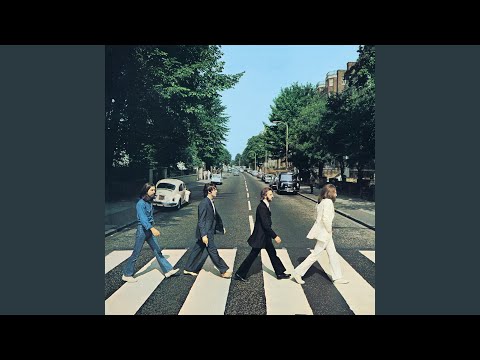
“The End” by The Beatles (Abbey Road, 1969)
“In the end, the love you take
is equal to the love you make.”
Closing a chapter as massive as The Beatles was never going to be simple. “The End” carries that weight, arriving as the final statement on Abbey Road. The music builds toward something reflective, almost ceremonial, as if the band knew they were signing off on more than just an album.
The famous line, “In the end, the love you take is equal to the love you make,” aims for something timeless. It sounds complete, like a phrase meant to be remembered and repeated. Yet the wording invites a second look, and once you start picking at it, the balance feels slightly off, as if the idea is circling itself rather than landing cleanly.
That doesn’t strip it of meaning, but it does make the line feel more fragile than it first appears. As a closing thought, it reaches for depth and nearly gets there, which might explain why it continues to divide listeners. Even in one of their final moments, perfection was never guaranteed, and maybe that’s part of what keeps it human.