

Rock Friendships That Stood The Test Of Time
via "The Beatles" / YouTube
Rock music has never been short on ambition, but the same intensity that fuels great records often tears people apart. Bands form with shared dreams, yet somewhere along the way, money, pressure, and personality clashes start pulling in different directions. What begins as a tight unit can quickly unravel once success raises the stakes and magnifies every small fracture.
Still, not every story follows that path. Some musicians manage to hold onto something stronger than the usual cycle of rise and fallout. They evolve, argue, drift, and return, but the connection remains intact. In an environment where change is constant and loyalty is tested, those lasting friendships feel almost unexpected.
This list looks at a handful of rock partnerships that endured long after the spotlight shifted or the band itself changed shape. These are relationships that survived both the highs and the harder moments, proving that behind the noise and reputation, genuine friendship can still take root and last.
Mick Jagger and Keith Richards
For more than half a century, Mick Jagger and Keith Richards have been tied together at the center of The Rolling Stones. Their partnership has carried the band through shifting eras, from smoky London clubs to stadium tours that still draw massive crowds today. Even as trends changed and generations came and went, their creative link never fully broke.
Their story goes back to a chance reconnection at a train station, where a shared obsession with blues records sparked something immediate. That connection shaped the sound of the Stones in the early 1960s and helped drive their rise during the British Invasion. By the end of the decade, they had become one of the defining acts of their time, with Jagger’s stage presence and Richards’ guitar work forming a recognizable and enduring identity.
It has not always been smooth. Disagreements over direction and business decisions have tested their patience with each other, especially during the band’s busiest years. Still, they found ways to move forward, returning to the studio and the stage time and again. Decades later, their ability to keep creating together says as much about their resilience as it does about their music.
David Bowie and Tony Visconti
David Bowie’s career was built on constant reinvention, but behind many of those changes stood Tony Visconti. Their partnership began in the late 1960s, when Bowie was still shaping his identity as an artist. Visconti recognized the potential early on and became one of the key figures helping translate Bowie’s ideas into recorded form.
Through the 1970s, their work together produced some of Bowie’s most adventurous material. Albums like Low and “Heroes” pushed boundaries and helped redefine what mainstream rock could sound like. Visconti’s production style complemented Bowie’s restless creativity, allowing each new phase to feel distinct while still connected to a larger vision.
Even after periods apart, they continued to return to each other when it mattered most. Their final collaborations carried a sense of closure, especially with Blackstar, released just before Bowie’s death. Visconti remained one of the few who understood the full weight of that final chapter, making their partnership not just productive, but deeply personal.

Angus Young and Brian Johnson
When Brian Johnson stepped into AC/DC in 1980, the situation was far from easy. The band had just lost Bon Scott, and the future was uncertain. Angus Young needed someone who could carry the same raw energy while helping the group move forward, and Johnson proved to be the right fit at the right time.
Their chemistry became clear almost immediately. Johnson’s voice matched the band’s hard-edged sound, while his humor and attitude fit the group’s no-frills personality. Together, they pushed ahead with Back in Black, an album that would become one of the biggest in rock history and cement their place at the top.
Years later, their bond faced another challenge when Johnson’s hearing issues forced him off the road. The temporary split raised questions about whether the partnership had reached its end. Instead, he returned for later recordings, showing that their connection ran deeper than circumstance. The way they picked up where they left off speaks to a relationship built on trust as much as music.
John Lennon and Paul McCartney
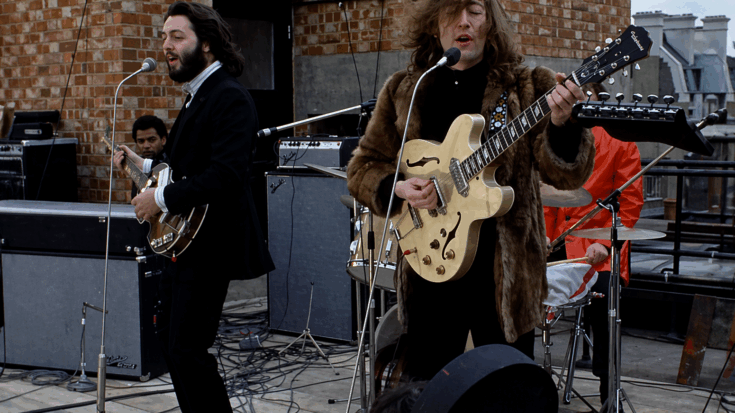
The connection between John Lennon and Paul McCartney began in their teenage years and quickly grew into something that would shape modern music. As the driving force behind The Beatles, their songwriting partnership produced a catalog that defined an era. Their ability to push each other creatively helped the band rise from local shows in Liverpool to worldwide fame within a few short years.
During the band’s peak, their bond felt inseparable, even as their personalities pulled in different directions. That tension eventually caught up with them, especially as the 1960s came to a close. Disagreements spilled into interviews and even into their solo work, where pointed lyrics revealed how strained things had become after the group’s breakup.
Time softened much of that distance. In the years before Lennon’s death, the two found common ground again, reconnecting in a quieter and more personal way. Stories from that period show a friendship that never completely disappeared, even during the worst moments. McCartney’s later performances, which bring Lennon’s voice back into the spotlight, reflect a bond that continued long after their last recording together.

Robert Plant and Jimmy Page
Among the many forces that powered Led Zeppelin, the dynamic between Robert Plant and Jimmy Page stood out. Their collaboration defined much of the band’s sound, blending Page’s layered guitar work with Plant’s expressive vocals. Together, they helped turn Zeppelin into one of the most influential acts of the 1970s.
The band’s sudden end after John Bonham’s death could have closed that chapter completely. Plant chose not to continue under the Zeppelin name, and both musicians moved in different creative directions. For a time, it seemed like their partnership might remain tied only to the past.
Yet they found their way back to each other in later years. Their mid-1990s projects revisited Zeppelin material with a different approach, showing how their chemistry could evolve rather than repeat itself. Even when they are not actively collaborating, the respect between them remains clear, built on shared history and a lasting sense of connection.