

10 Pop Hits You Never Realized Were Written by Rock Stars
Pop music has always borrowed from wherever great songwriting lives, even when the names behind the scenes don’t match the sound coming out of the speakers. Long before streaming credits were easy to check, many chart-topping pop hits arrived with little hint that they came from musicians better known for loud amplifiers, road-worn guitars, or a reputation built far from Top 40 radio. The result was a long-running crossover that most listeners never questioned.
Behind those glossy choruses and radio-friendly hooks were writers who learned their craft in rock bands, underground scenes, or folk clubs. Some shifted styles out of necessity, others out of curiosity, but all brought a different sensibility into pop songwriting—strong melodies, emotional directness, and a feel for dynamics that didn’t come from chasing trends. In many cases, these songs became defining moments for the artists who recorded them, even as their original creators stayed in the background.
This list looks at ten pop hits that quietly trace back to rock musicians you might not expect. These are songs that crossed genre lines without fanfare, proving that good writing travels easily between worlds. Whether the credit belongs to a legendary performer or a songwriter better known for their own band’s catalog, each entry reveals how deeply rock has shaped the pop hits people still sing along to today.
#10: “Halo” by Beyoncé (I Am… Sasha Fierce, 2009)
“Halo” feels inseparable from Beyoncé, a song so closely tied to her voice that it’s easy to assume it was built entirely from her world. Yet the foundation came from Ryan Tedder, a rock frontman with a knack for emotional clarity. At the time, Tedder was recovering from surgery and should have been resting, but songwriting proved to be the outlet he couldn’t put down.
Working quickly, he shaped the song around a simple but powerful melody, drawing inspiration from soul-driven singer-songwriters rather than pop radio formulas. The structure leaned heavily on feeling rather than flash, allowing space for vulnerability instead of overproduction. Within a few hours, the core of “Halo” was already in place.
When Beyoncé entered the process, she refined the song without stripping it of its original intent. Subtle lyrical changes and vocal decisions elevated the track into something grander while preserving its emotional center. The result became one of her signature ballads and a reminder that rock-rooted songwriting can thrive far outside its usual lane.

#9: “Crazy” by Patsy Cline (Patsy Cline Showcase, 1961)
Before his name became synonymous with outlaw country and road-worn poetry, Willie Nelson was scraping by as a working songwriter. “Crazy” emerged during that period, written quickly and almost casually, inspired by his own restless state of mind. Its winding chord progression already hinted at a writer thinking beyond standard country conventions.
The song eventually landed with Patsy Cline, whose phrasing and tone reshaped it completely. She leaned into its emotional tension, stretching lines and letting silence do as much work as the lyrics themselves. What could have been a straightforward heartbreak song took on a dramatic, almost orchestral feel.
The combination proved timeless. “Crazy” became one of the most recognizable songs of its era, blurring lines between country, pop, and torch-song tradition. For Nelson, it marked the quiet beginning of a legacy, showing that a rock-minded songwriter could influence pop culture long before stepping into the spotlight himself.

#8: “Feel Good Time” by Pink feat. William Orbit (Try This, 2003)
“Feel Good Time” started life far from the pop world it eventually entered. Beck originally wrote the track for his own use, layering it with his signature off-kilter rhythms and detached cool. It was never intended as a mainstream single.
That changed when Pink heard the song and connected with its energy. Instead of guarding it, Beck handed it over, allowing her to strip away his vocals and guitars while keeping the song’s core intact. The collaboration shifted the tone without diluting its edge.
Released as part of the Charlie’s Angels: Full Throttle soundtrack, the track carried both artists’ sensibilities at once. Pink’s delivery brought attitude and immediacy, while Beck’s songwriting backbone kept it from sounding disposable. The result stood out as a pop single with unmistakable rock DNA beneath the surface.

#7: “The Best Damn Thing” by Avril Lavigne (The Best Damn Thing, 2007)
On the surface, “The Best Damn Thing” sounds like pure sugar-rush pop-punk. Behind it, however, was Butch Walker, a veteran of glam and alternative rock scenes who understood how attitude sells just as well as aggression. His background gave the song its confident swagger.
Walker leaned into exaggeration rather than restraint, encouraging playful chants, cheeky spelling, and over-the-top hooks. The song didn’t aim for subtlety, and that was exactly the point. Its rock influence shows in how unapologetically loud and direct it feels, even within a pop framework.
For Avril Lavigne, the track became a defining moment of reinvention. It balanced her punk roots with a sharper sense of pop theater, proving that a rock songwriter’s instincts could turn simplicity into a statement. The song didn’t just stick—it announced itself and refused to be ignored.

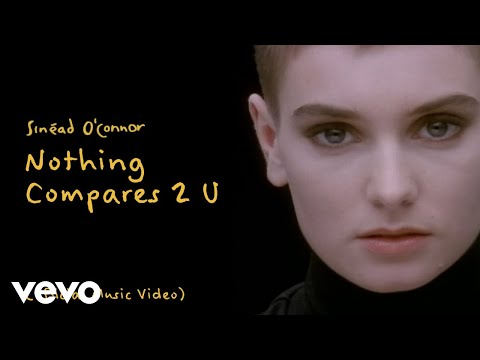
#6: “Nothing Compares 2 U” by Sinéad O’Connor (I Do Not Want What I Haven’t Got, 1990)
“Nothing Compares 2 U” is now inseparable from Sinéad O’Connor, but its story begins years earlier in a much quieter corner of Prince’s vast creative output. He originally wrote the song in the mid-1980s for The Family, a short-lived side project designed to explore material that didn’t fit his main releases. When the song appeared on their 1985 album, it barely registered, overshadowed by flashier productions and Prince’s own rapidly expanding catalog.
O’Connor approached the song without ornament or theatricality. She changed the key, slowed the pacing, and removed anything that distracted from the lyric itself. Her version leaned into stillness, allowing silence and restraint to carry as much emotional weight as the melody. What emerged was not a reinvention, but a reframing—one that turned a forgotten composition into something deeply personal and unsettlingly intimate.
The song’s success was immediate and overwhelming, topping charts worldwide and becoming one of the defining ballads of the decade. Its impact eventually drew Prince back to the track, prompting him to perform and re-record it in later years. In retrospect, “Nothing Compares 2 U” stands as one of the clearest examples of how a rock artist’s songwriting can find its true voice only after passing through someone else’s hands.
#5: “Wake Me Up” by Avicii (True, 2013)
When “Wake Me Up” first hit the airwaves, it didn’t sound like the EDM hits dominating the charts at the time. Avicii was already a global name, but this track signaled a deliberate shift toward melody and songwriting over pure electronic spectacle. Its defining feature wasn’t a drop or synth line, but an acoustic guitar figure that anchored the entire song.
That guitar part came from Mike Einziger of Incubus, whose background in alternative rock shaped the song’s harmonic movement. Einziger helped craft the chord progression and melodic framework, giving the track a folk-like warmth that stood in contrast to the digital production surrounding it. The structure owed more to rock songwriting than club culture.
The fusion proved remarkably effective. “Wake Me Up” became one of the most successful singles of the decade, crossing genre boundaries with ease. Its popularity showed that rock musicians could influence pop not by overpowering it, but by quietly reshaping its foundation—bringing organic textures and emotional clarity into a space that had grown increasingly synthetic.

#4: “She Wolf” by Shakira (She Wolf, 2009)
At first glance, “She Wolf” feels far removed from any rock lineage. Its pulsing beat and playful absurdity place it firmly in late-2000s pop territory. Yet the song’s instrumental backbone came from Sam Endicott, best known as the frontman of The Bravery, whose roots lay in post-punk and new wave revival.
Endicott initially developed the track without a specific artist in mind, focusing on rhythm and tension rather than conventional pop structure. When Shakira expressed interest, he passed the instrumental along without hesitation. Shakira then reshaped it with her own lyrics and vocal phrasing, leaning into the song’s strangeness rather than smoothing it out.
The result stood apart from most pop releases of the era. Its success proved that unconventional ideas could thrive on mainstream radio when paired with the right performer. Endicott later praised the finished song for its willingness to take risks, underscoring how rock sensibilities—especially those rooted in tension and minimalism—can push pop into unexpected territory.

#3: “Get the Party Started” by Pink (Missundaztood, 2001)
Before becoming one of pop’s most in-demand behind-the-scenes writers, Linda Perry was known primarily as the voice of 4 Non Blondes. Her transition into pop songwriting wasn’t planned so much as discovered. While experimenting with production software, she stumbled onto a beat that felt impossible to ignore, sparking the foundation for “Get the Party Started.”
Perry built the song quickly, stacking contemporary phrases and a relentless groove until it crossed a line from experiment to anthem. At first, she didn’t see it as a personal release and offered it to Madonna, who declined. That rejection proved pivotal, opening the door for Pink to take ownership of the track.
Once released, the song became one of Pink’s defining hits and a staple of early-2000s pop culture. For Perry, it marked the beginning of a prolific second career as a songwriter and producer. More importantly, it demonstrated how a rock musician’s instincts—direct, rhythmic, and unapologetic—could ignite pop radio without losing their edge.

#2: “Manic Monday” by The Bangles (Different Light, 1985)
“Manic Monday” has long been associated with The Bangles, but its origin traces back to a very different corner of the 1980s pop landscape. Prince wrote the song in 1984 with Apollonia 6 in mind, intending it as a showcase for their sleek, synth-driven sound. That plan never materialized, and the track sat unused despite its instantly memorable melody.
Prince had already taken notice of The Bangles and admired their blend of jangle-pop and new wave influences. Motivated partly by fandom—and reportedly a crush on one of the band members—he passed the song along under the pseudonym “Christopher.” The group immediately connected with it, reshaping the arrangement to fit their harmonies and guitar-forward style while keeping the song’s nervous energy intact.
Once released, “Manic Monday” quickly became a breakthrough moment. It climbed the charts worldwide and gave The Bangles their first major hit, establishing them as more than a regional favorite. For Prince, it was another quiet reminder of how effortlessly his songwriting could cross genres, thriving even when filtered through another band’s voice and aesthetic.

#1: “Beautiful” by Christina Aguilera (Stripped, 2002)
“Beautiful” marked a turning point not just for Christina Aguilera, but also for the songwriter behind it. Linda Perry originally wrote the ballad for herself, envisioning it as a deeply personal, stripped-down reflection rather than a pop showcase. At the time, Perry was still in the early stages of transitioning from rock frontwoman to behind-the-scenes writer.
That changed the moment Aguilera sang the song. Perry immediately recognized that Aguilera’s voice carried a vulnerability and emotional clarity the track demanded. Rather than reworking it to suit pop trends, they kept the arrangement sparse, allowing the vocal performance to sit front and center. Even the audible breaths and imperfections were left intact, reinforcing the song’s honesty.
Upon release, “Beautiful” became one of Aguilera’s defining songs and an anthem of self-acceptance that resonated far beyond radio charts. It also solidified Perry’s reputation as one of pop’s most important songwriters of the era. Rooted in rock sincerity but embraced by mainstream audiences, the song stands as the clearest example on this list of how a rock musician’s perspective can reshape pop at its most meaningful level.