

Why Tom Petersson Says a Major Health Decision Saved His Life

via @Skolnation189 / YouTube
When Tom Petersson spoke on Trunk Nation With Eddie Trunk, the most striking detail wasn’t the surgery itself, but how little warning preceded it. Petersson explained that his heart condition showed no outward symptoms. He felt fine, lived actively, and had no reason to suspect anything was wrong. The defect was congenital, quietly present for decades, and discovered almost by accident.
That lack of symptoms complicated the emotional weight of the decision. Petersson admitted he didn’t experience the kind of dramatic “before and after” transformation people often associate with major medical procedures. He didn’t wake up feeling stronger or healthier. In fact, physically, he felt largely the same. The difference was invisible, rooted in risk rather than relief.
Still, Petersson was blunt about the stakes. Without intervention, he believes the condition could have killed him suddenly. That understanding reframed the surgery as a preventative act rather than a response to suffering. Even without feeling “better,” the decision likely extended his life — a realization that carries its own complicated sense of gratitude.
The Psychological Toll of Open-Heart Surgery
What Petersson has spoken about most candidly since the operation is not pain, but fear. Open-heart surgery, he noted, takes more than a physical toll. The aftermath brought psychological effects he hadn’t anticipated, including anxiety and something close to post-traumatic stress. Like surviving a serious accident, the weight of the experience settled in only after the danger had passed.
In later interviews, Petersson described replaying the moment in his head, realizing how close he may have been to disaster. At the time, he approached the procedure with surprising calm — even humor. But reflection brought clarity, and with it, unease. The idea that life could have ended abruptly without warning was hard to shake.
That lingering fear also explains his ambivalence. Petersson admitted he sometimes wonders whether ignorance would have been easier. Knowing saved his life, but it also forced him through something deeply draining. He’s honest about not wanting to repeat the experience, underscoring that survival often comes with costs people rarely talk about.
Performing Through Recovery and Change
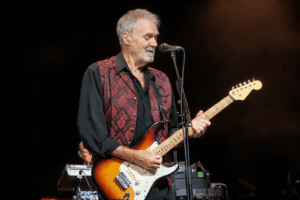
The physical consequences of the surgery were visible to fans in 2021, when Petersson performed seated during The Late Show With Stephen Colbert. It was a quiet reminder that recovery doesn’t always look heroic. Even for seasoned performers, healing requires adjustments, patience, and humility.
Despite those limitations, Petersson remained part of Cheap Trick’s ongoing story. Alongside founding members Robin Zander and Rick Nielsen, he continued contributing to a band that has outlasted trends, eras, and personal setbacks. The surgery didn’t remove him from the stage; it simply changed how he occupied it.
That persistence speaks to Cheap Trick’s broader legacy. Decades into their career, the band still tours regularly and releases new music, including 2024’s All Washed Up. Petersson’s recovery became another chapter in a long history of endurance, both personal and collective.
Choosing Survival Over Comfort
What makes Petersson’s story resonate isn’t triumph, but honesty. He doesn’t frame the surgery as a clear victory or a feel-good transformation. Instead, he presents it as a difficult choice made under imperfect circumstances, with outcomes that are emotionally mixed but ultimately necessary.
There’s something disarming in his admission that he felt fine before the operation and didn’t feel noticeably better afterward. That reality challenges the way we often talk about medical intervention. Sometimes survival isn’t about improvement — it’s about prevention, about avoiding an ending you never see coming.
In that sense, Petersson’s decision reflects a quieter kind of courage. He chose certainty over comfort, fear over ignorance, and long-term survival over short-term peace of mind. It’s not an easy narrative, but it’s an honest one — and for him, it made all the difference.