

Deep Cuts Test: Know These Classic Rock Songs and You’re the Real Deal
Classic rock hasn’t survived this long by accident. Songs recorded decades ago still sit at the center of “greatest of all time” lists, not as historical artifacts but as living music people return to again and again. The riffs, melodies, and attitudes from that era continue to feel foundational, whether they’re coming through old vinyl, streaming playlists, or a younger listener tracing the roots of the music they love now.
That staying power, though, has created its own blind spots. Familiar singles and title tracks tend to soak up all the attention, while deeper album cuts quietly fade into the background. Even the most celebrated bands of the era tucked away remarkable songs that never became radio staples, often buried on lesser-discussed records or overshadowed by bigger hits sitting right beside them.
Knowing those songs changes how you hear classic rock. It means you’ve gone past the surface and spent time with the albums themselves, not just the highlights. The tracks below weren’t designed to be obvious entry points, but they reward listeners who dig a little deeper. If these titles ring a bell without prompting, consider it proof—you didn’t just pass through classic rock, you actually lived in it.
“Royal Orleans” by Led Zeppelin (Presence, 1976)
Led Zeppelin’s reputation rests on scale and power, but “Royal Orleans” shows a looser, more playful side that often gets lost in the conversation. The song moves with a funky undercurrent, driven by Jimmy Page’s clipped guitar phrases and a rhythm section that sounds deliberately relaxed. It’s compact, rhythmic, and surprisingly nimble, leaning more toward groove than bombast without sacrificing the band’s identity.
Part of the song’s charm comes from how effortlessly it swings. There’s plenty of stop-time tension, brief instrumental breaks, and a sense that the band is enjoying the space rather than filling every second with force. Robert Plant’s vocal sits comfortably in the pocket, never pushing for drama, while John Paul Jones and John Bonham keep the momentum tight and danceable throughout.
Its placement on Presence explains why it rarely gets its due. Released during a turbulent period for the band, the album is often defined by the towering presence of “Achilles Last Stand.” In comparison, “Royal Orleans” feels modest. Yet that modesty is exactly what makes it endure for listeners who appreciate Zeppelin when they loosen the reins and let the groove lead.

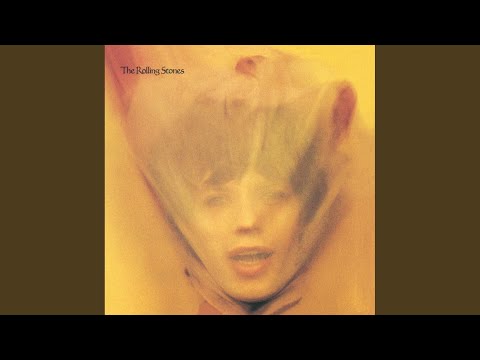
“Coming Down Again” by The Rolling Stones (Goats Head Soup, 1973)
The Rolling Stones are usually remembered for their snarl and swagger, but “Coming Down Again” quietly reveals another dimension. Built around a mournful piano line, the song unfolds slowly, allowing its mood to settle rather than rush toward a hook. It’s restrained, reflective, and intentionally vulnerable in a way the band rarely foregrounded during their peak years.
Keith Richards takes center stage with one of his rare lead vocal performances, delivering the song with weary sincerity. His guitar work is equally expressive, subtle rather than flashy, adding texture instead of dominance. Though Richards has denied autobiographical intent, the emotional weight of the performance has long encouraged listeners to read personal meaning into its lines.
The song’s low profile is tied to its context. Goats Head Soup sits awkwardly between more celebrated Stones records, and “Coming Down Again” lacks the immediate appeal of the album’s hit, “Angie.” Yet its emotional depth places it among the band’s most revealing moments. For listeners willing to linger, it offers a softer but no less compelling portrait of the Stones.
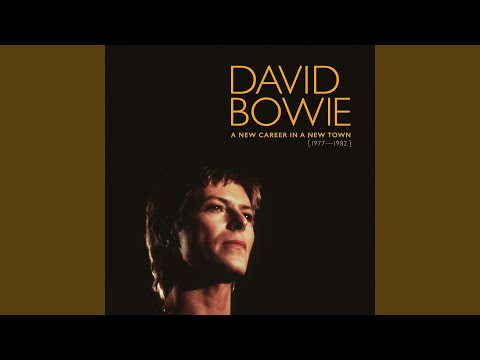
“Red Money” by David Bowie (Lodger, 1979)
“Red Money” closes Lodger with an uneasy sense of tension, fitting for an album that often feels restless and unsettled. As the final chapter of Bowie’s Berlin Trilogy, the record tends to be overshadowed by Low and “Heroes”, leaving songs like this one tucked away from casual attention. Yet its stark mood and angular energy reflect the experimental spirit of that period.
Musically, the track reworks the backing of Iggy Pop’s “Sister Midnight,” a song Bowie had previously produced. Rather than disguising the connection, “Red Money” leans into it, adding new vocals, guitar lines, and sharper edges. The overlap highlights how closely Bowie and Pop’s creative paths were aligned during their time in Berlin.
Critics often dismiss the song as derivative, but that criticism misses the point. Bowie himself described the lyrics as tied to themes of responsibility and visual symbolism emerging in his artwork at the time. Heard on its own terms, “Red Money” stands as a raw snapshot of artistic cross-pollination—less polished than his earlier personas, but deeply rooted in creative exploration.
“Danger Bird” by Neil Young & Crazy Horse (Zuma, 1975)
“Danger Bird” arrives early on Zuma, announcing the reunited force of Neil Young and Crazy Horse with a sense of tension that never fully resolves. The song doesn’t rush to make its point. Instead, it stretches out, letting atmosphere and repetition do the heavy lifting. From the opening moments, it feels less like a narrative being told and more like an emotional state being sustained.
Lyrically, Young keeps things stark. The image of a fossilized bird becomes a symbol for betrayal and emotional paralysis, hinted at rather than spelled out. Lines about infidelity land with blunt clarity, but the song’s real weight comes from what surrounds them. Young’s guitar solos surge and recede, raw and distorted, sounding closer to confession than technique. They’re expressive without being showy, carrying frustration, resignation, and release all at once.
Its reputation has always lived slightly in the shadows of Zuma’s centerpiece, “Cortez the Killer,” yet “Danger Bird” has earned quiet reverence over time. Lou Reed once singled out Young’s playing here as the finest he’d ever heard, a striking endorsement from a guitarist not known for casual praise. For listeners drawn to emotional guitar work rather than tidy songwriting, this track remains one of Young’s most rewarding deep cuts.

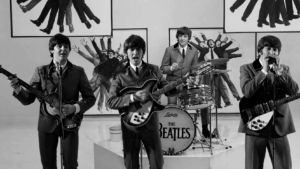
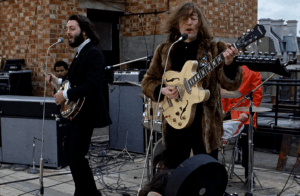
“Hey Bulldog” by The Beatles (Yellow Submarine, 1969)
“Hey Bulldog” captures The Beatles sounding unrestrained in a way few of their late-period recordings do. Built around a muscular, rolling piano riff, the song barrels forward with playful aggression, mixing groove and absurdity in equal measure. It feels spontaneous, almost chaotic, yet tightly controlled beneath the surface.
John Lennon’s lyrics lean into surreal humor, tossing out images of dogs and cryptic taunts while his vocal delivery swings between mockery and menace. The track famously dissolves into barking, shouting, and laughter near the end, a moment that could have derailed a lesser song. Instead, it reinforces the sense of a band enjoying the act of creation, feeding off each other’s energy rather than chasing polish.
Its obscurity has more to do with circumstance than quality. Recorded quickly for the Yellow Submarine film and tucked onto a soundtrack often viewed as nonessential, “Hey Bulldog” never had the platform of the band’s major singles. Yet it stands comfortably alongside their strongest late-era work, reminding listeners that even in their final stretch, The Beatles could sound loose, inventive, and genuinely fun.