
3 ’60s Country Songs Made for a Rowdy Honky-Tonk Karaoke Night
Honky-tonk karaoke has its own unspoken rules. The song needs to be loud enough to cut through clinking bottles, loose enough to survive a few missed notes, and familiar enough that half the room can shout along by the chorus. It’s not about precision or polish. It’s about attitude, swagger, and the kind of melody that still works when your voice is halfway gone and your timing’s a little off.
The 1960s produced no shortage of country songs that fit that bill perfectly. This was an era when honky-tonks were still smoky, jukeboxes ruled the room, and singers wrote with barroom reality in mind. The hooks were direct, the stories were simple, and the choruses were built to be belted, not carefully delivered. Long before karaoke machines became standard bar equipment, these songs were already doing the same job—pulling people together in loud, rowdy unison.
So if you’re stepping up to the mic looking for something that invites participation rather than judgment, the ’60s are a goldmine. Below are three country songs from that decade that thrive in a honky-tonk setting. They’re built for rough voices, raised glasses, and the kind of crowd that doesn’t mind singing a little off-key—as long as everyone sings it together.
“Jackson” by Johnny Cash and June Carter from Carryin’ On With Johnny Cash And June Carter (1967)
A honky-tonk karaoke night practically begs for a duet, and “Jackson” delivers that rare mix of humor, tension, and swagger that keeps both singers busy. It’s playful without being cute and sharp without turning sour, which makes it perfect for two voices trading lines across a noisy room. The song’s back-and-forth structure does half the performance work for you.
Cash and Carter recorded “Jackson” during a moment when their chemistry was impossible to miss, and that energy carries straight into a karaoke setting. The lyrics read like a running argument disguised as a road trip fantasy, and the crowd usually catches on fast. Even people who don’t know every verse recognize the chorus and jump in without hesitation.
What makes “Jackson” ideal for karaoke is its looseness. You don’t need pristine harmonies or perfect timing—confidence and attitude matter more. Whether you’re singing with a partner or daring someone from the bar to grab the second mic, this one turns the performance into a shared spectacle rather than a solo spotlight.
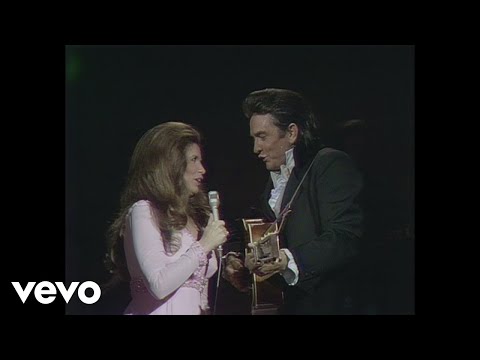
“Stand By Your Man” by Tammy Wynette from Stand By Your Man (1968)
“Stand By Your Man” works in a honky-tonk because it wears its convictions out in the open. There’s no irony, no wink—just a straight-faced declaration that invites the room to react however it wants. Some sing it earnestly, some lean into the drama, and others treat it like a knowing singalong. All three approaches work.
Wynette recorded the song at a time when country music leaned heavily into domestic storytelling, and that directness is part of its karaoke appeal. The melody moves slowly enough for even hesitant singers to stay on track, while the chorus lands with a familiarity that feels baked into American bar culture. Pedal steel or not, it sounds right in a crowded room.
Karaoke thrives on songs that spark conversation, and this one always does. Whether people agree with its message or not, they recognize it instantly. That recognition keeps the room engaged, turning a solo performance into something communal—exactly what you want when the night is already loud and a little unsteady.

“Crazy” by Patsy Cline from Showcase (1961)
“Crazy” might sound like an odd choice for a rowdy karaoke night, but that’s precisely why it works. Once the room has burned through its louder anthems, this song shifts the mood without killing the energy. It slows things down just enough to let everyone lean in instead of shouting over one another.
Written by Willie Nelson, the song’s phrasing is deceptively simple. You don’t have to hit every note perfectly to sell it; emotion carries the performance more than technical skill. That makes it forgiving for singers who feel the song more than they can technically handle it.
In a honky-tonk setting, “Crazy” often becomes the moment where the bar listens. Voices lower, conversations pause, and the chorus lands with surprising weight. It’s proof that karaoke isn’t just about noise—it’s about choosing songs that still connect, even when the room is full and the night is already in motion.