


5 Popular Albums Kurt Cobain Loved Most
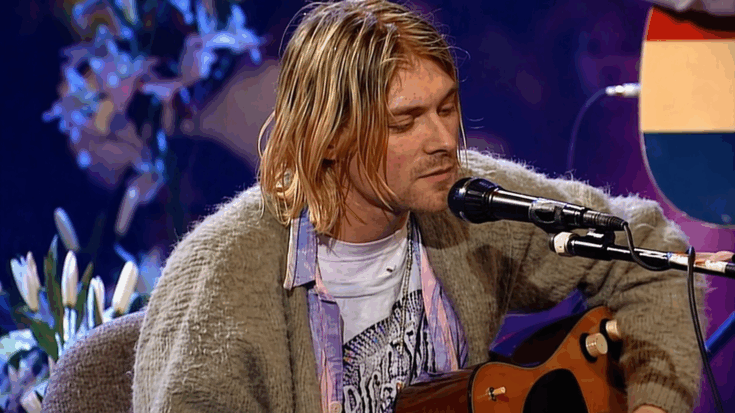
via "Nirvana" / YouTube
Success never sat comfortably with Kurt Cobain. By the early ‘90s, Nirvana had gone from scrappy outsiders to chart-dominating stars, and that shift came with a kind of quiet resistance. Cobain spoke openly about the unease of being embraced by the very mainstream he once dismissed, even admitting that part of him wanted to derail it. That tension between popularity and authenticity became one of the defining threads of his career.
What set Cobain apart from many of his Seattle peers was not just his discomfort with fame, but the depth of his influences. While other bands in the scene still carried the imprint of classic rock giants, Cobain was pulling ideas from far less obvious places. His taste leaned toward underground punk, fragile indie pop, and artists who valued honesty over bravado. He wasn’t chasing volume or dominance. He was drawn to vulnerability, to music that felt exposed rather than aggressive.
That perspective becomes clearer when looking at the now-famous list of his favorite albums, scribbled casually in a journal sometime in the early ‘90s. Over time, it has taken on a life of its own, guiding fans deeper into the music that shaped him. Hidden among the obscure and unconventional choices are a handful of more recognizable records, the rare moments where Cobain crossed into familiar territory.

Get the Knack by The Knack (1979)
Kurt Cobain once summed up his band’s sound in a way that raised eyebrows, pairing glossy pop acts with the raw force of hardcore. It sounded like a joke on the surface, but it revealed something more honest about how he heard music. Beneath the distortion and chaos, melody always mattered. That instinct made a record like Get the Knack more than just a guilty pleasure.
The album arrived at a strange moment, when punk’s initial shock was fading and something brighter began to creep into the airwaves. The Knack leaned into that shift with sharp hooks and tight songwriting, the kind that stuck immediately without feeling disposable. Cobain, who grew up slightly removed from punk’s first wave, absorbed a lot of those crossover sounds, even if he later tried to distance himself from their image.
Placed among far more abrasive and obscure names on his list, this album feels almost out of place. Yet that contrast explains why it belongs there. Cobain wasn’t rejecting pop instincts, he was reshaping them. Records like this helped him understand how to balance catchiness with tension, a combination that would later define his own work.
Meet the Beatles! by The Beatles (1964)
When Cobain pointed to mainstream artists, he rarely chose the expected entry points. Instead of reaching for the band’s most celebrated or experimental releases, he went back to something simpler. Meet the Beatles! captures a group still driven by urgency, before ambition turned inward and studio craft took over.
There’s a directness to this album that lines up with Cobain’s own values. The songs move quickly, the hooks are immediate, and the performances feel alive rather than polished. For someone who valued emotion over perfection, that early energy carried more weight than later technical achievements. It wasn’t about prestige. It was about connection.
His attachment to this music started long before fame entered the picture. As a kid, he spent time playing Beatles songs for family gatherings, treating them like his first stage. That early exposure never faded. Even as his taste drifted toward the underground, the foundation remained, quietly shaping how he approached melody and structure.
The Man Who Sold the World by David Bowie (1970)
Long before it became a centerpiece of Nirvana’s acoustic set, this album already held a special place in Cobain’s listening habits. Choosing it over more celebrated Bowie releases says a lot about what drew him in. He was less interested in the spotlight moments and more curious about records that lived in the margins.
At the time of its release, the album didn’t command much attention. Bowie’s rise would come later, leaving this record sitting quietly in the background as his catalog grew. That overlooked status likely made it more appealing to Cobain, who often gravitated toward music that hadn’t been fully claimed by the mainstream.
The songs themselves carry a darker, more introspective tone, something that aligns closely with Cobain’s own writing. There’s a sense of unease running through the record, balanced by strong melodic ideas. It’s easy to hear why it stayed with him. Even when introducing the song live, he seemed aware that not everyone would recognize it, which only added to its appeal.
Rocks by Aerosmith (1976)
Kurt Cobain didn’t ignore classic rock entirely, but when he did acknowledge it, the choice usually came with a condition. In this case, it meant looking past the polished, radio-friendly version of Aerosmith that dominated the late ‘80s and early ‘90s. What interested him was the earlier band, the one that still sounded dangerous and unpredictable.
Rocks captures that version perfectly. The guitars are loud and loose, the vocals push right to the edge, and the whole record feels like it could fall apart at any second. That raw energy gave it a kind of credibility that aligned more closely with Cobain’s own values. It wasn’t about perfection or commercial appeal. It was about impact.
Even with its harder edge, the album still carried songs that would stick around on classic rock playlists for decades. That balance between aggression and accessibility is likely what caught Cobain’s attention. It proved that a band could hit hard without losing its hooks, something he would later channel in his own way.
Green by R.E.M. (1988)
This might be the most unexpected inclusion on Cobain’s list. He had always shown admiration for R.E.M., but Green arrived at a turning point for the band. It was their first major-label release, a move that often raised questions about compromise and direction, especially in underground circles.
The album itself leans more toward brightness and experimentation than the band’s earlier, murkier records. Songs like “Stand” divided listeners, with some embracing its playful tone while others saw it as a step away from the band’s roots. Cobain, who was navigating similar territory after Nevermind, may have seen something familiar in that shift.
Rather than choosing one of R.E.M.’s more critically revered early albums, Cobain’s pick suggests a different kind of interest. Green feels like a snapshot of a band adjusting to a wider audience without completely losing itself. That tension, between staying grounded and stepping into the spotlight, was something Cobain understood all too well.