

Who Actually Wrote the Grateful Dead’s Top Hit?

For a band as influential as the Grateful Dead, chart success was surprisingly rare. Their reputation was built on legendary live shows and a fiercely loyal community of fans rather than radio-friendly singles. The Deadheads followed the band across the country, turning concerts into cultural events, but that devotion didn’t always translate into major hits on the Billboard charts.
That makes the story of “Touch of Grey” particularly interesting. Released in 1987, the song became the Grateful Dead’s highest-charting single, reaching No. 9 on the Billboard Hot 100. It was a remarkable achievement for a group that had already spent more than two decades touring, recording, and shaping the sound of American rock.
The success also sparked a simple question: who actually wrote the song that finally gave the band its biggest hit? As with many of the Grateful Dead’s most beloved tracks, the answer lies in a partnership that quietly shaped much of their catalog.
https://twitter.com/TJStJerome/status/1938222655032717566
The Song That Finally Broke Through
By the mid-1980s, the Grateful Dead had long since established themselves as a cultural institution. Albums like Workingman’s Dead and American Beauty had produced fan favorites, but the band still hadn’t enjoyed a major mainstream hit. Their music often stretched beyond the typical structure of radio singles, leaning instead toward long jams and exploratory performances.
“Touch of Grey” changed that dynamic almost overnight. Appearing on the 1987 album In the Dark, the track had a straightforward structure and a memorable chorus built around the line “I will get by.” That simple, resilient message resonated widely, especially with audiences who had followed the band through decades of change.
The song’s success also introduced the Grateful Dead to a broader audience. For many listeners in the late ’80s, “Touch of Grey” became their first exposure to a band that had already spent years building a devoted following far outside the mainstream charts.
The Garcia–Hunter Songwriting Partnership
The creative force behind “Touch of Grey” was the long-standing partnership between Jerry Garcia and lyricist Robert Hunter. Hunter wrote the words while Garcia composed the music, a collaboration that produced some of the Grateful Dead’s most enduring songs. Their relationship was unusual for a rock band, since Hunter rarely performed onstage but remained central to the group’s identity.
Together, Garcia and Hunter crafted a body of work that blended poetic imagery with roots-influenced rock. Songs like “Truckin’,” “Friend of the Devil,” and “Brokedown Palace” all emerged from their partnership. Hunter’s lyrics often carried a reflective, almost literary quality, while Garcia’s melodies gave them a loose and expressive musical frame.
“Touch of Grey” followed the same formula. Hunter’s words capture a sense of perseverance in the face of hardship, while Garcia’s arrangement keeps the mood bright and hopeful. That balance between realism and optimism became one of the defining traits of the Garcia-Hunter catalog.
https://twitter.com/jerrygarcia/status/1937209035725365689
Why This Song Became Their Biggest Hit
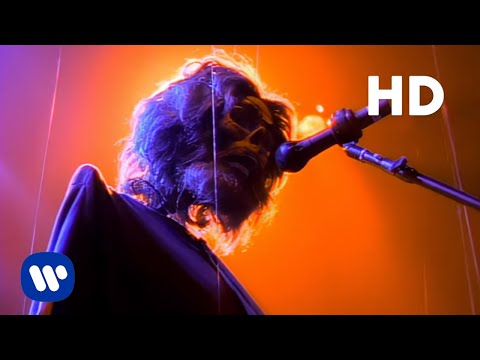
Several factors helped push “Touch of Grey” into the charts in a way earlier Grateful Dead songs never managed. One of the most obvious was the band’s first major music video, directed by Gary Gutierrez. The surreal clip featured the band performing while gradually transforming into skeletons, a playful nod to the group’s iconic imagery.
MTV gave the video heavy rotation, exposing the Grateful Dead to viewers who may never have attended one of their marathon concerts. The timing was perfect: by the late 1980s, music television had become one of the most powerful tools for reaching a national audience.
Even so, the song still sounded unmistakably like the Grateful Dead. Garcia’s guitar lines, the relaxed rhythm, and Hunter’s thoughtful lyrics all remained intact. “Touch of Grey” didn’t change who the band was—it simply delivered their style in a form that the wider public finally embraced.