

How the British Invasion Changed Bob Dylan

Before the mid-1960s, Bob Dylan had already built a reputation as one of the most important voices in American folk music. Songs like “Blowin’ in the Wind” and “The Times They Are a-Changin’” captured the mood of a generation wrestling with civil rights, war, and cultural upheaval. Listeners often treated Dylan as a kind of spokesman for political change, even though he repeatedly rejected that label.
Dylan himself was uncomfortable with the idea of being the “voice of a generation.” While many of his songs addressed real social issues, they were never meant as official statements on behalf of anyone. Instead, they reflected his own observations, experiences, and curiosity about the world around him. That personal approach was exactly what made the songs resonate so widely.
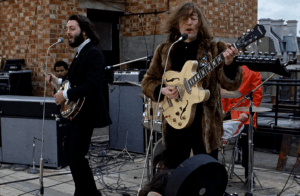
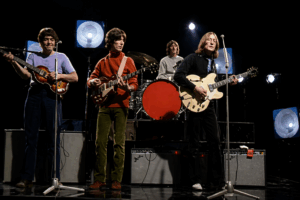
Around the same time, another cultural shift was underway. The British Invasion—led by bands like the Beatles and the Rolling Stones—was transforming popular music on both sides of the Atlantic. This movement didn’t just reshape rock and pop; it also pushed artists like Dylan to reconsider their place within a rapidly changing musical and cultural landscape.
Dylan’s Complicated Relationship With Protest Songs
Dylan’s early career was closely tied to the American folk revival. His songwriting often explored political topics, but he approached them in ways that were reflective rather than prescriptive. Instead of delivering clear political messages, Dylan used storytelling, irony, and symbolism to explore the contradictions of the time.
Because those songs spoke to widespread concerns, many listeners interpreted them as protest anthems. Dylan, however, seemed uneasy with that expectation. He often pushed back against the idea that he was writing songs meant to rally movements or represent political causes.
This tension can be heard in songs like “I Shall Be Free No. 10,” where Dylan pokes fun at the image people had created around him. Rather than embracing the role of cultural prophet, he portrays himself as ordinary—“average” and “common”—undermining the myth that had started to grow around his public persona.
Humor, Politics, and Self-Reflection
“I Shall Be Free No. 10,” which appeared on Another Side of Bob Dylan (1964), shows Dylan experimenting with humor and satire as a way to address politics. The song jumps from topic to topic, referencing figures such as Muhammad Ali, conservative politician Barry Goldwater, and even the Cold War space race. Instead of forming a clear political argument, Dylan lets the references swirl together in a playful stream of consciousness.
This style reflects a songwriter who was more interested in questioning the culture around him than delivering neat conclusions. The lyrics move between absurd jokes and sharp observations, suggesting that the world’s political conflicts might be too strange to fully explain in a single song.
By taking this approach, Dylan distances himself from the role people had assigned him. The humor becomes a tool for dismantling expectations. Rather than standing above the chaos of the era as a guiding voice, he places himself inside it, confused and curious like everyone else.
The British Invasion and a Changing Perspective
Toward the end of the song, Dylan makes an unexpected reference to England, hinting at the influence of the British Invasion. The moment feels almost casual, yet it points to a larger cultural exchange that was reshaping the music world. British artists had absorbed American blues, folk, and rock traditions, then returned them to the United States in a new form.
For Dylan, this wave of British musicians offered a fresh perspective on American culture. Hearing his country’s musical roots reflected back through a different lens may have encouraged him to rethink how he approached songwriting and identity. It reminded him that culture was constantly moving and evolving.
In that sense, the British Invasion didn’t simply introduce new bands to American audiences—it helped shift how artists like Dylan saw their own work. His reference to something he “learned over in England” suggests that the encounter sparked reflection about politics, music, and cultural identity, even if he presented it with a shrug and a joke rather than a grand statement.