The Live Album That Showed AC/DC’s Power

In the late 1970s, AC/DC had already built a reputation as one of the most explosive live bands in rock. Their concerts were loud, sweaty, and relentless, driven by the sharp guitar interplay of Angus and Malcolm Young and the wild charisma of singer Bon Scott. Before the band conquered America and became arena legends, their reputation spread mainly through word of mouth and the energy of their stage shows.
That raw power was finally captured on the 1978 live album If You Want Blood You’ve Got It. Recorded during the Powerage tour and largely drawn from a show at the Apollo Theatre in Glasgow, the record presented AC/DC exactly as fans experienced them in concert—no excess polish, no unnecessary theatrics, just a hard-hitting rock band in full flight.
Over the decades, critics and fans have continued to point to the album as proof of what made AC/DC special during the Bon Scott era. Rather than simply documenting a concert, If You Want Blood You’ve Got It distilled the band’s live identity into a single explosive statement that still resonates today.
A Band at Full Speed on the Powerage Tour
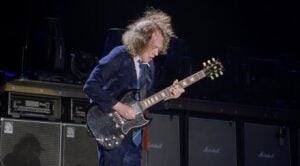
By 1978, AC/DC had sharpened their sound into something unmistakable. Albums like Let There Be Rock and Powerage had refined the band’s mix of blues roots, rock swagger, and thunderous rhythm playing. On stage, those songs became even more intense, with Angus Young’s manic guitar work pushing every performance to the edge.
The Glasgow recordings captured a band that was both disciplined and reckless in the best way. Tracks such as “Riff Raff” and “Bad Boy Boogie” showed the tight rhythm section of Cliff Williams and Phil Rudd locking in behind the Young brothers’ guitars, while Bon Scott commanded the crowd with a mix of humor and grit.
Many listeners have pointed out that the album captures AC/DC just before their global breakthrough. Within a year they would release Highway to Hell and become worldwide stars, but If You Want Blood You’ve Got It freezes them at a moment when they were still hungry, still proving themselves, and playing every show like their reputation depended on it.
https://twitter.com/Mitch61644921/status/2023706410027020699
The Songs That Defined the Experience
Part of the album’s strength comes from its carefully chosen setlist. Rather than stretching across multiple records like many live releases of the era, AC/DC packed ten songs into a single LP that moves quickly from one punch to the next. The result feels more like a concentrated burst of energy than a sprawling concert document.
Highlights include the gritty live version of “The Jack,” where Bon Scott’s cheeky storytelling turns into a full crowd sing-along. “Whole Lotta Rosie” features the now-legendary chant of “Angus!” from the Glasgow audience, a moment that would become a permanent part of the band’s live shows.
Elsewhere, songs like “Let There Be Rock” and “Rocker” showcase the band’s ability to stretch out without losing focus. Even when the performance veers toward chaos, the music never collapses. Instead, the tension between precision and mayhem becomes part of what makes the record so thrilling.
Why the Album Still Stands Among the Great Live Records
Over time, If You Want Blood You’ve Got It has been placed alongside other classic live albums such as Live and Dangerous by Thin Lizzy and No Sleep ’Til Hammersmith by Motörhead. Like those records, it captures a band at a moment when their live reputation was beginning to eclipse their studio work.
Listeners often describe the album as raw and immediate. The crowd noise cuts through the guitars, the performances feel slightly dangerous, and Bon Scott sounds completely at home leading the chaos. That sense of authenticity is one reason the album has remained so beloved among AC/DC fans.
More than four decades later, the record still works as both a snapshot of a specific era and a reminder of what AC/DC were capable of on stage. It may only run a little over fifty minutes, but in that time If You Want Blood You’ve Got It delivers a powerful argument: few bands have ever sounded this alive on a live album.