

How Ritchie Blackmore and Ronnie James Dio Made Rainbow Immortal

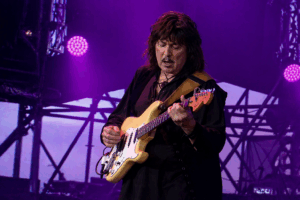
In 1975, Ritchie Blackmore reached a turning point in his career. After years as the driving guitarist behind Deep Purple, he had grown frustrated with the direction the band was taking. The funk and soul influences creeping into albums like Burn and Stormbringer did not match the darker, more dramatic style he preferred. While working on what was supposed to be a solo project in Munich, Blackmore began to realize that something entirely new was forming.
The sessions brought him together with Ronnie James Dio and several members of Dio’s band Elf. The chemistry between Blackmore’s guitar ideas and Dio’s mythic storytelling became obvious almost immediately. What started as a studio collaboration soon felt like the beginning of a full band rather than a side project.
That partnership would soon become Rainbow. Together, Blackmore and Dio crafted a style that blended hard rock power with medieval imagery and classical influences. The music they created during those first years would not only define Rainbow but also leave a lasting mark on heavy rock and metal.
A Song About Castles and Crossbows
The first real glimpse of what Blackmore and Dio could do together came with the song “Sixteenth Century Greensleeves.” The track combined a heavy guitar riff with Dio’s fantasy-inspired lyrics, setting it apart from most hard rock songs of the time. It carried the feeling of a medieval tale told through amplifiers and distortion.
Blackmore later explained that the goal was simple: they wanted a song about castles and crossbows. Yet the result was more sophisticated than that description suggests. The arrangement carried a strong classical flavor, with dramatic shifts and melodic passages that gave the song a sense of grandeur.
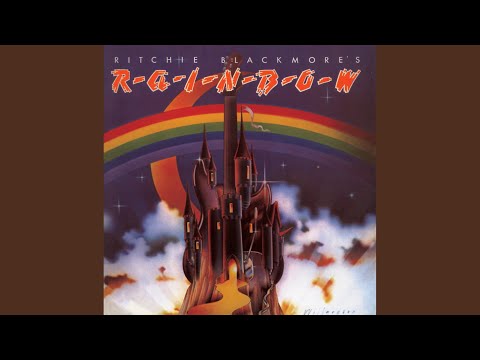
That creative spark formed the foundation for Rainbow’s debut album, Ritchie Blackmore’s Rainbow (1975). The record introduced listeners to a darker, more theatrical style of hard rock. Songs like “Man On The Silver Mountain” delivered pure power, while other tracks hinted at the epic storytelling that would soon define the band.
Beauty and Power in Early Rainbow
The debut album offered more than just heavy riffs. It also revealed how well Blackmore’s musical instincts matched Dio’s expressive voice and lyrics. Together they could move between thunderous rock and quiet, emotional moments without losing their identity.
Two songs in particular showed this range clearly. “Catch The Rainbow” stretched out into a slow-burning epic, allowing Dio to explore the full emotional depth of the lyrics. Meanwhile, “The Temple Of The King” offered something entirely different—a delicate, almost folk-like ballad that felt timeless and mystical.
These songs proved that Rainbow was not limited to straightforward hard rock. Blackmore’s guitar phrasing and Dio’s storytelling created music that felt cinematic and imaginative. Even decades later, those tracks remain among the most beloved pieces the two artists ever recorded together.
https://twitter.com/birgerstoffer66/status/1933387007578845657
Rising and the Sound of a Legend
Before recording Rainbow’s second album, Rising (1976), Ritchie Blackmore made a bold decision. He replaced most of the band’s lineup, keeping only Ronnie James Dio from the original group. Among the new arrivals was drummer Cozy Powell, whose thunderous playing would soon become a defining element of Rainbow’s sound.
Powell’s explosive style is heard immediately on “Stargazer,” the towering centerpiece of the album. The song builds slowly before unleashing its full force, with Dio’s dramatic vocal performance riding over Blackmore’s sweeping guitar lines and orchestral arrangements. Many fans still see it as one of Rainbow’s greatest achievements, often compared to other epic rock pieces like “Kashmir.”
From the mysterious opening of “Tarot Woman” to the blistering finale “A Light In The Black,” Rising captured Rainbow at a creative peak. The album elevated the band’s reputation and confirmed that the partnership between Blackmore and Dio had produced something special. As Dio later reflected, the two of them wrote some truly wonderful music together—and those early Rainbow records remain proof of it.