


The Darker Meanings Behind Paul McCartney’s Most Haunting Songs
Paul McCartney’s career has been built on writing songs that feel instinctive and carefully shaped at the same time. From his earliest recordings through decades of constant reinvention, melody has always come first, often wrapped in arrangements that make even complex emotions sound accessible. That gift helped define the sound of modern pop and rock, and it’s a large part of why his work continues to feel familiar across generations.
Beneath that surface warmth, though, his catalog tells a more complicated story. McCartney’s life unfolded alongside extraordinary success, but it also carried loss, tension, and long stretches of emotional strain. The collapse of a world-changing band, personal grief, and the pressure of constant scrutiny all left traces behind. While optimism runs through much of his music, there are moments when his writing turns inward and unsettled, letting darker thoughts sit uncomfortably in the spotlight.
Those songs stand out because they don’t rely on shock or bitterness to make their point. Instead, they use gentle melodies to frame uneasy ideas, creating a quiet sense of unease that lingers after the music fades. Across his vast body of work, a small group of tracks carries this weight more clearly than the rest. What follows is a look at the stories and meanings behind Paul McCartney’s most haunting songs, and why their shadows still resonate.
“Norwegian Wood (This Bird Has Flown)”, Rubber Soul, 1965
At first glance, “Norwegian Wood (This Bird Has Flown)” drifts by with the ease of a folk reverie. Its lilting melody, acoustic textures, and understated delivery make it feel almost harmless, even quaint. The song’s sound was quietly radical for its time, introducing the sitar into a Western pop setting and helping push The Beatles away from straightforward rock toward something more exploratory. That gentle atmosphere, however, masks a story built on frustration and misdirection.
The lyric unfolds as a carefully veiled account of a romantic encounter that never quite goes as planned. The narrator follows a woman home, navigates awkward social cues, and ends the night alone, displaced and vaguely humiliated. McCartney later described the “Norwegian wood” not as luxury but as cheap pine décor, a sly commentary on mid-’60s trends and the shallow modernity that sometimes accompanied them. What sounds poetic on the surface carries a quiet sense of disappointment underneath.
That tension sharpens in the final verse, when the narrator’s passive tone gives way to something more unsettling. The suggestion that he sets fire to the room is delivered without drama, as if it were a private joke. It turns the song’s earlier charm on its head, revealing a flash of bitterness and resentment that lingers after the music fades. The darkness isn’t shouted — it’s slipped in sideways, which is precisely what makes it memorable.

“Maxwell’s Silver Hammer”, Abbey Road, 1969
“Maxwell’s Silver Hammer” arrives dressed as a cheerful novelty, bouncing along with piano accents and a music-hall bounce that feels intentionally old-fashioned. Within the context of Abbey Road, it sounds almost playful, a singalong that seems designed to lighten the mood. That contrast is exactly where its unease begins to take hold.
The song’s narrative is shockingly blunt. Maxwell Edison murders a classmate, a teacher, and a judge, each killing punctuated by the same jaunty refrain. There’s no suspense and no remorse — just a tidy procession of violence delivered with a smile. The lack of emotional reaction is what makes the song disturbing, as if the horror is so routine that it barely registers anymore.
McCartney later explained that the song reflected his view of life’s sudden reversals. Just as things appear stable, disaster strikes without warning. Beneath the cartoonish tone sits a bleak idea: that chaos is inevitable, arbitrary, and impossible to outrun. “Maxwell’s Silver Hammer” doesn’t explore evil in a dramatic way — it presents it as an everyday interruption, which makes the song far colder than its melody suggests.
“Eleanor Rigby”, Revolver, 1966
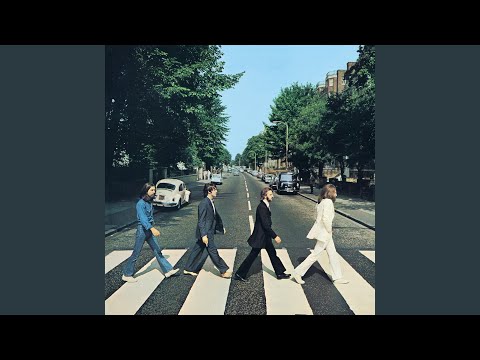
“Eleanor Rigby” opens by asking listeners to notice people who are usually invisible. From that moment on, the song refuses comfort, trading guitars and drums for a stark string arrangement that feels almost funereal. Its sound alone signals that this is not a typical pop narrative but something closer to a short story set to music.
The song’s characters exist in parallel isolation. Eleanor moves through life unseen, cleaning a church that offers no real sanctuary. Father McKenzie prepares sermons no one hears and performs rituals devoid of connection. Their lives intersect only in death, when he presides over her burial in a near-empty space. The song doesn’t offer resolution or hope — it simply observes and moves on.
What makes the song especially haunting is its grounding in real experience. McCartney drew from people he had encountered over time, shaping Eleanor as a composite of quiet loneliness rather than a single figure. The fact that a real gravestone bearing her name later surfaced only deepened the song’s uneasy realism. “Eleanor Rigby” doesn’t exaggerate sadness — it documents it, which is why it continues to feel uncomfortably true.
“She’s Leaving Home”, Sgt. Pepper’s Lonely Hearts Club Band, 1967
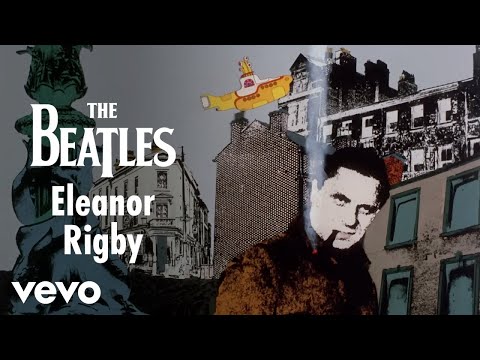
“She’s Leaving Home” unfolds with the precision of a newspaper report, beginning in the stillness of an ordinary morning. The song’s measured pace and orchestral arrangement slow time, allowing every detail to settle before the story reveals itself. From the first verse, the mood is reflective rather than dramatic, drawing attention to emotional distance rather than rebellion.
The narrative centers on a young woman who quietly leaves her family behind, but the song refuses to frame her as reckless or cruel. Instead, McCartney presents both sides of the rupture: her longing for independence and her parents’ stunned confusion. Their pain is not dismissed, yet it’s clear they never truly saw her needs until she was gone.
Inspired by a real disappearance reported in the press, the song captures a broader generational shift taking place in the late 1960s. What makes it dark is not tragedy in the traditional sense, but inevitability. No one in the song is portrayed as a villain, and no clear solution is offered. The sadness comes from miscommunication and emotional distance — a quiet fracture that feels impossible to repair once it’s begun.
“Blackbird”, The Beatles (White Album), 1968
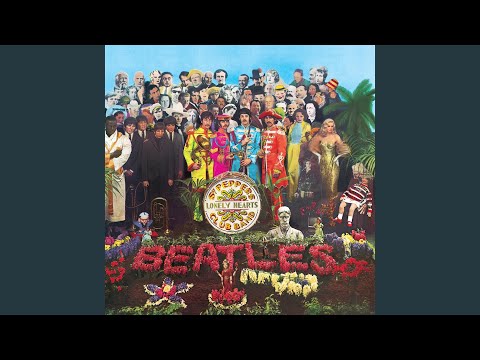
“Blackbird” stands apart from the dense sprawl of The White Album by doing almost nothing at all. One voice, one acoustic guitar, and a sparse rhythmic pulse created by McCartney’s foot tapping are all it needs. The song feels intimate and hushed, as though it’s being played in an empty room after everyone else has gone home. That restraint gives it a slightly eerie calm, even before the meaning beneath the lyrics comes into focus.
On the surface, the song appears to be a simple metaphor about a wounded bird learning to fly again. The imagery is gentle and open-ended, which allowed listeners to project their own meanings onto it for years. McCartney later revealed that the “blackbird” was a symbolic stand-in for Black Americans struggling through the violence and resistance surrounding the civil rights movement in the southern United States. What sounds like a pastoral folk song is, in fact, rooted in real fear, courage, and endurance.
That quiet framing is what gives the song its emotional weight. Rather than documenting conflict directly, McCartney chose encouragement as his vehicle, offering hope without preaching or explanation. The darkness lies in what the song never states outright — the danger, hatred, and isolation faced by those it was written for. “Blackbird” endures because it trusts the listener to hear what’s left unsaid.
“Another Day”, Single, 1971
“Another Day” marked McCartney’s first step into the world as a solo artist, and it immediately turned away from triumph or reinvention. Instead, the song settles into the life of an unnamed woman moving through a routine defined by repetition and quiet disappointment. The melody is warm and inviting, but the story it carries is deliberately narrow and enclosed.
Like “Eleanor Rigby,” the song observes rather than participates. The narrator watches as the woman goes to work, drinks her coffee, and returns home to a life that seems permanently stalled. There is no dramatic crisis and no sudden realization, only the slow accumulation of loneliness. The darkness comes from how ordinary it all feels, as though this emotional stagnation is not unusual at all.
McCartney later acknowledged that these songs reveal an uncomfortable aspect of his writing process. He positioned himself as an observer, watching lives from a distance and shaping them into narratives. That detachment gives “Another Day” its uneasy tone. The song doesn’t judge or intervene — it simply documents a life passing by unnoticed, which makes its sadness feel quietly relentless.

“Too Many People”, Ram, 1971
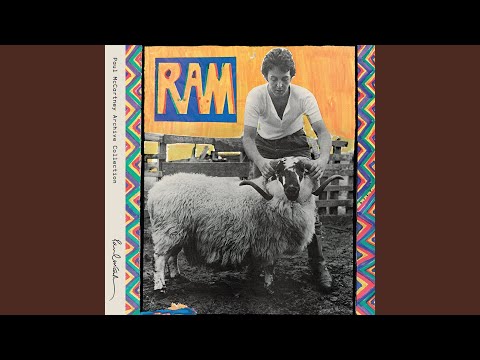
“Too Many People” arrived at a moment when the breakup of the Beatles was still raw and unresolved. Musically, it carries the melodic confidence that runs through Ram, but there’s a sharp edge beneath the polish. The song moves with purpose, propelled by irritation rather than reflection, and it stands out as one of McCartney’s most openly confrontational pieces.
Lyrically, the song takes aim at hypocrisy and moral posturing, calling out figures who speak loudly about ideals while offering little substance. At the time, listeners quickly assumed it was a veiled response to John Lennon, whose own post-Beatles work had taken on a more overtly political tone. Lennon himself heard it that way, responding with his own far less subtle musical retaliation.
What makes the song dark isn’t just its target, but McCartney’s discomfort with his own aggression. He later admitted the lyrics were intentionally obscured, softened by metaphor and phrasing rather than direct accusation. The song captures a rare moment when restraint and resentment coexist, revealing an artist struggling with anger he wasn’t entirely comfortable expressing.
“Band on the Run”, Band on the Run, 1973
“Band on the Run” unfolds like a short film, shifting moods and perspectives as it goes. It begins with confinement and frustration, opens into escape, and finally settles into freedom that still feels hard-won. The song’s sweeping structure mirrors its subject matter, giving it the sense of movement that defines both its sound and its story.
While the imagery suggests a literal prison break, McCartney used the idea more broadly. The song reflects the growing tension between musicians and authority during the early 1970s, when arrests and moral crackdowns were becoming common. To McCartney, artists were being treated like criminals for lifestyles that felt increasingly at odds with conservative institutions.
That sense of being hunted, misunderstood, and pushed to the margins gives the song its underlying darkness. “Band on the Run” isn’t a victory lap so much as a survival anthem. Freedom, in this context, comes with exhaustion and uncertainty, not celebration. The song’s power lies in how it frames escape not as triumph, but as necessity.

“Tug of War”, Tug of War, 1982
“Tug of War” sits at the emotional center of McCartney’s early solo period, shaped by transition and unresolved tension. It was written during a time when his creative world was shifting, no longer anchored by Wings and increasingly defined by introspection. The song moves deliberately, built on contrasts that mirror the push and pull suggested by its title.
Lyrically, the song explores conflict as a constant condition of adult life. There’s exhaustion in its observations, a sense that compromise and competition never truly end. While it was written before John Lennon’s death, listeners inevitably heard echoes of their famously complicated partnership. The rivalry, mutual respect, and constant comparison between the two had never fully disappeared, even after the band itself had.
What makes the song especially heavy is its emotional ambiguity. McCartney never assigns blame or reaches a clear conclusion. Instead, “Tug of War” lingers in the unresolved space between affection and frustration. The darkness comes from that lack of closure, capturing a relationship defined as much by strain as by shared history.

“That Day Is Done”, Flowers in the Dirt, 1989
“That Day Is Done” closes Flowers in the Dirt on a note of quiet finality. Co-written with Elvis Costello, the song carries a weight that feels heavier than most of the album that precedes it. Its pace is slow and reflective, allowing each line to land without urgency or embellishment.
The song centers on the experience of loss, focusing not on grief itself but on what remains unsaid when someone is gone. Regret hangs over the lyrics, shaped by the realization that time has run out. Rather than dramatizing death, the song treats it as an unavoidable fact, one that leaves behind emotional debris that can’t be easily cleared away.
McCartney’s contribution softened the song’s edges while deepening its emotional pull. Gospel-inflected harmonies and a restrained arrangement give the piece a sense of quiet resignation. The darkness of “That Day Is Done” lies in its honesty — the recognition that apologies, explanations, and reconciliations often arrive too late to matter.

“The End of the End”, Memory Almost Full, 2007
By the time McCartney wrote “The End of the End,” mortality was no longer an abstract idea. Approaching the age once treated playfully in “When I’m Sixty-Four,” he turned his attention toward what it means to face death with clarity rather than fear. The song is gentle, conversational, and deliberately unguarded.
Rather than framing death as tragedy, McCartney imagines it as a moment of communal remembrance. He draws inspiration from Irish wake traditions, picturing a farewell filled with stories, laughter, and shared memory. That framing strips death of its mystery while acknowledging its inevitability.
The darkness of the song isn’t rooted in despair, but in acceptance. “The End of the End” confronts the subject directly, refusing to look away or soften its meaning. Its power comes from that bravery — an artist choosing reflection over denial, and finding peace not in avoidance, but in preparation.

“(I Want to) Come Home”, Everybody’s Fine Soundtrack, 2009
“(I Want to) Come Home” was written for a story already steeped in loss. After watching an early cut of Everybody’s Fine, McCartney found himself emotionally aligned with its themes of grief, distance, and regret. It’s a rare example of him writing from someone else’s perspective while drawing deeply from personal experience.
The song adopts the voice of a widower trying to reconnect with his adult children, carrying the weight of missed opportunities and emotional gaps that have grown over time. Its melody is restrained, avoiding sentimentality even as it leans into vulnerability. Hope exists, but it’s fragile and uncertain.
What makes the song particularly haunting is how closely it mirrors McCartney’s own life after the death of Linda. While written for a fictional character, the emotion feels lived-in rather than imagined. The darkness comes from longing — not just for connection, but for time that can no longer be reclaimed.