

Five Influential ’60s Bands Still Shockingly Snubbed by the Rock Hall

via @DataRedacted / YouTube
Since its inception, the Rock & Roll Hall of Fame has never been free from controversy. The debates rarely center on whether rock history deserves preserving, but on who gets to represent it. Every induction season reopens old arguments about criteria, credibility, and the uneasy mix of art, influence, and industry politics.
Some omissions feel less like oversights and more like unresolved grudges frozen in time. Stories persist about strained relationships, shifting voting blocs, and quiet biases that leave certain artists circling the ballot year after year. Others point to broader blind spots, where entire styles or movements seem perpetually underappreciated despite their cultural reach and lasting influence.
As the eligibility list grows longer, the odds only get steeper for acts still waiting on the outside. New nominees arrive, attention shifts, and the gap between contribution and recognition widens. With that in mind, this list looks back to the 1960s, highlighting five influential bands whose absence from the Rock Hall remains one of its most baffling ongoing conversations.
The Monkees
The Monkees have spent decades battling a perception problem that has little to do with their actual impact. Being assembled for television has long been used as shorthand to dismiss their legitimacy, even though their success unfolded in the same industry-driven environment as many of their peers. Chart dominance, sold-out shows, and cultural saturation don’t happen by accident, regardless of how a band is formed.
Their commercial run alone rivals that of many inducted acts. Four consecutive No. 1 albums, a string of enduring singles, and a fanbase that extended well beyond teenage television viewers point to something deeper than novelty. As the group matured, members increasingly took creative control, pushing back against the very constraints critics often cite against them.
Beyond the charts, their influence stretched into songwriting, studio experimentation, and solo careers that carried real weight. Time has softened the old arguments, but the Hall’s stance has not. At this point, their absence feels less like scrutiny and more like a refusal to reassess outdated assumptions.
Captain Beefheart
Captain Beefheart’s legacy was never built on radio rotations or gold records, but on disruption. His work challenged conventional song structures, performance norms, and even the definition of what rock music could absorb. That discomfort is precisely why so many major artists later cited him as a turning point in their own creative paths.
From avant-garde pioneers to mainstream icons, admiration for Don Van Vliet has crossed genres and generations. His 1969 album Trout Mask Replica remains one of the most studied and debated releases of its era, praised less for accessibility than for its fearless originality. Few records have left such a distinct fingerprint without ever brushing commercial success.
The Rock Hall has a framework designed for artists whose importance outweighs their sales numbers. Beefheart fits that purpose almost too neatly, which makes his continued absence puzzling. When influence is repeatedly acknowledged but never formally recognized, the omission starts to feel intentional rather than accidental.

Harry Nilsson
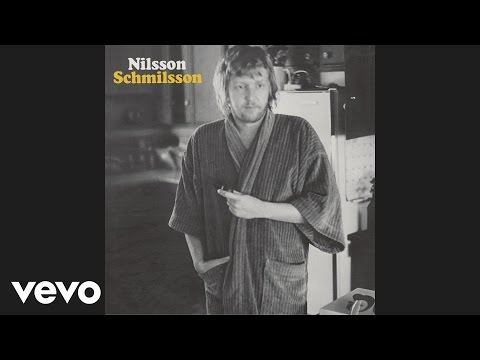
Harry Nilsson never chased the spotlight in the way many of his contemporaries did, yet his presence loomed large behind the scenes. His voice, songwriting, and studio imagination earned admiration from fellow musicians who rarely agreed on anything else. That respect translated into a catalog that balanced emotional vulnerability with sharp melodic instincts.
Commercial success was hardly an issue. Major hits, multiple Grammy Awards, and a body of work anchored by Nilsson Schmilsson placed him firmly within the mainstream of early ’70s rock and pop. What set him apart was his ability to remain artistically adventurous even at the height of his popularity.
Despite all of this, his name has never appeared on a Rock Hall ballot. The omission is striking, especially given how frequently his peers spoke about his influence. Recognition for Nilsson would acknowledge not only his hits, but the quieter ways he reshaped songwriting norms.
Procol Harum
Procol Harum’s relationship with the Rock Hall has been strangely incomplete. Their brief appearance on the ballot ended without induction, followed by years of silence, despite a catalog that extends well beyond one legendary song. While “A Whiter Shade of Pale” often dominates discussions, it barely scratches the surface of their contribution.
The band’s fusion of classical motifs, psychedelic textures, and lyrical depth helped define a more ambitious strain of late-’60s rock. Albums like Shine on Brightly and Salty Dog pushed boundaries at a time when progressive ideas were still taking shape. Their influence can be traced through decades of art rock and symphonic experimentation.
Honoring a single recording without acknowledging the band behind it feels incomplete. Procol Harum’s work wasn’t an isolated flash of inspiration, but a sustained creative effort. A full induction would finally place their broader legacy in proper context.

Why Simon Retired, Then Reconsidered
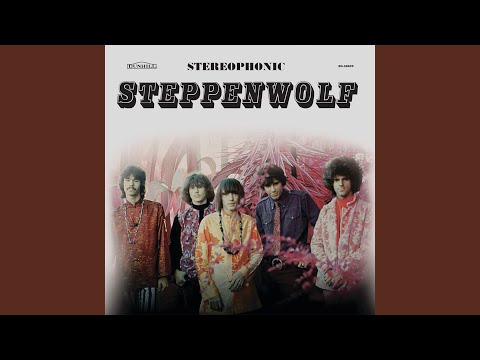
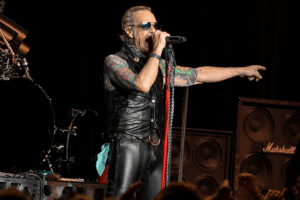
Steppenwolf’s music became inseparable from the era that produced it. Their songs captured a raw, restless energy that aligned perfectly with the cultural shifts of the late ’60s. Tracks like “Born to Be Wild” didn’t just succeed on the charts—they became shorthand for freedom, rebellion, and amplified rock power.
Their success extended well beyond one anthem. A steady run of Top 40 hits and tens of millions of albums sold worldwide positioned the band as a defining force of the period. The classic lineup delivered a sound that blended hard rock weight with accessible hooks, influencing countless bands that followed.
Recognition from the Hall has so far stopped at individual songs, leaving the group itself in limbo. Given their impact and consistency, that partial acknowledgment feels insufficient. Steppenwolf’s absence stands as one of the clearer cases where legacy and recognition remain out of sync.