Billy Joel’s ‘We Didn’t Start the Fire’ — Which Names Are Still Alive Today?

via Billy Joel / YouTube
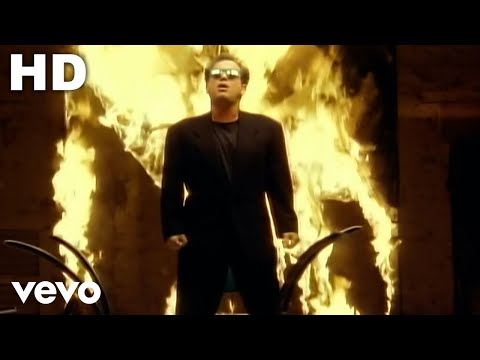
When Billy Joel released “We Didn’t Start the Fire” in 1989, it landed less like a traditional pop single and more like a breathless roll call of memory. The song races through four decades of headlines, scandals, triumphs, and cultural touchstones, delivered with the urgency of someone trying not to forget anything important. Its sing-song cadence masks something heavier: a generational attempt to make sense of a chaotic world inherited, not chosen.
At its core, “We Didn’t Start the Fire” functions as a compressed history lesson, stitched together by rhyme instead of narrative. Joel wasn’t telling stories so much as sketching a mental map of the forces that shaped his worldview as a Baby Boomer growing up in postwar America. Presidents sit next to movie stars, athletes brush up against assassinations, and global crises are reduced to single, unforgettable phrases. The effect is dizzying but deliberate.
What makes the song especially striking today is how much time has caught up with it. Many of the figures Joel referenced were already gone by the late ’80s, and the years since have quietly claimed almost everyone else he name-checked. More than three decades later, revisiting the lyrics feels less like nostalgia and more like an inventory of absence. As of January 2026, only three of the people mentioned in the song are still alive—a reminder that history doesn’t just move forward, it steadily erases its witnesses.
Bernhard Goetz
Near the end of the song’s final verse, Billy Joel drops a name that would have felt uncomfortably current to listeners in 1989. Bernhard Goetz wasn’t a distant historical figure or a long-dead icon — he was a living symbol of a decade defined by fear, crime, and moral panic. His inclusion places the song squarely in its own moment, anchoring the rapid-fire history lesson to an unresolved national argument.
Goetz became infamous after a 1984 incident on a New York City subway, when he shot four young men he claimed were about to rob him. The case dominated headlines and talk shows, sparking heated debates about vigilantism, self-defense, gun laws, and race. While Goetz was acquitted of attempted murder charges, he served jail time on a weapons conviction, leaving the public sharply divided over whether he was a folk hero or a cautionary tale.
Unlike most names in the song, Goetz never faded into myth or memorial. He periodically resurfaced over the years, including a brief and unsuccessful run for New York City mayor in 2001. As of January 2026, he remains alive at 78, a reminder that not all of Joel’s references belong safely to history books.
https://twitter.com/MaxWalkerWorld/status/2006271541194219838
Chubby Checker
When Billy Joel name-checks Chubby Checker, he’s tipping his hat to a very specific slice of early ’60s pop culture. Checker’s career was inseparable from “The Twist,” a song and dance craze that swept through American living rooms and television screens with joyful simplicity. For a generation coming of age, it was music designed not for reflection but for movement.
Checker’s success was undeniable. “The Twist” hit No. 1 twice — first in 1960, then again in 1962 — a rare feat that cemented his place in chart history. He followed it with a string of similarly themed hits that leaned into the same formula, encouraging participation rather than reinvention. By the time Joel referenced him decades later, Checker already represented a nostalgic artifact of a much earlier era.
What’s surprising is how long that legacy has endured. Checker continued performing well into his later years, maintaining a touring presence long after many of his contemporaries had retired. In late 2025, he was inducted into the Rock & Roll Hall of Fame after years of public lobbying. Now in his 80s, he remains one of the few living reminders of the song’s lighter cultural moments.
Bob Dylan
As the song moves into the 1960s, Bob Dylan’s appearance feels inevitable. Any attempt to capture the emotional and political undercurrents of that decade would be incomplete without him. Dylan wasn’t just reacting to history — he was shaping how people understood it, translating unrest and uncertainty into language that lingered long after the headlines faded.
Dylan’s early work helped redefine what popular music could do. Songs like “Like a Rolling Stone” and “A Hard Rain’s A-Gonna Fall” blurred the line between folk tradition and modern poetry, giving voice to a generation wrestling with war, civil rights, and social change. His willingness to evolve — and sometimes provoke — ensured his relevance far beyond the decade that made him famous.
That longevity sets him apart from nearly everyone else Joel referenced. Dylan continued releasing acclaimed work into the late 20th century and beyond, winning Album of the Year at the Grammys in 1998 and receiving the Nobel Prize in Literature in 2016. Turning 85 in 2026, he stands not only as one of the song’s few surviving names, but as proof that cultural influence doesn’t always fade with time.