

3 Songs That Brought Phil Collins and Motown Together

via "Phil Collins" / YouTube
There was a point in the late ’80s when Phil Collins found himself stepping into a different kind of spotlight. His role in Buster wasn’t just another acting gig; it pulled him into a story rooted in real-life crime and consequence. The film, loosely inspired by the Great Train Robbery of 1963, gave Collins the chance to play a character navigating both ambition and regret, themes that would carry over into the music tied to it.
The soundtrack became more than a companion piece. It opened the door for Collins to revisit the past while reshaping it through his own voice. His take on “A Groovy Kind of Love” leaned into a softer, nostalgic tone, connecting a new audience to a song that already had history behind it. At the same time, the project pushed him toward something deeper than reinterpretation, placing him alongside figures who helped define an entire era of soul and pop.
That connection came through his collaboration with Lamont Dozier, one of the architects of the Holland-Dozier-Holland sound. For Collins, this wasn’t just another credit on a record. It was a full-circle moment, working with someone whose music shaped his early listening years. The result was a rare meeting point between British pop and classic Motown, captured across three songs that bridged two distinct musical worlds.
“Big Noise” by Phil Collins (Buster, 1988)
“Big Noise” arrives early in the soundtrack with a burst of optimism that mirrors the film’s restless energy. It’s upbeat, direct, and built around a simple idea: if you want something, you go after it without hesitation. That message lines up neatly with the mindset of Buster Edwards as he chases a life bigger than the one he started with.
There’s also a noticeable blend happening under the surface. Collins brings his polished pop instincts, while Lamont Dozier injects a rhythmic bounce shaped by years of Motown songwriting. The result doesn’t feel like a throwback, but it carries enough of that classic structure to give the track a familiar lift. It feels like two musical worlds meeting halfway.
Lyrically, the song leans into encouragement without overcomplicating things. Lines about setting your sights high and making your presence known aren’t subtle, but that’s exactly why they work. “Big Noise” stays clear and confident, functioning both as a character theme in the film and as a broader statement about ambition.

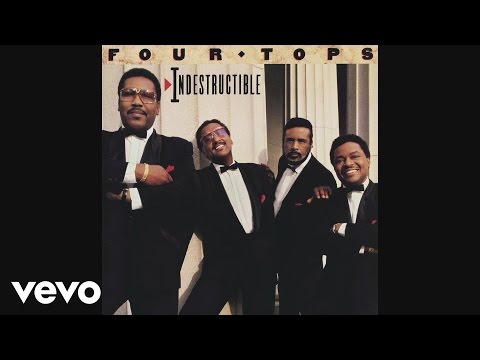
“Loco in Acapulco” by The Four Tops (Indestructible, 1988)
When The Four Tops recorded “Loco in Acapulco,” it brought the collaboration full circle. Dozier had already helped define the group’s sound decades earlier as part of Holland-Dozier-Holland, writing some of their most recognizable hits. This track reconnects him with that history in a very different era.
The song leans into escapism. Set against the backdrop of Acapulco, it paints a picture of heat, nightlife, and letting go. There’s a playful edge running through it, carried by a groove that feels relaxed but still tight. Collins adds his touch behind the kit and in the backing vocals, quietly tying the track to the rest of the Buster project.
What makes “Loco in Acapulco” work is how naturally it bridges generations. The Four Tops bring their unmistakable vocal style, while the production reflects the late ’80s without losing the warmth of earlier Motown recordings. It doesn’t try to recreate the past; it lets that legacy move forward without losing its identity.
“Two Hearts” by Phil Collins (Buster, 1988)
“Two Hearts” became the centerpiece of the soundtrack, both within the film and beyond it. Released as a single, it climbed to No. 1 on the Billboard Hot 100 and charted across multiple countries. It also picked up major recognition, including a Grammy and a Golden Globe, confirming its reach outside the movie itself.
At its core, the song is built on a simple but effective idea about connection. The lyrics describe two people so closely linked that they move as one, reflecting the relationship at the center of the story. Dozier later explained that it was meant to capture a love so strong it feels unified, not divided, giving the track its emotional anchor.
Musically, “Two Hearts” leans closest to classic Motown. The rhythm, the phrasing, and the overall structure echo the style Dozier helped shape years earlier. Collins delivers it with ease, letting that influence come through naturally. It ends up feeling less like a tribute and more like a genuine continuation of that sound in a new setting.