

6 Famous Band Names That Secretly Mean Something Clever
via "Vincinator" / YouTube
Before you even hear a song, a band name can already set the mood. It can sound dangerous, playful, mysterious, or completely offbeat. Sometimes that first impression is exactly the point, because a great name does more than label a group. It hints at the personality, attitude, or sense of humor waiting behind the music.
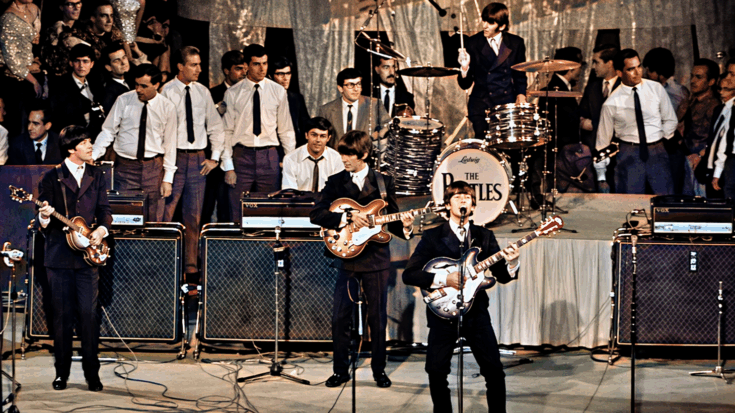
That is part of what has always made band names so interesting. Some are direct and easy to understand, while others hide a joke, a pun, or a reference that only becomes clear later. The Beatles remain one of the best-known examples, turning a simple wordplay into something unforgettable while also nodding to the kind of music that shaped them. Once you notice the cleverness, the name becomes even harder to forget.
Plenty of other famous groups pulled off the same trick. Their names may have seemed obvious at first, but many were built around sly meanings, inside jokes, or smart little twists that helped them stand out. In many cases, those ideas have been sitting in plain sight for years, quietly adding another layer to bands people thought they already knew.

Led Zeppelin Was Named After a Joke About Failure That Backfired Completely
The story behind Led Zeppelin’s name starts with a throwaway line that ended up aging in the opposite direction. During a conversation about forming a new supergroup, Keith Moon reportedly joked that the project would go down like a “lead balloon.” It was meant as a sarcastic prediction, the kind musicians toss around without thinking much of it.
Instead of brushing it off, Jimmy Page held onto the phrase and reshaped it. “Lead balloon” became “Led Zeppelin,” swapping the imagery of something crashing for something massive and airborne. The spelling tweak also helped avoid confusion over pronunciation, making sure people didn’t read “lead” the wrong way.
What started as a joke about failure turned into one of the most powerful names in rock history. The contrast is part of what makes it stick. A phrase meant to suggest disaster ended up attached to a band that defined an era, proving that sometimes the best ideas come from comments that were never meant to be taken seriously.
Lipps, Inc. Sounds Like a Business Name Until You Say It Out Loud
At first glance, Lipps, Inc. looks like a company you might find on a corporate letterhead. The comma and abbreviation give it a formal, almost legal feel, which makes it easy to miss what is really going on. It reads like a business name, and that is exactly what makes the trick work.
The moment you say it out loud, the meaning shifts. “Lipps, Inc.” becomes “lip sync,” a playful nod to performance and presentation, especially fitting for a disco act. The group behind the hit “Funkytown” leaned into that sense of style and rhythm, where image and delivery mattered just as much as the sound itself.
That simple wordplay is what gives the name its charm. It hides in plain sight, relying on how people read versus how they speak. Once you catch it, it feels obvious, but until then, it quietly does its job without drawing too much attention to itself.
Gorillaz Packed Multiple Meanings Into a Name That Fits Their Identity
The name Gorillaz carries more than one possible explanation, and that ambiguity fits the band perfectly. Created by Damon Albarn, the group was never meant to follow a traditional path. It blended animation, alternative music, and hip-hop influences into something that felt deliberately different.
One interpretation links the name to the rivalry between Blur and Oasis in the 1990s. Liam Gallagher once compared Blur to The Monkees, which may have pushed Albarn toward something more ironic and self-aware. Another angle traces the name back to “guerrilla,” hinting at the band’s unconventional, almost underground approach to making music.
There is also a simpler explanation that adds to the cleverness. A group of gorillas is called a band, which makes the name feel like a quiet inside joke. Whether intentional or not, it ties everything together. The layered meanings mirror the project itself, where visuals, music, and ideas all overlap in ways that are not immediately obvious.
Soft Cell Carries a Double Meaning That Fans Only Noticed Later
Soft Cell’s name was originally tied to a darker idea than it first appears. The phrase points to padded rooms, a reference the band used to reflect themes of isolation, control, and the strange pressures of modern life. It fit the mood of their music, which often leaned into uneasy emotions beneath catchy surfaces.
Over time, listeners started to hear something else in the name. “Soft Cell” sounds like the opposite of a “hard sell,” a phrase tied to persuasion and marketing. Whether intentional or not, that contrast lines up neatly with the band’s style, which never felt overly pushy or manufactured despite their success.
That added layer makes the name more interesting than it initially seems. Even if the second meaning came after the fact, it still works. It turns a straightforward concept into something with a bit more personality, giving the name a quiet cleverness that keeps it from feeling one-note.
The Pogues Hid a Gaelic Insult Behind a Radio-Friendly Name
Before they became known as The Pogues, the band went by a name that was much harder to broadcast. “Polk and Mahone” was derived from the Irish phrase “póg mo thóin,” which translates bluntly to “kiss my a**.” It was a fitting choice for a group that built its reputation on raw energy and a refusal to play things safe.
The problem was that not everyone found the joke as amusing as the band did. Complaints eventually reached the BBC, which made it clear that the name would not fly on air. That forced the group to rethink how they presented themselves without completely losing their edge.
The solution was to shorten the name to The Pogues, keeping the spirit of the original while making it easier to promote. The result still carried its roots for those who knew where to look, but it passed under the radar for a wider audience. That balance between rebellion and practicality became part of what made the band stand out.
Frank Zappa Turned a Censored Name Into a Smarter Punchline
Frank Zappa never shied away from pushing boundaries, and his band’s original name reflected that attitude. “The Mothers” was a nod to “motherf***ers,” a term that, in musician slang, could mean someone exceptionally skilled. It was meant as a compliment, even if it came wrapped in language that raised eyebrows.
That kind of wording did not sit well with record executives, who quickly pushed for a change. Rather than abandoning the idea entirely, Zappa leaned into the situation and reworked it into something more acceptable on paper. The constraint became part of the creative process instead of a limitation.
The new name, “Frank Zappa and the Mothers of Invention,” added a layer of humor that made the whole situation feel intentional. It played on the phrase “necessity is the mother of invention,” turning a forced edit into a clever twist. In the end, the revised name said just as much about Zappa’s personality as the original ever could.