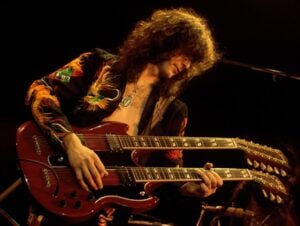


3 Iconic 1982 Duets That Somehow Never Aged

via Mostly Brenda / YouTube
Duets tend to age differently than most pop songs. When two voices share the spotlight, the focus shifts from performance to interaction. Lines are exchanged rather than delivered, emotions are tested rather than stated outright. Even in a three-minute single, there’s a sense of movement—tension, compromise, sometimes confrontation. That push and pull gives duets a built-in narrative edge that solo tracks rarely match.
At their best, duets feel almost theatrical without drifting into excess. There’s drama in the contrast between voices, in how phrasing overlaps or pulls apart, in how one singer responds to the other rather than the listener. That’s why classic pairings from earlier decades still resonate. Songs like “You’re All I Need To Get By” or “You Don’t Bring Me Flowers” endure not because of studio polish, but because they capture human exchange in real time—vulnerability, misunderstanding, and connection living inside the melody.
By 1982, pop music was changing fast, with new technology, sleeker production, and a sharper eye on the charts. Yet a handful of duets released that year resisted being tied to the moment. Instead of chasing trends, they leaned into storytelling, chemistry, and emotional balance. More than forty years later, these collaborations don’t sound frozen in time—they sound strangely current, as if the conversation they began never really ended.
“The Girl Is Mine” by Michael Jackson and Paul McCartney
When Thriller is discussed, the conversation usually jumps straight to its juggernaut singles and era-defining visuals. Yet the album’s first introduction to the public was far more understated. “The Girl Is Mine” arrived as a warm, conversational duet that leaned on charm rather than spectacle. It was Michael Jackson easing listeners into a new phase of his career, guided by one of his earliest heroes.
The song frames rivalry as something almost quaint. Instead of jealousy boiling over, Jackson and Paul McCartney trade polite insistence, each confident but never aggressive. Their voices contrast without clashing—Jackson light and playful, McCartney grounded and conversational. Even the spoken exchange at the end feels less like posturing and more like friendly sparring, turning what could have been melodrama into something approachable.
That restraint is what keeps the song from sounding dated. It doesn’t chase trends or rely on studio tricks to sell the story. Instead, it captures two artists meeting in the middle, letting melody and personality do the work. Decades later, it still plays like a snapshot of mutual respect rather than a novelty pairing, which gives it a timeless ease.

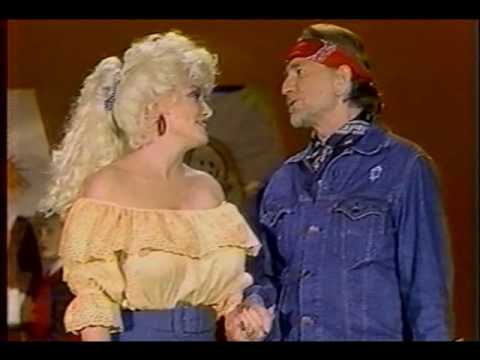
“Everything’s Beautiful (In Its Own Way)” by Dolly Parton and Willie Nelson
Dolly Parton and Willie Nelson approach optimism from very different places, and that contrast shapes the heart of this duet. Written by Parton, the song celebrates the quiet details of the natural world—clouds drifting, mountains standing still, the gentle reassurance found in observation. Her delivery is bright and open, as if wonder itself is something newly discovered.
Nelson enters from another angle entirely. His voice carries the weight of distance traveled and time passed, sounding reflective rather than wide-eyed. Where Parton marvels, Nelson affirms. He doesn’t challenge her optimism; he reinforces it, giving the song balance by grounding its innocence in experience. The result feels less like harmony for harmony’s sake and more like shared understanding.
That interplay keeps the song fresh. It doesn’t lean on sentimentality alone, nor does it drift into nostalgia. Instead, it captures two perspectives arriving at the same conclusion by different paths. The message remains intact because it’s rooted in contrast, not perfection—a quality that allows it to age without losing its emotional clarity.
“Up Where We Belong” by Joe Cocker and Jennifer Warnes
Joe Cocker’s voice had long been associated with grit, strain, and emotional wear, making him an unexpected fit for a sweeping romantic ballad. “Up Where We Belong” occupies a rare space in his catalog, polished yet sincere, elevated without sanding down his identity. Paired with Jennifer Warnes, the song found a balance between raw feeling and cinematic scale.
Warnes brings control and clarity to the duet, guiding its structure while allowing Cocker’s rasp to add gravity. Their voices don’t blend so much as complement one another, each emphasizing different emotional stakes. The contrast gives the song dimension, turning it into more than a soundtrack moment and grounding its grandeur in human vulnerability.
Its longevity owes much to that balance. While firmly tied to its film, the song doesn’t depend on visual memory to land its impact. The emotions it carries—aspiration, doubt, and hard-won belief—remain accessible outside their original context. That universality is why it still resonates long after the closing credits faded.