

The Music Duo Slash Always Found Interesting
via "berlin_mario" / YouTube
When Slash talks about music, it rarely stays inside the borders of rock. His reputation was built on searing guitar solos and a larger-than-life image, but his taste has always been broader than the stereotype suggests. Even early on, he gravitated toward music that carried attitude, not just technical skill.
That instinct shaped how he listened. Whether it was the swagger of Aerosmith or the raw edge of the grunge movement, what mattered was the feeling behind the sound. If a track felt alive, it earned his attention. If it played things safe, it didn’t last long on his turntable.
That openness made it easier for him to cross genres without hesitation. For Slash, music was never about categories. It was about energy, personality, and the sense that the artist was pushing against something. That mindset is what led him to admire a hip-hop duo that many rock fans would not have expected him to champion.
From Sunset Strip to the Streets
During the height of Guns N’ Roses, the band already carried a dangerous reputation. Their sound and attitude stood in contrast to the polished acts dominating the Sunset Strip. Still, even that chaos did not feel as unpredictable as what was coming out of hip-hop at the time.
Groups like N.W.A brought a level of confrontation that went beyond theatrics. Their music felt grounded in real tension, not just rebellion for show. Slash recognized that difference right away. It was not just noise or aggression. It was something rooted in lived experience.
That shift caught his attention because it mirrored what rock used to represent. The edge that once defined hard rock was evolving, and hip-hop was picking up that role. Slash did not see it as competition. He saw it as part of the same ongoing conversation in music.
The Pull of Dr. Dre and Snoop Dogg
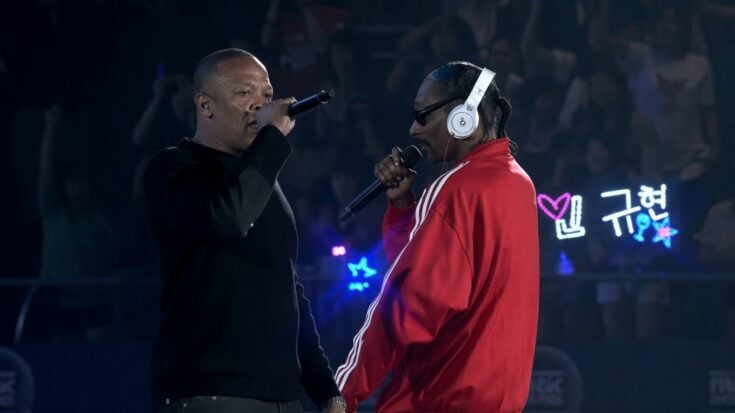
Among the artists he followed, the partnership between Dr. Dre and Snoop Dogg stood out the most. Their work had a distinct identity, built on smooth production but anchored by something deeper. It was not just catchy. It carried weight.
Albums like The Chronic and 2001 showed how far hip-hop production could go. The sound was polished, yet it never felt sterile. There was always a sense of movement within the tracks, a balance between groove and tension that kept listeners engaged from start to finish.
Slash appreciated that unpredictability. He once pointed out how they consistently brought something fresh to the table. Even if the style was far from his own, he could hear the same creative spark that drove great rock records. That connection mattered more than genre differences.
One Musical Language, Different Voices
What tied all of this together was Slash’s ability to hear music as a shared language. He understood that intensity could take many forms. The layered production of Public Enemy, shaped by teams like the Bomb Squad, carried the same urgency as a distorted guitar riff.
That perspective also explained why he remained open to artists across eras. Acts like N.E.R.D and Jay-Z continued to push hip-hop forward, experimenting with sound in ways that echoed what rock innovators once did. Meanwhile, some rock bands began to settle into safer territory.
In the end, Slash was never trying to become part of that world. He simply respected it. Even if he might not fit naturally into a studio session with hip-hop producers, he could still recognize the artistry. For him, the appeal of that duo was simple. They kept things interesting, and that was always enough.