

Why John Lennon Had to Keep Explaining This Song to His Band

When John Lennon stepped into his solo career after the breakup of The Beatles, he gained far more freedom to pursue the musical ideas that fascinated him. During his time with the band, experimentation was always part of the process, but it was balanced by the instincts of the other members. George Harrison had a curiosity for new sounds, and Paul McCartney often brought melodic structure that kept Lennon’s wilder ideas grounded.
Once Lennon was working on his own projects, that balance shifted. His collaborations with Yoko Ono pushed him further into avant-garde territory, sometimes producing recordings that puzzled even loyal fans. Tracks like “Revolution 9” had already shown how far he was willing to stretch the definition of popular music.
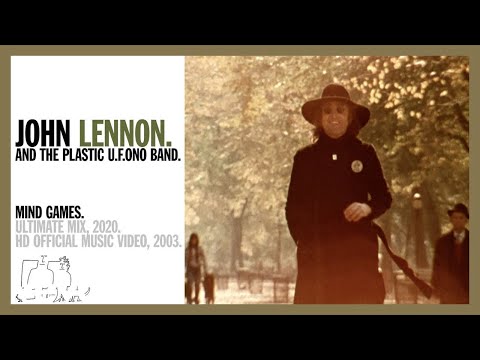
Yet one of the strangest moments in Lennon’s solo career involved a song that sounded relatively simple on the surface. “Mind Games,” released in 1973, would become one of his most recognizable solo singles. Behind the scenes, however, Lennon found himself repeatedly explaining a key musical idea to the American musicians in his band.
A Song That Seemed Simple on the Surface
“Mind Games” actually dated back to the early days after The Beatles’ breakup. Lennon had begun performing versions of the song as early as 1970, though it would take a few years before it was properly recorded. By the time it appeared as the title track of the Mind Games album in 1973, it carried a polished sound that made it feel like a natural follow-up to songs such as “Imagine” and “Jealous Guy.”
Listeners often heard the song as one of Lennon’s more accessible compositions. The melody was smooth, the arrangement was gentle, and the lyrics leaned toward the hopeful, idealistic tone that had defined much of his early solo work. Nothing about it seemed especially complicated.
Inside the studio, though, the track contained a section that confused the musicians around him. Lennon had slipped a stylistic influence into the middle eight that many of the players simply didn’t recognize. What sounded subtle to Lennon felt unfamiliar and puzzling to the American band members trying to perform it.
Trying to Introduce Reggae to His Band
The part that caused the confusion was the middle eight, which Lennon deliberately structured around a reggae rhythm. In the early 1970s, reggae was still far from mainstream in the United States. While the genre had already begun gaining attention in the UK and Jamaica, many American musicians were still unfamiliar with its feel and rhythmic patterns.
Lennon later recalled how he kept trying to explain the groove during the recording sessions. According to him, the process became almost humorous because the musicians struggled to grasp what he meant. To Lennon, the section was clearly reggae, but the band needed repeated guidance before they could capture the rhythm he wanted.
He eventually described the experience with some amusement. Lennon noted that the apparent orchestral texture on the track was mostly his own slide guitar playing just a few notes, while the middle eight was intentionally built around reggae. Explaining that style to American musicians in 1973, he said, proved harder than he expected.
A Style the World Would Soon Understand
What made the situation especially interesting is how quickly reggae would become more widely recognized. Within only a few years, artists such as Bob Marley and the Wailers would break into the American charts, helping introduce the genre to a much larger audience. By the mid-1970s, reggae rhythms were no longer mysterious to most listeners.
Looking back, Lennon’s attempt to include reggae elements in “Mind Games” seems surprisingly forward-thinking. He was experimenting with a style that had not yet fully crossed into the American mainstream. For the musicians in the room, it was unfamiliar territory.
In the end, the finished track didn’t sound radical at all to the public. “Mind Games” became one of Lennon’s best-known solo songs, remembered for its dreamy sound and hopeful message. Yet behind that smooth surface was a moment in the studio where Lennon had to pause, laugh, and patiently explain a rhythm that the world would soon come to know well.