

The Song That Cost Michael Bolton $5 Million — And Sparked a Major Legal Battle

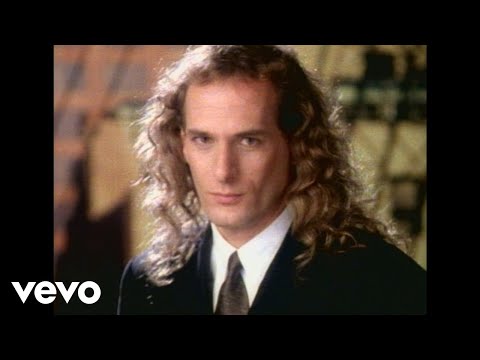
In 1991, Michael Bolton was riding one of the biggest waves of his career. His album Time, Love & Tenderness was a commercial powerhouse, fueled by emotional ballads and polished pop-soul singles. Among them was “Love Is a Wonderful Thing,” a lively track that climbed to No. 4 on the Billboard Hot 100 and dominated adult contemporary radio. For Bolton, it looked like another signature hit.
But behind the success, a storm was quietly brewing. The title — and parts of the melody — sounded very familiar to one group that had been making soul music since the 1950s: The Isley Brothers. They had recorded a song with the exact same title decades earlier, and when Ronald Isley heard Bolton’s version on the radio, the resemblance immediately caught his attention.
What followed was one of the more unusual copyright cases in pop music. The dispute would stretch across years of legal battles, expert testimony, and appeals, eventually ending with a multimillion-dollar judgment. A song that once symbolized Bolton’s chart dominance ultimately became known for something else entirely.
A Forgotten Soul Track From the 1960s
The story actually begins long before Bolton’s 1991 hit. In 1966, The Isley Brothers released their own song titled “Love Is a Wonderful Thing.” The group was already well established, thanks to earlier classics like “Shout,” “Twist and Shout,” and “This Old Heart of Mine.” Their influence on soul and R&B music was undeniable.
Yet their “Love Is a Wonderful Thing” didn’t make much of an impact at the time. Recorded earlier in the mid-1960s, the track was issued as a standalone single but never cracked the Billboard Hot 100. Compared to their other songs, it slipped quietly into obscurity and remained largely forgotten by the wider public.
That changed decades later. In March 1991, EMI Records included the old recording in a compilation called The Complete UA Sessions. The timing was remarkable, because just weeks later Michael Bolton released Time, Love & Tenderness, featuring his own song with the same title. While the two tracks existed in very different eras, the similarities would soon become impossible to ignore.

Ronald Isley Takes the Dispute to Court
When Ronald Isley first heard Bolton’s “Love Is a Wonderful Thing” on the radio, his reaction was complicated. At first, he actually enjoyed the song. In fact, he assumed Bolton had sampled or officially borrowed from the Isley Brothers’ original track and arranged proper credit for it.
That assumption quickly fell apart. When Isley checked the album credits, his name — and the names of his bandmates — were nowhere to be found. To him, the melody and hook sounded too close to be coincidence. Instead of feeling honored, he felt that something had been taken without permission.
In early 1992, Isley and his publishing company, Three Boys Music Corp., filed a copyright infringement lawsuit. The defendants included Bolton, his co-writer Andy Goldmark, Sony Music Entertainment, and several publishing companies tied to the release. The claim was simple: Bolton’s hit had borrowed essential elements from the 1966 Isley Brothers recording.
Bolton’s Defense and the Battle of Music Experts
Michael Bolton and his team strongly denied the accusation. Through statements issued by his manager, the singer insisted that “Love Is a Wonderful Thing” was an entirely original composition. They argued that the similarities were either coincidental or too vague to qualify as infringement.
The case eventually went to trial in 1994. To prove their claim, the Isley Brothers’ legal team brought in a musicologist — an expert who analyzes the structure of songs. The specialist compared the two recordings and pointed out multiple parallels between them.
According to the testimony, the similarities extended beyond just the title. The expert highlighted overlapping melodic phrases, the hook built around the title lyric, instrumental patterns, and the relationship between the verses and chorus. There was even discussion that Bolton, who admired classic soul music, could have heard the earlier track decades earlier and absorbed parts of it subconsciously.
The $5 Million Judgment That Followed
After examining the evidence, the jury ultimately sided with the Isley Brothers. They concluded that Bolton and Goldmark had indeed used elements from the earlier song without permission. The court then faced the next question: how much money the original artists were owed.
Jurors looked closely at the commercial success of Bolton’s single and the album it came from. They determined that 66% of the profits generated by the song itself were tied to the copied material. Because the single helped drive album sales, the jury also attributed 28% of Time, Love & Tenderness revenue to the infringement.
The final judgment totaled about $5.4 million. Sony Music was responsible for the largest portion of the payout, while Bolton and Goldmark were assigned smaller shares. Bolton appealed the decision multiple times, even attempting to bring the case before the U.S. Supreme Court, but the courts ultimately upheld the ruling. The long legal battle finally ended with the Isley Brothers receiving the compensation they had sought for years.