The Night Neil Young Shocked Glasgow by Busking on the Street

By 1976, Neil Young was already a towering figure in rock. He had stadium crowds, platinum records, and the unpredictable fire of Crazy Horse behind him. Yet he never quite seemed comfortable being separated from ordinary people by security barriers and spotlights. The folk instinct that shaped him in the 1960s still tugged at his sleeve.
That instinct followed him to Scotland in April of that year. Young had flown in with Crazy Horse for a headline performance at Glasgow Apollo, one of the city’s most beloved venues. A big night was planned. Cameras were ready. The schedule looked polished on paper.
But Neil Young has never been known for sticking to the paper.
Instead of retreating to a hotel suite or rehearsing behind closed doors, he drifted toward the streets. Guitar in hand, hair doing whatever it pleased, he stepped away from the machinery of rock stardom and toward something far simpler. Glasgow didn’t know what was coming.
https://twitter.com/kennylanglea/status/1862950199292744121
Cameras, Chaos, and a Slightly Late Arrival
A local film crew had been hired to document the visit. Director Murray Grigor and cinematographer David Peat arrived at the airport dressed neatly in jackets and ties, expecting, perhaps, a more conventional rock operation. They weren’t exactly immersed in the rock world, and they certainly weren’t prepared for Young’s loose, offbeat energy.
After missing a couple of connecting flights from London, Young finally appeared and reportedly gave the crew a simple instruction: capture something raw. No polish. No fuss. Just “funky” footage. It was less of a briefing and more of a vibe. The filmmakers quickly realized this assignment might not follow any normal script.
The mood turned even more unpredictable at the Albany Hotel’s penthouse lunch, where antics reportedly included a small fire involving decorative table settings. It was chaotic, slightly absurd, and oddly fitting. Folk music might carry a serious reputation, but this was the mid-’70s rock road version of folk—equal parts poetry and mischief.
From the Apollo to Central Station
Once the initial frenzy settled, Young took things in a different direction. Instead of basking in pre-show hype, he wandered out into the city and casually asked passersby for directions to the Bank of Scotland. It was disarming. Here was a global star pretending—or perhaps genuinely trying—to blend into everyday Glasgow life.
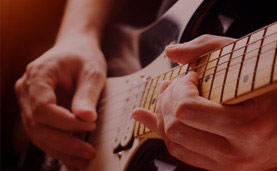
Eventually, he planted himself at the entrance of Glasgow Central Station. No grand introduction. No stage lighting. Just pavement, a guitar, and curious commuters moving through their day. According to Grigor, the busking idea was entirely Young’s. He wanted to see who might recognize him. Or maybe he didn’t care either way.
Reactions ranged from quiet curiosity to broad smiles. Some onlookers seemed unsure whether they were witnessing a prank or a private moment turned public. Recognition flickered across a few faces. Others simply paused because the music sounded good. Fame, in that setting, didn’t matter much. The song did.
“The Old Laughing Lady” in the Open Air
Among the tunes Young played that day was “The Old Laughing Lady,” a song from his early solo catalog. Stripped of studio production and arena amplification, it felt right at home in the open air. The melody drifted through the station entrance, mingling with city noise and train announcements.
There’s something fitting about that choice of song. It harks back to his folk beginnings, before the distortion-heavy experiments that would later influence grunge and alternative rock. For a moment, the future “Godfather of Grunge” was simply a troubadour again—one man, one guitar, and a small gathering of strangers.
The footage from that afternoon captures more than a stunt. It shows a musician reconnecting with the ground beneath his boots. No barricades. No velvet ropes. Just a spontaneous performance that turned an ordinary Glasgow afternoon into a story the city would remember.