

Rock Stars Whose Deaths Still Feel Unbelievably Untimely

Rock history is filled with lives that ended before their stories felt complete. Some artists burned brightly for only a handful of years, yet left behind music that still feels unfinished, as if the final chapters were torn out. When a songwriter dies young, the loss isn’t measured only in albums released or chart positions earned. It lingers in the quiet question of what might have come next.
This list looks beyond simple tragedy. It weighs two difficult ideas at once: the depth of an artist’s talent and the scale of the future they were denied. A musician who stepped away from recording long before their death leaves a different kind of absence than someone taken at the height of their creative powers. The real measure here is potential — the songs unwritten, the risks untried, the reinventions that never had the chance to happen.
The focus stays firmly on rock, though its edges blur into soul and hip-hop when the spirit fits. These are individual voices — singer-songwriters, frontmen, and instrumentalists — whose careers were still in motion when everything stopped. Ranking them is never exact, because greatness evolves with age. Some artists peak early. Others grow sharper and more daring in midlife. What makes these losses feel untimely is not just how young they were, but how much of their promise still hung in the air.
Janis Joplin – Died 1970, age 27
Janis Joplin emerged at a time when rock music was expanding in every direction, yet her voice felt rooted in something older and deeper. Drawing heavily from blues traditions, she brought a level of emotional directness that stood apart from many of her contemporaries. Performances with Big Brother and the Holding Company, especially on songs like “Piece of My Heart,” revealed a singer unafraid of sounding exposed.
By 1970, her artistry was evolving. The sessions for Pearl showed greater control and a more focused approach in the studio. Tracks such as “Me and Bobby McGee” suggested that she was learning how to shape her intensity rather than simply unleash it. The rough edges were still there, but they were being channeled with more intention.
Her heroin overdose in October 1970 ended that progression abruptly. At 27, she had already secured a place in rock history, yet there was clear evidence of growth underway. Many artists refine their craft in their 30s and 40s. Joplin never reached that stage, leaving behind not just a powerful catalog, but the strong sense that her most balanced work may still have been ahead.
Prince – Died 2016, age 57
Over the course of four decades, Prince built one of the most diverse catalogs in modern music. He wrote, arranged, produced, and performed with a level of control that few artists ever achieve. Albums like 1999, Purple Rain, and Sign o’ the Times demonstrated how comfortably he moved between funk, rock, R&B, and pop without diluting any of them.
What makes his passing particularly difficult to process is how active he remained. In the years leading up to 2016, he was still touring extensively, experimenting with stripped-down piano shows, and revisiting the vast archive of unreleased recordings stored in his vault. There was no visible slowdown. If anything, he seemed energized by the freedom to release music on his own terms.
His accidental fentanyl overdose in April 2016 halted that momentum. At 57, he was still performing at a high level and exploring new directions. Many artists enter a reflective and creatively rich period in their later years. Prince appeared positioned for exactly that kind of phase. The silence that followed felt sudden and incomplete.
Stevie Ray Vaughan – Died 1990, age 35
During the early 1980s, Stevie Ray Vaughan helped bring blues-rock back into the center of the conversation. His playing combined technical precision with deep emotional weight, drawing from Texas blues traditions while pushing them forward. Songs like “Texas Flood” and “Pride and Joy” reintroduced intensity to a genre that had drifted from mainstream attention.
His personal struggles with addiction threatened to derail his career, but by the late 1980s he had committed to sobriety. The album In Step reflected that renewed clarity. The guitar work remained powerful, yet there was greater discipline and structure behind it. Critics and fans alike began to talk about long-term impact rather than short bursts of brilliance.
The helicopter crash in August 1990 ended that renewed chapter at just 35. Vaughan had already overcome his most difficult period and appeared ready to expand his artistry even further. Blues-rock had regained a leading figure, and he was entering what could have been his most stable and productive years. The interruption makes his loss feel especially unfinished.
Jim Morrison – Died 1971, age 27
As the frontman of The Doors, Jim Morrison brought a literary sensibility into mainstream rock. His lyrics drew from poetry, film, and philosophy, giving songs like “The End” and “Riders on the Storm” a darker, more introspective edge than much of the music surrounding them at the time. Onstage, his presence could be unpredictable, which only deepened the band’s mystique.
By the early 1970s, the pressures of fame and legal trouble had begun to weigh heavily on him. After relocating to Paris in 1971, he appeared to be stepping away from the chaos that had come to define his public image. There were indications that he wanted to focus more seriously on writing and possibly reshape his identity beyond the volatile rock persona.
His death in July 1971 ended that transition before it had a chance to take shape. At 27, Morrison had already influenced a generation of musicians, yet his career felt unresolved. Many artists evolve significantly after their initial breakthrough years. Morrison never had the opportunity to test what that evolution might have looked like.
Tom Petty – Died 2017, age 66
Tom Petty built a catalog that felt stitched into the fabric of American radio. With Tom Petty and the Heartbreakers, he wrote songs that were plainspoken but never simple — “American Girl,” “Free Fallin’,” and “I Won’t Back Down” carried a directness that made them endure. His voice, nasal and unmistakable, delivered heartbreak and defiance with equal clarity.
What made his passing so difficult to absorb was how active he still was. In 2017, he had just completed a 40th-anniversary tour with the Heartbreakers, playing lengthy sets that proved his stamina and commitment. He wasn’t coasting on nostalgia. He was still writing, still planning, still performing with the same steady fire that defined his early years.
Petty’s death from an accidental drug overdose at 66 felt abrupt, not inevitable. Rock history is full of artists who fade slowly; Petty didn’t fit that pattern. He remained creatively engaged until the end, suggesting there were more albums and tours ahead. The loss wasn’t about unfinished youth, but about momentum suddenly cut off.
David Bowie – Died 2016, age 69
Throughout his career, David Bowie consistently reshaped his sound and image. From the glam-rock theatrics of The Rise and Fall of Ziggy Stardust and the Spiders from Mars to the experimental textures of Heroes and the polished pop of Let’s Dance, he resisted staying in one artistic lane for long. Reinvention became part of his identity.
After a decade away from the spotlight, he returned with The Next Day in 2013, followed by Blackstar in January 2016. Both albums demonstrated that his creative instincts remained sharp. Blackstar in particular showed a willingness to explore complex arrangements and layered themes, signaling that he was still engaged with contemporary ideas.
His death from liver cancer, just two days after the release of Blackstar, reframed that final album. At 69, Bowie was still working at a high level, and there was little evidence of creative decline. Many artists continue producing strong work well into their later years. With Bowie, it felt reasonable to expect further reinvention. That expectation ended suddenly.
John Lennon – Died 1980, age 40
John Lennon had already reshaped popular music before he turned 30. As a founding member of The Beatles, he helped expand what rock songwriting could hold — confession, satire, protest, tenderness. Tracks like “Strawberry Fields Forever” and “Across the Universe” showed a restless mind that rarely settled for the obvious line. Even after the band dissolved, that instinct for provocation and introspection remained intact.
His solo years were uneven but daring. He could deliver the stark vulnerability of “Mother,” the raw fury of “Working Class Hero,” and the fragile optimism of “Imagine” within the same stretch of creative life. After a period away from the spotlight to focus on family, he returned in 1980 with Double Fantasy, sounding reflective but energized. There was a sense that he was entering a new chapter rather than closing one.
His murder outside the Dakota in December 1980 cut that renewal short. At 40, Lennon was hardly a relic of the ’60s; he was an artist still wrestling with ideas about fame, politics, and fatherhood. The tragedy lies not only in the violence of his death, but in the conversations — musical and cultural — that ended with it.
Bob Marley – Died 1981, age 36
When Bob Marley began gaining international attention in the 1970s, reggae was still largely unfamiliar outside Jamaica. Through albums like Exodus and Kaya, he helped carry the genre onto global radio while keeping its political and spiritual core intact. His songwriting balanced accessibility with conviction, which allowed messages about injustice and liberation to travel far beyond their origins.
The late 1970s were a period of rapid expansion for him. Major tours brought reggae into arenas across Europe and North America. His influence reached beyond music into cultural and political conversations. Even as illness began to affect him, he continued recording and performing, maintaining a pace that suggested long-term plans rather than decline.
Cancer took his life in 1981 at just 36. Marley had already become a global symbol, yet his career still felt in motion. Reggae’s international identity was still forming, and he remained central to that development. The music endures, but the sense of interrupted momentum has never faded.
Kurt Cobain – Died 1994, age 27
In the early 1990s, Nirvana shifted the direction of mainstream rock almost overnight. Nevermind connected with an audience that felt alienated from the excess of the previous decade, and Kurt Cobain’s writing gave that mood a voice. Beneath the distortion and aggression were carefully constructed melodies and lyrics that moved between irony and vulnerability.
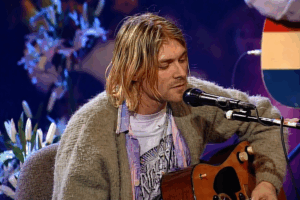
The follow-up, In Utero, showed a songwriter pushing against expectations. The production was harsher, the tone more confrontational, yet it also revealed depth and control. Performances like Nirvana’s MTV Unplugged set suggested that Cobain was capable of moving into quieter, more nuanced territory. There were hints of growth beyond the image that had formed around him.
His suicide in April 1994 ended that progression at 27. The mythology of youth and anguish has often overshadowed the craft in his writing, but the arc of his short career points toward further evolution. Many artists do their most refined work later in life. Cobain never reached that stage, and that absence continues to shape how his legacy is viewed.
Buddy Holly – Died 1959, age 22
In the late 1950s, rock and roll was still finding its structure, and Buddy Holly helped give it one. He wrote his own material, worked closely with his band in the studio, and favored clean, melodic arrangements that would later influence generations of songwriters. Tracks like “That’ll Be the Day” and “Peggy Sue” were concise, direct, and built around strong hooks rather than flash.
At just 22, he was already experimenting with orchestration and more ambitious recording techniques. His move to New York suggested a desire to broaden his sound beyond early rockabilly frameworks. The confidence in his songwriting hinted at a long career of refinement rather than a brief burst of youth-driven energy.
The plane crash in February 1959 ended that progression almost at the starting line. Holly’s catalog is relatively small compared to those he inspired — from The Beatles to countless others — and that contrast makes the loss sharper. He wasn’t nearing the end of a run. He was laying foundations.
Jimi Hendrix – Died 1970, age 27
By the late 1960s, the electric guitar had already become central to rock music, but Jimi Hendrix expanded its vocabulary almost overnight. Through feedback, distortion, and controlled improvisation, he treated the instrument as a space for exploration rather than decoration. Albums like Are You Experienced and Electric Ladyland revealed both technical mastery and an ear for layered studio experimentation.
His performance at Woodstock in 1969 remains one of the most discussed moments in rock history, yet it represented only one phase of a rapidly developing artist. In 1970, Hendrix was working on new material that suggested a shift toward funk and more complex rhythmic structures. He was moving beyond the psychedelic framework that had first defined him.
His death in September 1970 at 27 left that evolution incomplete. The question has never been whether he was influential — that is clear — but how far he might have pushed his sound had he lived longer. Hendrix had already transformed the instrument. The trajectory suggested he was still far from finished.
Freddie Mercury – Died 1991, age 45
Onstage, he commanded attention with precision and confidence. As the frontman of Queen, Freddie Mercury combined theatrical instincts with disciplined musicianship, helping shape songs that balanced grandeur and intimacy. “Bohemian Rhapsody,” “Somebody to Love,” and “We Are the Champions” showcased not only vocal range but a willingness to stretch rock songwriting into unconventional forms.
Throughout the 1980s, even as musical trends shifted, Mercury remained central to the band’s identity. His collaboration with opera singer Montserrat Caballé on Barcelona reflected his continued curiosity and refusal to stay confined to one style. Despite declining health in his final years, he continued recording with Queen, contributing to albums such as Innuendo.
His death from AIDS-related complications in November 1991 closed a career that still carried creative momentum. At 45, he was not an aging legacy act but an active performer and writer. Queen endured, but Mercury’s voice was inseparable from its core. The sense of untimeliness comes from knowing that his ambition had not diminished — only his time had.
https://twitter.com/BoredWeb3/status/866459093321383936