

Neil Young Reveals What Made Crazy Horse So Special
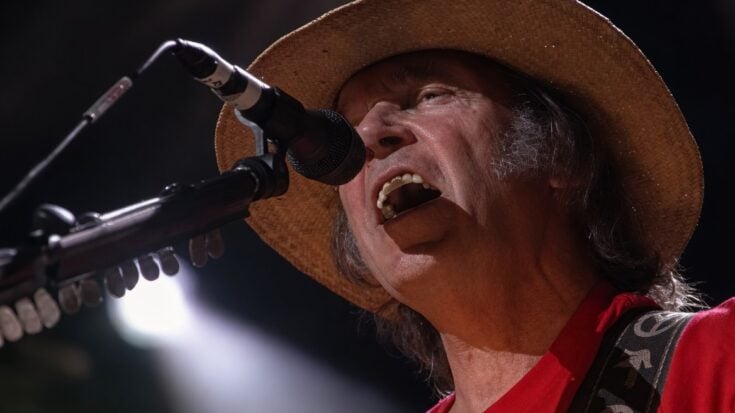
via "Farm Aid" / YouTube
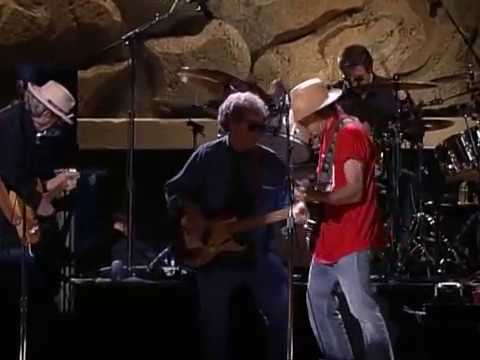
When Neil Young calls on Crazy Horse, the direction of the music tends to shift. The sound gets looser, louder, and more unpredictable. It is not polished in the traditional sense, but that has always been the point. With them, Young leans into something raw that feels closer to instinct than design.
Across decades, their collaborations have carried a distinct identity. Albums like Rust Never Sleeps and Ragged Glory show how the band could move from ragged distortion to hypnotic repetition without losing momentum. Even later works like Psychedelic Pill continued that same spirit, stretching songs into long, wandering explorations.
That connection did not come from technical perfection. It came from trust and familiarity built over time. With members like Billy Talbot and Ralph Molina staying the course for decades, Crazy Horse became more than a band. They became a musical language Young could return to whenever he wanted to say something that needed space to breathe.
The Groove That Never Stays Still
One of the defining traits of Crazy Horse lies in how they handle rhythm. Songs rarely sit in one place for long. Instead, they drift, expand, and reshape themselves while still holding onto a central pulse. This is especially clear in tracks like “Cowgirl in the Sand,” where the groove feels steady and unstable at the same time.
Young once described how the band could move through different musical ideas without breaking the flow. Billy Talbot and Ralph Molina would lock into a pattern, only for subtle shifts to emerge from within it. The result gave the illusion that the song was constantly evolving, even when it never fully left its core structure.
That approach changed how Young played guitar. His long solos did not feel excessive because the band underneath him was always shifting. Instead of leading every change, he responded to what was already happening. It created a conversation rather than a performance, which is why those extended jams rarely feel repetitive.
The Missing Piece That Held It Together
At the center of that early magic was Danny Whitten. Young did not hesitate when describing his importance. He called Whitten “the key,” not because he dominated the sound, but because he balanced it. His guitar work acted as a counterweight, filling the spaces that Young deliberately left open.
Whitten had a way of guiding the band without drawing attention to himself. His rhythm playing could subtly redirect the entire group, shifting the feel of a song without disrupting it. That skill is especially noticeable on Everybody Knows This Is Nowhere, where his presence gives the music a grounded but flexible backbone.
“Cowgirl in the Sand” stands as a clear example of what he brought. The song stretches past ten minutes, yet it never loses focus. Whitten’s playing anchors the movement, allowing Young to wander freely on top. It is less about lead versus rhythm and more about two guitars moving together in a shared direction.
Loss, Legacy, and the Sound That Endured
The chemistry that defined those early years did not last forever. Danny Whitten died from a heroin overdose, a loss that deeply affected Young. It was not just the absence of a bandmate, but the disappearance of a musical partner who helped shape his sound during a crucial period.
That grief found its way into Tonight’s the Night, a record often associated with darkness and reflection. Even though it is part of the so-called Ditch Trilogy, the emotional imprint of Crazy Horse, and especially Whitten, is impossible to ignore. The record feels like a response to everything that had been lost.
Still, the essence of Crazy Horse carried on. With Billy Talbot and Ralph Molina remaining, the band continued to evolve alongside Young. The sound may have shifted over time, but its core remained intact. That sense of looseness, risk, and instinct is what made Crazy Horse special, and why Young keeps returning to them when it matters most.