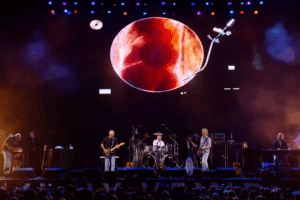


Graham Nash Says This Kind of Music Will Never Die

via "Don Brown" / YouTube
When Graham Nash first crossed paths musically with Stephen Stills and David Crosby, there was no grand plan to form a band. Each of them already had a path—Nash with The Hollies, Stills with Buffalo Springfield, and Crosby carving his own direction after leaving The Byrds. It wasn’t strategy that brought them together, but something far less predictable.
That moment happened in the orbit of Joni Mitchell, whose Laurel Canyon home became the setting for one of rock’s most famous origin stories. A simple gathering turned into something else entirely when Stills and Crosby played “You Don’t Have to Cry.” Nash asked to hear it again—and then again—until instinct took over and he added a high harmony.
What followed wasn’t just a good jam session. It was the spark that formed Crosby, Stills & Nash. Nash would later describe that moment as transformative, as if something clicked into place instantly. Three distinct voices, coming from different musical worlds, suddenly sounded like they had always belonged together.
The Power of Three Voices
Unlike many bands of their time, Crosby, Stills & Nash didn’t rely on a traditional rhythm section to define their sound. Instead, they leaned heavily into vocal interplay. Their harmonies didn’t just support the songs—they were the songs. The absence of drums or bass in many arrangements gave their voices more room to breathe.
Tracks like “Suite: Judy Blue Eyes” and “Helplessly Hoping” showed how far they could push this approach. With little more than guitars and tightly woven vocals, they created something rich and layered. It wasn’t minimal in feeling—it was precise, almost architectural in how each voice fit into the other.
That focus set them apart during a time when rock music was increasingly getting louder and more rhythm-driven. While others chased volume and experimentation, Crosby, Stills & Nash refined something older and more delicate. Their music proved that complexity didn’t always require more instruments—sometimes it just needed better listening.
Melody Over Everything
For Nash, the secret behind the lasting appeal of that era’s music comes down to something simple: melody. Not just any melody, but one that stays with you. He has often pointed out that people return to those songs because they can remember them, hum them, and feel them long after they’ve ended.
He doesn’t dismiss modern music in the process. In fact, he has acknowledged the strength of contemporary genres, including hip-hop, even citing tracks like “This Is America” by Childish Gambino as powerful works. But he draws a line between appreciation and preference.
What he values most are songs with clear melodic identity and lyrics that connect instantly. That combination, in his view, is what keeps older music alive across generations. It’s not nostalgia alone doing the work—it’s structure, clarity, and emotional access built into the songwriting itself.
Why This Kind of Music Endures
Decades later, the songs from Crosby, Stills & Nash—and their contemporaries—continue to find new listeners. Whether it’s “Big Yellow Taxi” or “Helplessly Hoping,” these tracks don’t feel locked in time. They carry something that translates, even as trends shift around them.
Part of that endurance comes from how the music was built. There’s very little excess. The focus on melody and harmony means the songs aren’t tied to production styles that might age quickly. Strip them down, and they still work exactly as intended.
That’s why Nash remains confident that this kind of music will never disappear. As long as people respond to melody and honest lyrics, there will always be space for it. Styles may evolve, but the core of what makes a song resonate hasn’t really changed—and likely never will.