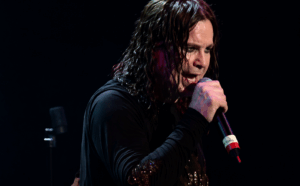


Dave Mustaine Opens Up About Missing James Hetfield and Lars Ulrich
For decades, the relationship between Dave Mustaine and his former Metallica bandmates has been defined as much by conflict as by shared history. Early thrash metal lore often paints the story in sharp lines—betrayal, bitterness, and rivalry—but time has softened the edges. In a recent interview with Spin, Mustaine spoke with surprising openness about where things stand today.
Rather than rehashing old grievances, Mustaine framed the conversation around memory, perspective, and truth. He acknowledged that none of the parties involved fully remembers every detail of what happened in the early ’80s. What matters more now, he suggested, is the willingness to talk honestly and accept that multiple versions of the past can exist at once.
That approach sets the tone for a reflection that feels less like score-settling and more like closure. As Mustaine looks toward the final chapter of his career, his comments reveal a man more interested in reconciliation than revisionism.
Rebuilding Trust After Years of Distance
When asked about his current relationship with James Hetfield and Lars Ulrich, Mustaine described ongoing conversations that aim to clarify rather than inflame. He spoke about acknowledging conflicting memories and accepting that the truth often lives somewhere in between. It’s a far cry from the hostile narratives that once dominated headlines.
Mustaine emphasized that these discussions aren’t about assigning blame decades later. Instead, they’re about understanding how miscommunication and youth shaped decisions that affected everyone involved. He made it clear that reconciliation is an active process, not a single moment of forgiveness.
What stands out most is how casually Mustaine spoke about the effort itself. There was no grand declaration of peace—just the reality that relationships, even fractured ones, require work if they’re going to evolve.
Love, Loss, and the Weight of Leaving
One of the most revealing moments came when Mustaine admitted that the intensity of past conflicts was rooted in something more emotional than competitive. He said plainly that he loved those guys—and that love was precisely why the fallout hurt so much. The idea of leaving the band, he explained, was once impossible to fully process.
This reframing casts the early Metallica split in a different light. Rather than a simple firing, it becomes a moment of emotional rupture that neither side was equipped to handle at the time. That sense of loss lingered, even as both parties went on to build legendary careers.
Age, Mustaine noted, has changed how he approaches these memories. With more years behind him than ahead, he’s focused on making interactions count. There’s still a sharp edge to his humor, but it’s now paired with self-awareness and restraint.
Legacy, Closure, and the End of the Road
The timing of Mustaine’s comments adds extra weight to them. According to Loaded Radio, Megadeth’s upcoming self-titled album and 2026 world tour will mark the band’s final run. After more than four decades, the end is officially in sight.
Looking back, Mustaine’s brief tenure in Metallica—from 1981 to 1983—was short but consequential. As reported by Blabbermouth, his dismissal came just before the band recorded their debut album, with Kirk Hammett stepping in. That moment reshaped the trajectory of thrash metal history.
Yet Mustaine’s story doesn’t end in bitterness. His decision to re-record “Ride the Lightning” on his final album, noted by The Irish Times, feels like a quiet olive branch. It’s a full-circle gesture from a musician who turned rejection into one of metal’s greatest success stories—and who now seems at peace with how it all unfolded.
https://twitter.com/HeavyMetal_999/status/1718242955331338658