

Billy Joel Facts That Even Lifelong Fans Might Not Know

“Piano Man” still drifts out of barroom speakers. “Just the Way You Are” remains a wedding staple. “My Life” and “It’s Still Rock and Roll to Me” continue to soundtrack long drives and late-night radio. For more than four decades, Billy Joel has been woven into everyday American life, his songs so familiar that they can feel almost personal. Few artists have managed to balance massive commercial success with that kind of lasting intimacy.
The numbers alone are staggering: 33 Top 40 hits, six Grammy Awards, and over 150 million records sold worldwide. He filled arenas, dominated radio playlists, and became a fixture on the front pages as much as the charts. Yet statistics only tell part of the story. Success can create a polished public image, one that often smooths over the complicated, stubborn, and deeply human details behind it.
Beyond the spotlight and the sing-alongs lies a far more layered figure — a songwriter shaped by setbacks, sharp humor, private battles, and unexpected passions. Lifelong fans may know every lyric, but there are still corners of his life that rarely make the headlines. The following facts, quotes, and little-known stories offer a closer look at the man behind the piano — not just the legend, but the person.
1. Billy Joel Became One of the Best-Selling Artists Ever – Despite Not Wanting to Sing
Billy Joel built a legacy around his voice, yet early on he had little interest in being a frontman. He saw himself more as a composer and pianist, someone who could write songs for others rather than stand in the spotlight delivering them. That reluctance makes his rise all the more remarkable. Over four decades, he transformed from a hesitant singer into one of the most recognizable voices in American music.
The numbers confirm just how massive that transformation became. According to the RIAA, Joel ranks among the top-selling artists in history, with more than 82 million units certified in the United States alone. Only the Beatles, Garth Brooks, Elvis Presley, Led Zeppelin, and the Eagles have moved more. He even outsold contemporaries like Michael Jackson, Elton John, and Bruce Springsteen — a staggering achievement for someone who once doubted he should be at the microphone at all.
2. Billy Joel Became One of the Best-Selling Artists Ever – Despite Not Wanting to Sing
Arena tours often come with a familiar frustration: prime seats snapped up by scalpers or filled by corporate guests who barely know the setlist. Joel grew tired of looking down from the stage and seeing the front rows occupied by people who weren’t fully invested in the music. Rather than accept it as the cost of doing business, he made a change.
He began giving away many of his best seats to fans who couldn’t otherwise afford them. His reasoning was simple — he wanted to perform for people who were genuinely thrilled to be there. Joel has said he doesn’t care to play for “big shots.” He prefers to see faces lit up with excitement, not indifference. It’s a small but telling gesture from an artist who has always seemed more comfortable with regular fans than with elite circles.
3. A Long-Awaited Reunion With His Father in Germany
Billy Joel’s relationship with his father, Howard Joel, was complicated. Howard left the family when Billy was young, and the two were estranged for years. Their separation left a lasting emotional mark, one that would quietly influence Joel’s songwriting. The longing and reflection in “Vienna,” for instance, are often connected to his feelings about his father and his father’s Austrian roots.
In 1995, while touring Europe, Joel reunited with Howard in Vienna and later invited him onstage in Nuremberg, Germany. The moment carried weight far beyond a typical guest appearance. Father and son performed together after years apart, closing a personal chapter in front of thousands of witnesses. It was a rare, deeply human scene in the middle of a massive international tour.
4. Billy Joel Once Claimed He Saw a Ghost in His Hamptons Estate
Even rock legends aren’t immune to a good ghost story. During a town hall event with fellow Hampton residents, Joel shared an unusual experience from his former estate. He said he once saw what appeared to be a nineteenth-century woman brushing her hair inside the house — a vision that felt vivid enough to leave a lasting impression.
The property was eventually sold to Jerry Seinfeld and underwent significant renovations. Whether the supposed apparition lingered after the remodel remains a mystery. Joel never positioned himself as a paranormal enthusiast, but the story adds an unexpected layer to his life offstage — a reminder that even the “Piano Man” has had moments he couldn’t quite explain.
5. “Big Shot” Took Aim at Bianca Jagger — From Mick’s Point of View
When 52nd Street arrived in 1978, listeners debated who inspired the sharp-tongued “Big Shot.” Billy Joel later confirmed that the song was written with Bianca Jagger in mind, though not in the way gossip columns might expect. He imagined the lyrics from Mick Jagger’s perspective, sketching a portrait of a glamorous socialite who had perhaps taken the party a little too far.
The timing made the rumor mill spin even faster. Mick and Bianca Jagger separated not long after the song’s release, and their high-profile lifestyle had already fueled plenty of headlines. Joel’s track never names names, but its biting tone and wry delivery gave it an extra edge. It remains one of his most playful lyrical character studies — part satire, part society snapshot.
6. “Just the Way You Are” Began as a Birthday Gift
Before it became a wedding staple and a radio fixture, “Just the Way You Are” started as something far more personal. Joel wrote it as a birthday present for his first wife and business partner, Elizabeth Weber. At the time, he didn’t even see it as a single — just a heartfelt gesture set to music.
The song took on a life of its own. It climbed to No. 3 on the Billboard Hot 100, marking Joel’s first Top 10 hit, and earned him Grammy Awards for both Record of the Year and Song of the Year. What began as a private gift became one of the defining love songs of the 1970s, cementing his reputation as more than just a sharp storyteller — he could write straight from the heart as well.
7. The Stranger Outsold a Giant of the ’70s
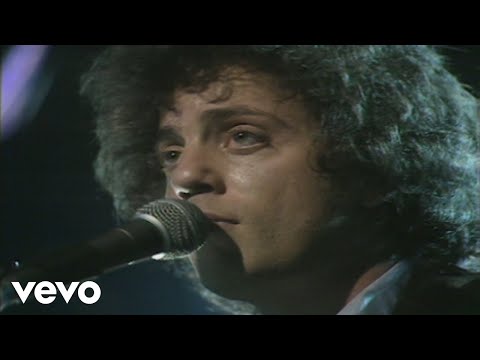
Joel’s breakthrough collaboration with producer Phil Ramone yielded The Stranger in 1977, an album packed with songs that would become staples: “Movin’ Out (Anthony’s Song),” “Just the Way You Are,” and “Scenes From an Italian Restaurant.” The record didn’t just perform well — it exploded. It eventually went multi-platinum and became one of the best-selling albums of the decade.
Its commercial success was so strong that it even outsold Simon & Garfunkel’s Bridge Over Troubled Water, long considered one of the era’s towering achievements. Decades later, Rolling Stone included The Stranger in its list of the 500 Greatest Albums of All Time. For Joel, it marked the moment he shifted from promising songwriter to cultural mainstay.
8. Phil Ramone Helped Shape Joel’s Golden Era
Phil Ramone wasn’t just another producer passing through the studio. A musical prodigy who performed violin for Queen Elizabeth II at age 10, Ramone opened his own recording studio by 20 and built a reputation for polished, radio-ready sound. When he teamed up with Joel in the mid-1970s, the chemistry was immediate.
From 1977 to 1986, Ramone produced a string of Joel’s most successful albums, guiding the sound that defined his commercial peak. Their partnership balanced Joel’s storytelling instincts with Ramone’s technical precision and pop sensibility. Together, they crafted records that still dominate classic rock playlists, shaping a run that many fans consider his golden era.
9. Turnstiles Marked a Return to New York — and Creative Control
Disillusioned with the Los Angeles scene and the direction his career seemed to be heading, Billy Joel packed up and went back to New York in the mid-1970s. The move wasn’t just geographic; it was personal. He wanted to reconnect with the city that shaped him and bring that identity into his music. The result was Turnstiles, his third studio album, steeped in New York imagery and working-class perspective.
At first, he wasn’t satisfied with how the record turned out. Rather than accept it, Joel made the unusual decision to re-record much of it and produce it himself. Commercially, it didn’t make a huge splash, but songs like “New York State of Mind” and “Miami 2017 (Seen the Lights Go Out on Broadway)” revealed his growing confidence as both songwriter and producer. In hindsight, Turnstiles feels like a turning point — the moment he fully claimed his voice.
10. He Once Performed as “Bill Martin” Before “Piano Man” Took Off
Before he became “The Piano Man,” Billy Joel was just another musician trying to get by in Los Angeles. After signing with Columbia Records in 1972, he relocated to California and spent months playing piano at the Executive Room Bar under the pseudonym Bill Martin. The alias wasn’t about reinvention — it was about survival. He needed steady work while his recording career slowly took shape.
Those nights behind the bar proved invaluable. Surrounded by regulars, drifters, and lonely drinkers, Joel absorbed the characters who would later populate “Piano Man.” The song, written during that stretch, became his first major hit and introduced him to a national audience. What started as a side gig under a borrowed name ultimately defined his public identity.
11. A Brief and Troubling Encounter With Heroin
Joel has never pretended that the 1970s were entirely clean or uncomplicated. In a later interview, he admitted that while in Amsterdam in the late ’70s, he tried heroin. The experience was intense and disorienting. He described being propelled into a mental space he wasn’t prepared to handle, saying it took him somewhere far removed from reality.
Unlike many of his peers, Joel did not spiral into prolonged addiction. He has spoken about the incident with a sense of caution rather than bravado. The moment stands as a reminder of how easily the era’s excesses could have derailed even the most successful artists. For Joel, it became a line he chose not to cross again.
12. Early Touring Resilience After a Rocky Start
Joel’s early career wasn’t smooth. His debut album, Cold Spring Harbor (1971), suffered from a mastering error that sped up the recordings and altered his vocal pitch. The technical flaw hurt its reception and left him frustrated. Still, instead of retreating, he took the show on the road to promote the flawed release.
That tour carried him across the United States and even to Puerto Rico, where he performed at the Mar y Sol Pop Festival. Despite the album’s issues, his live performance won over the crowd. He earned three encores and a standing ovation — proof that whatever problems existed in the studio, his stage presence was undeniable. Long before the arena tours and residency runs, he had already learned how to win an audience the hard way.
13. A Mastering Error Turned Cold Spring Harbor Into a Disaster
Billy Joel’s 1971 debut, Cold Spring Harbor, should have been his introduction to the world. Instead, it became a cautionary tale. A mastering mistake caused the entire album to be pressed at the wrong speed, making his voice sound unnaturally high — closer to a cartoon chipmunk than the grounded, conversational tone he was known for in clubs. The error wasn’t subtle, and it undercut the record before it had a real chance.
The damage was immediate. Critics dismissed it, and sales were weak. Joel has said he was furious when he first heard the final product. The album would later be corrected in reissues, but at the time, it felt like a career-ending blow. Rather than quit, he absorbed the setback and kept moving — a pattern that would repeat throughout his early years.
14. He Wanted to Write Hits for Others — Not Sing Them
Before he embraced the spotlight, Joel saw himself primarily as a songwriter. Performing wasn’t the dream; composing was. He imagined crafting songs that other artists would record, staying behind the scenes while someone else handled the stage lights and interviews. The idea of being the face attached to the music didn’t appeal to him.
Industry advice shifted his direction. He was told that if he wanted people to hear his songs, he needed to record them himself. That push led him to make a solo album and step up to the microphone. The reluctant singer eventually became one of the most recognizable voices of his era — proof that sometimes practicality shapes destiny more than ambition.
15. A Desperate Moment at 19 Nearly Ended Everything
Long before sold-out arenas and Grammy wins, Joel faced a personal low point. At 19, his band Atilla had collapsed, and his girlfriend had left him. Overwhelmed and depressed, he attempted suicide by drinking furniture polish. He later explained, with dark humor, that he chose it because he thought it might taste better than bleach.
The attempt failed, and he survived — an outcome that would prove pivotal. Joel has spoken candidly about the incident in later years, using humor to soften the memory but never denying its seriousness. That moment of despair became part of the complicated emotional landscape that would inform much of his songwriting in the years to come.
16. Before the Ballads, There Was a Loud Metal Duo Called Atilla
It’s hard to reconcile the polished piano-driven hits with the fact that Joel once played in a heavy metal duo called Atilla. Formed with drummer Jon Small, the band leaned into sheer volume and distortion. Joel handled organ through towering amplifiers, pushing the sound to levels that bordered on punishing.
According to Joel, the group played roughly a dozen gigs, and audiences often couldn’t tolerate the volume. People would literally leave the room. The project was short-lived and commercially unsuccessful, but it shows a different side of his musical curiosity. Long before he became synonymous with melodic pop-rock, he experimented with raw amplification and intensity — even if the experiment cleared a few clubs in the process.
17. He Rode a Motorcycle to Woodstock — and Left Early
In August 1969, Billy Joel hopped on his motorcycle and headed to Woodstock, drawn by the promise of seeing Jimi Hendrix and the Who in person. Like countless young musicians of his generation, he wanted to witness what felt like a defining moment in rock history. The festival was chaotic, muddy, and legendary — but it didn’t hold him for long.
Joel left after about a day and a half. The reason wasn’t philosophical or musical. It was practical. He later joked that the lack of proper toilet facilities made the decision for him. While others endured the full weekend in the name of countercultural devotion, Joel opted for comfort. Even at 20, he wasn’t romanticizing misery.
18. He Missed His Final Exams — and Didn’t Graduate With His Class
At Hicksville High School, Joel wasn’t a troublemaker or a slacker. He did well academically, but by his senior year, music had already taken priority. He was playing late-night gigs at a local piano bar, earning real money and building experience. On the eve of his English and gym finals, he worked late — and slept through the exams.
Without those credits, he couldn’t graduate with his class. The diploma had to wait. Decades later, in 1992, his high school revisited his record. Taking into account his public speeches and accomplishments, administrators decided he had met the spirit of the requirements. Twenty-five years after missing those tests, Joel finally walked across the stage to receive his diploma.
19. Raised Jewish, Fascinated by Catholic Ritual, Ultimately an Atheist
Billy Joel was born to non-practicing Jewish parents, but his childhood religious exposure was eclectic. As a kid, he sometimes attended Catholic Mass with friends. He has described the experience as theatrical and mysterious — filled with ritual that felt dramatic and symbolic, even if he didn’t fully believe it.
As an adult, Joel has identified himself as a “cultural Jew,” acknowledging his heritage without embracing organized religion. He has also been open about being an atheist. The mix of cultural identity and skepticism reflects the same independent streak that runs through much of his music — respectful of tradition, but not bound by it.
20. Seeing The Beatles on TV Changed His Life
On August 14, 1965, Joel watched The Beatles perform on The Ed Sullivan Show. He was 15 years old. Until that moment, rock music hadn’t seemed like a realistic career path. It was entertainment, not a future. Then he saw four young men who didn’t look like distant stars. They looked familiar — like kids from working-class neighborhoods who had simply plugged in and taken over.
That broadcast altered his trajectory. Joel later said he realized that if they could do it, maybe he could too. Years afterward, he would stand on the stage of the Ed Sullivan Theater himself, performing for a new generation. The cycle felt complete: a teenager once inspired by a television performance became the artist lighting that same spark in someone else.
21. Before the Piano, He Was Winning Fights in the Ring
Long before audiences associated him with a grand piano, Billy Joel’s first serious pursuit was boxing. As a kid growing up on Long Island, he dealt with bullying and decided to fight back — literally. Training in the ring gave him confidence and discipline, and he quickly proved he wasn’t just dabbling. As an amateur, he won his first 22 bouts and even competed in Golden Gloves events.
The run ended after he broke his nose in what became his final fight. That injury marked a turning point. Joel chose to step away from boxing and channel his energy into music instead. The toughness he developed in the ring didn’t disappear, though. It carried into his career — the resilience to take hits, get back up, and keep going.
22. His Father’s Escape From Europe Shaped His Family Story
Billy Joel was born in the Bronx on May 9, 1946, to Jewish parents Howard and Rosalind Joel. His father’s story stretched back to Austria, where Howard had trained as a classical pianist before World War II. As antisemitism intensified, he fled Europe — first to Switzerland, then eventually to the United States by way of Cuba. The journey was one of survival and reinvention.
After divorcing Rosalind, Howard returned to Vienna, and father and son were separated for more than two decades. That absence left a deep mark on Joel’s life and writing. The combination of musical heritage and personal distance shaped him in complicated ways — a classical pianist’s son who grew up without him, eventually carving out his own identity at the keyboard.