

’60s Songs That Tried — and Somehow Managed — to Capture the Meaning of Life

via @Swingin’ Pig / YouTube
The 1960s had a habit of forcing big questions to the surface. It was a decade shaped by protest and progress, optimism and anxiety, all colliding at once. Political violence, social change, technological leaps, and generational clashes made everyday life feel unstable, urgent, and impossible to ignore. Against that backdrop, music became less about escape and more about reflection—songs started circling ideas of purpose, identity, and what it even meant to exist in a moment like that.
What makes many of these songs endure isn’t that they offered answers. They didn’t. Instead, they leaned into uncertainty. Writers in the ’60s were far more interested in observing, questioning, and capturing fleeting truths than laying down grand conclusions. Their lyrics often feel like snapshots—small, human moments that quietly point toward something larger without spelling it out.
That’s the spirit guiding this list. These aren’t the only ’60s songs that grappled with life’s meaning, but they reflect how wide that search could be. From longing and isolation to irony and hope, each track approaches the question from a different angle, revealing how messy, contradictory, and deeply human the answers can be.
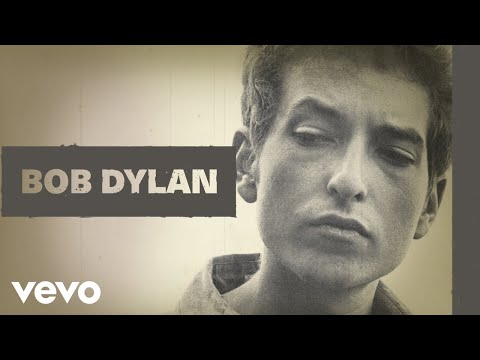
“The Times They Are A-Changin’” by Bob Dylan (The Times They Are A-Changin’, 1964)
Written by someone barely out of his teens, “The Times They Are A-Changin’” didn’t try to explain the chaos of the early ’60s so much as acknowledge it head-on. Dylan captured a moment when the ground felt like it was shifting under everyone’s feet—politically, socially, and generationally. The song arrived while protests, assassinations, and cultural revolutions were colliding, and it sounded less like a sermon than a warning flare sent up into the night.
What gives the song its lasting power is how easily it slides into any era marked by uncertainty. Its message isn’t locked to one cause or movement. Instead, it reflects a recurring human experience: watching the world change faster than people can adapt. Some listeners feel energized by that momentum, while others feel stranded by it, unsure whether to resist or surrender. Dylan’s lyrics don’t take sides—they simply observe the tide coming in.
Musically, the song draws from older folk traditions, borrowing cyclical patterns that allow the verses to stack tension one line at a time. That repetition reinforces the idea that history moves in loops, not straight lines. Combined with Dylan’s sharp phrasing and unmistakable delivery, the result became more than a protest song—it became a reminder that change is inevitable, whether anyone feels ready for it or not.
“Plastic People” by The Mothers of Invention (Absolutely Free, 1967)
Instead of chasing spiritual enlightenment, “Plastic People” goes for something just as revealing: mockery. Fronted by Frank Zappa, the Mothers of Invention approached life’s meaning from the angle of absurdity, suggesting that sometimes the most honest response to society is laughter. The song takes aim at conformity, shallow consumer culture, and the exhaustion that comes from being surrounded by people who feel unreal.
There’s something deeply familiar in its cynicism. The song taps into that universal sensation of moving through crowds and feeling disconnected, whether in a mall, at a party, or in school hallways. Zappa mixes social commentary with pointed humor, skewering political excuses and cosmetic identities alike. The effect isn’t bitterness—it’s recognition, the kind that makes listeners smirk because it hits close to home.
Beneath the satire, though, there’s a quieter sense of disappointment. The song suggests that authenticity and love can’t survive when everything becomes artificial. That realization gives “Plastic People” its strange emotional weight. By tearing down false surfaces, it arrives at a blunt truth: a meaningful life can’t be built out of imitation, no matter how polished it looks.

“I Wish I Knew How It Would Feel to Be Free” by Nina Simone (Silk & Soul, 1967)
When Nina Simone recorded “I Wish I Knew How It Would Feel to Be Free,” she transformed a jazz instrumental by Billy Taylor into something far more direct and urgent. With lyrics added and emotion laid bare, the song became an expression of longing that resonated far beyond the Civil Rights Movement. It spoke to anyone who had ever felt trapped—by society, by expectations, or by circumstance.
The song’s structure leans heavily on gospel traditions, grounding its message in something communal and familiar. Simone’s piano anchors the melody while her voice carries both hope and frustration in equal measure. Each line feels like a confession rather than a performance, making the desire for freedom sound personal instead of abstract.
What gives the song its lasting gravity is how closely it mirrored Simone’s own life. She wasn’t content to sing about freedom as an idea—she chased it, often at great personal cost. That tension between aspiration and reality sits at the heart of the song, turning it into a meditation on what freedom means, how elusive it can be, and why the search itself matters.

“Stories of the Street” by Leonard Cohen (Songs of Leonard Cohen, 1967)
From its opening lines, “Stories of the Street” captures a feeling many people recognize but struggle to articulate: being surrounded by others while feeling profoundly alone. Cohen frames the city as both vast and intimate, a place where chance encounters, missed connections, and quiet longing all coexist. The song doesn’t search for drama—it finds meaning in stillness, in watching life unfold from the margins.
Much of the song’s power comes from how it balances personal desire against larger movements beyond individual control. Love, politics, and identity drift through the verses without ever settling into neat conclusions. Cohen suggests that meaning isn’t found by stepping outside the crowd, but by standing within it and noticing how easily people can disappear into it.
There’s also an undercurrent of danger and vulnerability running through the imagery. Whether inspired by travel, political tension, or inner turmoil, the song places beauty and despair side by side. That contrast feels intentional. Life, as Cohen presents it here, is rarely one thing at a time—it’s risk and tenderness sharing the same breath.

“I Think I Understand” by Joni Mitchell (Clouds, 1969)
“I Think I Understand” arrives with no grand gestures. Instead, it unfolds quietly, offering reflection rather than resolution. Taken from Mitchell’s early folk period, the song focuses on fear—not as an enemy to defeat, but as a force that shapes how people move through the world. The lyrics feel less like a declaration and more like a thought spoken aloud.
At its core, the song explores a simple but difficult truth: fear can either guide or consume. Mitchell frames it as terrain to be crossed, full of unstable ground and moments of clarity. That metaphor resonates because it mirrors real experience—growth rarely comes without hesitation, and understanding often arrives only after uncertainty has done its work.
One of the song’s most striking elements is how it draws inspiration from storytelling outside of music. Influenced by fantasy literature, Mitchell borrows language that turns emotional struggle into a kind of journey. That blend of imagination and self-examination reinforces the song’s quiet insight: meaning doesn’t always come from answers, but from learning how to carry light through unfamiliar places.