

Why Neil Young Turned His Old Car Into a Song
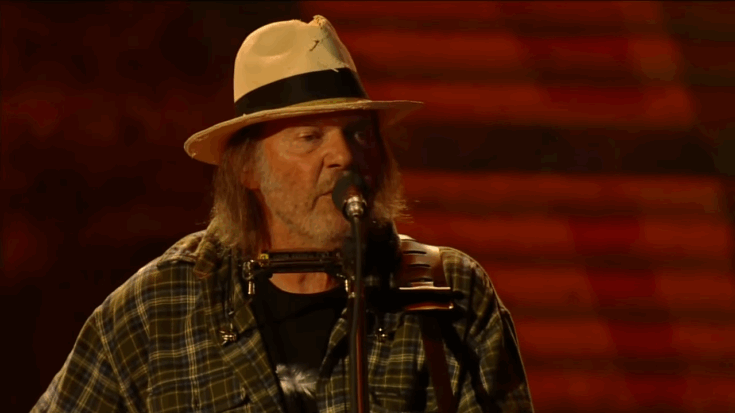
via "Farm Aid" / YouTube
Music has always been a way to remember people, places, and moments that refuse to fade. Artists often write songs for lost friends, former lovers, or passing eras. That tradition runs deep, but not every tribute follows the expected path.
When Neil Young wrote one of his most heartfelt songs, the subject was not a person at all. Instead, it was something far more unusual. It was a machine that had carried him through a critical chapter of his life.
That choice says a lot about how memory works. Sometimes, the objects that move with us through our early struggles end up holding just as much emotional weight as the people around us. In Young’s case, one worn-out vehicle became tied to his identity as a musician on the rise.
The Hearse That Started It All
In the early 1960s, Young was still figuring things out. He had the ambition and the songs, but he needed a way to get from one gig to another. With help from his mother, he bought a used 1948 Buick Roadmaster hearse, a vehicle that was impossible to ignore.
The car came with all the details you would expect from its former purpose. It had curtains, carpeting, and even a sliding tray designed for caskets. For a young musician, though, it was perfect. That same tray made loading instruments effortless, turning a funeral car into a practical touring machine.
Young gave it a name that matched its odd charm: Mortimer Hearsebug. It was not just transportation. It became a mobile base for his early career, carrying his band, his gear, and the beginnings of everything that would come later.
When Mort Fell Apart on the Road
The end came in a way that almost felt surreal. While driving through Ontario with his band, the hearse suddenly gave out. The transmission dropped, leaving the car stranded and effectively finished.
What stands out is not just the breakdown itself, but how Young remembered it. Instead of frustration or panic, he recalled laughter. The situation was absurd enough that it turned into one of those moments where everything feels hopeless and hilarious at the same time.
Without the money to repair it, there was no saving Mort. The car that had carried his early life simply stopped working, leaving him to move forward without it. Still, the memory of that breakdown stayed with him, waiting to be reshaped into something else.
“Long May You Run” and the Life After
Years later, Young found a way to bring Mortimer Hearsebug back, not as a vehicle, but as a song. In 1976, he recorded “Long May You Run” with Stephen Stills. On the surface, it sounds like a warm, reflective message of endurance.
Once you know the story, the lyrics take on a different meaning. Lines about lasting through change and shining in the sun point back to that old hearse. Even a reference to its final days appears in the song, though Young adjusted the details slightly.
In the end, the song works because it treats the car like something more than metal. It becomes a symbol of youth, struggle, and the fragile beginnings of a career. Turning Mort into music allowed Young to preserve that part of his life, giving a broken-down vehicle a kind of immortality that only a song can provide.