

The Surprising Ways Classic Rock Still Shows Up in Today’s Songs
via BBC/ YouTube
Classic rock is often treated like a sealed chapter in music history, something preserved on classic-hits radio stations or boxed sets rather than an active ingredient in new songs. That perception makes sense on the surface. Sampling culture grew out of late-1970s block parties and early hip-hop scenes, where DJs pulled from soul, funk, jazz, and R&B records that were already built for rhythm, repetition, and movement.
For a long time, that difference mattered. Early producers were working with the records they knew best, often drawn from family collections, and those sounds became the backbone of hip-hop’s DNA. When rock did break through, it felt like a moment rather than a trend, with collaborations like Run-DMC’s reworking of “Walk This Way” showing that rock and hip-hop could share space without canceling each other out.
That view hasn’t aged particularly well. Over the past few decades, classic rock has quietly threaded itself into modern hip-hop and pop through sampling, interpolation, and melodic borrowing. Certain drum breaks, riffs, and vocal fragments from the 1960s, ’70s, and ’80s now resurface in places that don’t immediately register as “rock-influenced,” even when listeners are hearing them more often than the originals.
“The Big Beat” by Billy Squier
Billy Squier’s “The Big Beat” barely registered as a hit when it arrived in 1980, but its fate ended up being far stranger and far more influential than chart placement ever suggested. Built around an oversized, echo-heavy drum pattern, the song landed awkwardly between rock radio trends of the time. What sounded excessive to some listeners turned out to be exactly what early hip-hop producers were looking for: a break that hit hard, repeated cleanly, and filled space without clutter.
Its second life began quietly, popping up in early rap records before exploding once DJs started pulling breaks from the Ultimate Breaks & Beats compilations. From that point on, “The Big Beat” became unavoidable in hip-hop’s formative years. Tracks tied to the Roxanne Wars leaned heavily on it, and the beat’s blunt-force simplicity made it a natural backbone for lyrical sparring and street-level storytelling.
Decades later, the same drum pattern resurfaced in places few would’ve predicted. Jay-Z used it to anchor “99 Problems,” while Dizzee Rascal stripped it down even further for “Fix Up, Look Sharp,” reshaping the sound for a new generation. What once felt like an overcooked rock experiment ended up becoming one of the most durable rhythmic templates in modern music, earning Squier an unlikely reputation as a quiet architect of hip-hop’s sound.
“Straight to Hell” by The Clash
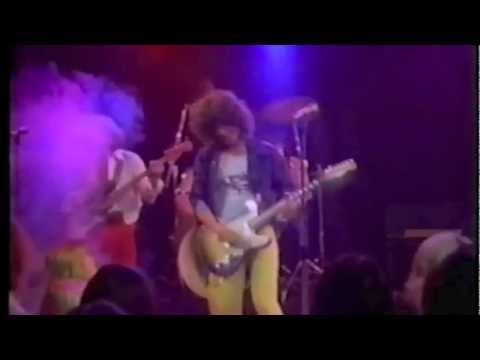
M.I.A.’s “Paper Planes” didn’t just dominate radio in the late 2000s—it carried a mood that felt both playful and sharply political. Beneath the gunshots and cash registers sat a woozy, descending loop that made the song instantly recognizable. That uneasy rhythm did more than support the hook; it mirrored the track’s themes of displacement, suspicion, and cultural friction.
That loop traces directly back to The Clash’s “Straight to Hell,” a song already steeped in stories of migration and abandonment. Originally written about children left behind by British soldiers abroad, the track carried a sense of drift and unease that translated seamlessly into M.I.A.’s world. The sample didn’t just sound good—it carried the same emotional weight, reframed for a different era.
Producer Diplo has admitted the song was assembled loosely, with repeated verses and an unfinished structure that somehow worked better because of its rough edges. The connection between The Clash and M.I.A. went beyond geography or genre; it was a shared instinct for turning political tension into something catchy without sanding off the discomfort. In that sense, “Paper Planes” didn’t borrow from punk history so much as continue it.

“Your Song” by Elton John
Not every modern nod to classic rock comes through heavy sampling or looping. Sometimes the reference is smaller, quieter, and more emotionally pointed. That approach defines “Scared to Live,” a ballad that stands apart from much of The Weeknd’s catalog through its restraint and clarity. The song leans into the long tradition of vulnerable pop songwriting rather than chasing contemporary trends.
That lineage becomes unmistakable near the song’s climax, when the line “I hope you don’t mind” appears—lifted directly from Elton John’s “Your Song.” The moment lands softly, but its impact is immediate, calling up decades of pop ballad history in a single phrase. Rather than hiding the influence, the song invites the comparison, letting familiarity deepen the emotion instead of distracting from it.
Because the interpolation uses both melody and lyrics, Elton John and Bernie Taupin received songwriting credit, a detail that reflects how openly the connection was handled. John has spoken warmly about the result, praising the way the reference fits naturally into a modern framework. The exchange feels less like borrowing and more like a conversation across generations, with one classic line continuing to say exactly what it always did.

“Here, There and Everywhere” by The Beatles
The Beatles’ catalog has long been treated as sacred ground, tightly controlled and rarely licensed for outside use. Sampling their recordings has proven especially difficult, with several high-profile attempts either blocked outright or pushed into unofficial releases. That reluctance has only added to the mystique surrounding the rare moments when their music does surface in contemporary songs.
One of those moments arrived quietly on “White Ferrari,” a fragile standout from Frank Ocean’s 2017 album Blond. Rather than looping a recognizable hook, Ocean threaded a subtle reference to “Here, There and Everywhere” into the song’s melodic phrasing and lyrical structure. The connection isn’t immediately obvious, but once heard, it reshapes the way the song feels—less like a modern R&B track borrowing from the past, and more like a private homage.
Ocean has openly credited The Beatles with helping him break through a prolonged bout of writer’s block, and that influence extends beyond sound alone. Lines in “White Ferrari” closely echo the emotional cadence of the earlier song, and both John Lennon and Paul McCartney received songwriting credit as a result. The interpolation works because it never announces itself, allowing one of the band’s most tender compositions to linger just beneath the surface.

“Crazy Train” by Ozzy Osbourne
Mid-2000s club rap thrived on excess, volume, and relentless energy, and few tracks embodied that spirit better than “Let’s Go.” Built for packed dance floors and blaring car stereos, the song paired three of the era’s loudest voices with a beat that felt deliberately over the top. Its aggression was part of the appeal, pushing bravado into something almost theatrical.
That intensity was amplified by the track’s opening sample, lifted directly from the unmistakable intro of “Crazy Train.” The riff had already crossed genre lines long before rap got hold of it, but its placement here gave it a new kind of menace. Stripped from its original context, the guitar line became a rallying cry rather than a rock anthem, driving the song forward with barely contained chaos.
Rather than pushing back against the reuse, Ozzy Osbourne reportedly embraced it. Trick Daddy later recalled that sample clearance came easily, with minimal upfront cost and no resistance from the veteran rocker. The exchange benefited both sides: a classic riff found new life in a modern hit, and another generation was introduced to one of heavy metal’s most recognizable openings without even realizing it.