

The Most Addictive Songs of 1970 That Still Get Stuck in Your Head

There’s something about 1970 that refuses to fade quietly into history. The year felt like a hinge between eras — the idealism of the ’60s still lingering in the air, while a slicker, more radio-ready future for pop and rock was starting to take shape. Soul, folk, R&B, and guitar-driven anthems all shared space on the charts, and somehow it worked. Turn on a station from that year and it sounds less like a time capsule and more like a perfectly shuffled playlist.
What really defined the biggest songs of 1970 wasn’t just chart position. It was replay power. The hooks were strong enough to follow you out the door. The choruses practically invited you to sing along, whether you wanted to or not. A good groove didn’t hurt either. When a rhythm locked in and a melody wrapped itself around it, the song settled into your brain and set up camp. That’s how you end up humming something decades later without even realizing where it came from.
More than five decades on, certain tracks still feel effortless and immediate. The bright R&B pulse of “Signed, Sealed, Delivered (I’m Yours),” the spiritual sweep of “My Sweet Lord,” and the irresistible ache of “Band of Gold” haven’t lost their grip. They’re the kind of songs that pop up in a grocery store aisle or on a road trip playlist and suddenly you’re singing every word. That kind of staying power isn’t accidental. It’s addictive.
“Signed, Sealed, Delivered (I’m Yours)” by Stevie Wonder, (Signed, Sealed & Delivered)
From the first ecstatic shout, this track feels like sunlight bursting through a window. Stevie Wonder doesn’t ease you in — he grabs you by the collar and pulls you straight into the celebration. The bass line climbs with purpose, the horns punch through with bright, brassy confidence, and the whole arrangement feels alive. It’s the kind of song that makes your shoulders start moving before you’ve given them permission.
A lot of that pull comes from the melody itself. The verses build upward step by step, guiding your ear higher until it lands on that triumphant declaration: “Here I am, baby.” When the chorus hits, it feels earned. The structure is simple, but it’s crafted with care. Each element — rhythm, harmony, hook — stacks neatly on top of the other, and suddenly you’re inside a chorus that refuses to let go.
The charts backed up the feeling. The song reached No. 3 on the Billboard Hot 100 and topped the R&B chart for six weeks in 1970. Over the years, it’s been covered and sampled dozens of times, a testament to how sturdy the songwriting really is. More than 50 years later, it still feels immediate. That’s not nostalgia talking. That’s pure replay value.

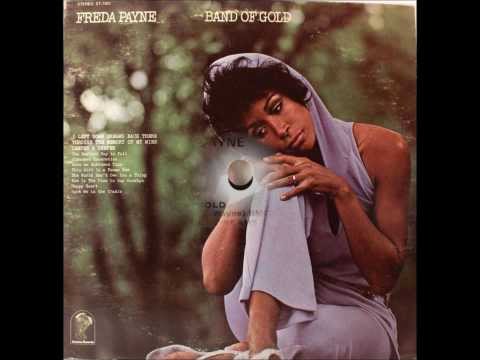
“Band of Gold” by Frieda Payne (Band of Gold)
There’s a strange magic to the way this song opens. The chorus arrives almost immediately, and it doesn’t waste time setting the mood. Freda Payne delivers heartbreak wrapped in a melody that practically glows. The contrast is what makes it stick. The story is bruised and uncertain, yet the sound is bright enough to hum along with.
The bass riff that launches the track is unforgettable. It’s clean, confident, and just a little dramatic. As Payne sings about a honeymoon night gone wrong, the mystery lingers. Was the groom overwhelmed? Unfaithful? Simply not ready? The lyrics never spell it out. Instead, they circle the feeling of abandonment, which somehow makes the hook even stronger. You fill in the blanks while singing along.
Despite its bittersweet premise, “Band of Gold” climbed to No. 3 in the United States and hit No. 1 in the United Kingdom, holding that spot for six weeks. Payne herself reportedly worried she might be too mature to sell the story, but the emotion in her voice tells a different story. The song’s staying power proves that a great hook can carry even the saddest storyline straight into pop immortality.
“I Want You Back” by The Jackson 5 (Diana Ross Presents The Jackson 5)
When this song hit No. 1 in early 1970, it felt like something new had arrived. The Jackson 5 burst onto the scene with a groove that was tight, playful, and impossibly catchy. At just ten years old, Michael Jackson sounded like he’d been doing this for decades. His voice carried urgency, innocence, and polish all at once.
That opening guitar chord is iconic for a reason. It announces itself boldly, then makes room for a rhythm section that locks into one of Motown’s most irresistible grooves. Piano and bass dance together underneath layered harmonies that feel effortless. The chorus — “Oh baby, give me one more chance” — lands with perfect timing, engineered to echo in your head long after the track fades out.
Originally intended for another Motown act, the song was reshaped by The Corporation into a showcase for the Jackson brothers. The decision paid off instantly. “I Want You Back” didn’t just launch a career; it set a new standard for pop craftsmanship. Decades later, it still feels kinetic and fresh, proof that when melody and rhythm align this well, they don’t age.

“Arizona” by Mark Lindsay (Arizona)
There’s a glossy, radio-ready charm to this track that feels instantly of its time. Mark Lindsay stepped out from Paul Revere & the Raiders with a song that managed to bottle up the late-’60s counterculture and hold it up to the light. It’s playful, a little teasing, and surprisingly affectionate. Beneath the shine, you can hear the tension of an era trying to reconcile flower power with middle America.
The groove eases in with a simmering guitar and bass exchange, almost conversational. Lindsay sketches his free-spirited “Arizona” with equal parts admiration and exasperation, pointing out her rainbow shades and San Francisco leanings. Then the chorus arrives, bright and brassy, practically daring you not to sing along. The way he stretches out “Ari-ZO-na” gives the hook room to breathe — and to lodge itself firmly in your memory.
Although released in late 1969, the song didn’t break into the Billboard Top 10 until February 1970, cementing its place among that year’s defining hits. It’s polished pop with just enough edge to feel rooted in its cultural moment. Decades later, that blend still works. The melody carries the spirit of its time without feeling trapped in it, which is probably why it’s so hard to shake.

“My Sweet Lord” by George Harrison (All Things Must Pass)
When George Harrison stepped out on his own after The Beatles split, he didn’t arrive quietly. “My Sweet Lord” opened his solo era with a warm acoustic strum and that unmistakable slide guitar gliding through the mix. The melody feels gentle at first, almost meditative, then the layered vocals rise and repeat until the song turns into something communal. It’s devotional without being heavy-handed.
The hook is deceptively simple. Harrison builds it gradually, adding harmonies and rhythmic insistence until you’re chanting along almost by instinct. The repetition becomes the point. Each “hallelujah” stacks onto the last, and suddenly the song feels bigger than a standard pop single. It’s intimate and expansive at the same time, which helps explain why it lingers in your head long after it ends.
Of course, the track’s legacy includes the well-known copyright case involving “He’s So Fine,” written by Ronnie Mack and recorded by The Chiffons. The court ruled in 1976 that Harrison had committed “subconscious” infringement, and the matter was settled years later. Yet none of that dulled the song’s impact. After Harrison’s death in 2001, “My Sweet Lord” returned to No. 1, spanning more than three decades between chart-topping runs. Controversy aside, its melodic pull remains undeniable — soft, sweet, and impossible not to hum.