5 Times Rock Songs Stole the Show in Movies
via "Otávio Fontes" / YouTube
Film scenes often linger in memory for reasons that go beyond the visuals. A single song, placed at the right moment, can shift the mood, sharpen the emotion, and turn an already strong scene into something unforgettable. Directors have long leaned on rock music for this purpose, knowing that a familiar riff or lyric can instantly connect with an audience.
Rock songs carry their own history before they ever appear on screen. When they are woven into a film, that history blends with the story being told, giving the moment extra weight. Viewers do not just hear the music, they feel it, and that feeling tends to stay long after the credits roll. In many cases, the song and the scene become inseparable in the minds of fans.
This kind of pairing does not happen by accident. It comes from careful choices that match tone, timing, and emotion in a way that feels natural. The result is a set of scenes that stand out not just for what happens, but for how they sound. Here are five moments when rock songs did more than support a movie, they helped define it.
“Bohemian Rhapsody” by Queen in Wayne’s World
Long before it became a staple of sing-alongs across generations, “Bohemian Rhapsody” already had a reputation as one of rock’s boldest recordings. Its shifts in tempo and style gave it a theatrical quality that felt larger than most radio hits of its time. That same unpredictability made it a perfect fit for a moment on screen that needed both humor and energy.
In Wayne’s World, the song comes alive inside a cramped car packed with friends on their way to a show. What begins as a casual listen quickly turns into a shared ritual, as each passenger locks into the song’s operatic peaks and hard-rock payoff. The scene builds naturally, moving from playful singing to full commitment, until everyone is thrashing in sync.
That burst of chaos turned into something more lasting than a simple gag. The moment reshaped how audiences interacted with the song, turning it into a communal experience tied to friendship and spontaneity. Even today, when the track plays, many people picture that car ride, as if the film permanently rewired how the song is meant to be enjoyed.

“Stuck in the Middle With You” by Stealers Wheel in Reservoir Dogs
A cheerful melody can sometimes feel more unsettling than silence, especially when placed against the wrong kind of image. That contrast sits at the center of one of the most talked-about scenes in Reservoir Dogs. The song itself, light and almost playful, sets up an expectation that the film immediately turns on its head.
As the tension builds, the character played by Michael Madsen treats the moment with a disturbing sense of ease. He flips on the radio, hears “Stuck in the Middle With You,” and begins to move along with it as if nothing is out of place. The casual dancing, paired with what follows, creates a jarring disconnect that is hard to shake.
That choice of music turns the scene into something far more memorable than the action alone. The lyrics echo the trapped position of the victim, while the upbeat rhythm makes the violence feel even colder. It is a reminder that the right song, used the wrong way, can amplify tension in ways a traditional score never could.

“Voodoo Child (Slight Return)” by The Jimi Hendrix Experience in Withnail and I
Music tied to a specific era can instantly ground a film in its time, and few artists capture the late 1960s quite like Jimi Hendrix. His sound carries a sense of freedom, but also a restless edge that fits stories about characters drifting through uncertain moments. That balance plays out perfectly in Withnail and I.
The film follows two struggling actors trying to escape their routine, and the road becomes a key part of that journey. Early on, Hendrix’s music hints at their desire to break away from the city and start fresh somewhere else. It feels hopeful, even if the characters themselves seem unsure of where they are headed.
That mood shifts dramatically on the return trip, when “Voodoo Child (Slight Return)” takes over. The sharp guitar lines match the erratic driving, pushing the scene into something tense and unpredictable. What could have been a simple travel moment instead turns into a chaotic stretch that captures the instability of the characters better than dialogue ever could.

“Sunshine of Your Love” by Cream in Goodfellas
A slow-burning riff can say more than a page of dialogue when it lands at the right moment. “Sunshine of Your Love” carries that kind of weight, with its looping guitar line creating a sense of tension that feels almost inevitable. It is not loud or explosive, but it lingers in a way that makes everything around it feel uneasy.
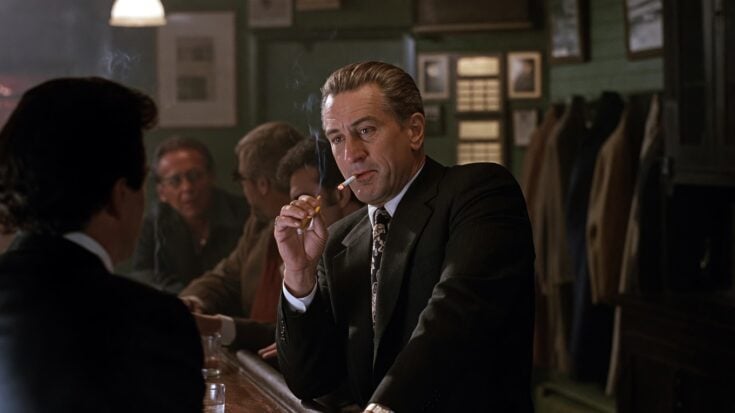
In Goodfellas, Robert De Niro barely moves as the scene unfolds. Sitting at the bar, smoking and watching, his stillness becomes the focus. The music fills the space between glances, turning what could have been a quiet pause into something loaded with meaning. Every look feels calculated, every second stretched.
The power of the moment comes from restraint. Nothing dramatic happens on the surface, yet the combination of that hypnotic riff and De Niro’s cold expression signals what is coming next. The scene builds dread without raising its voice, showing how a rock track can guide the audience toward a conclusion before a single word confirms it.

“Tiny Dancer” by Elton John in Almost Famous
Not every memorable music moment on screen is built on tension. Sometimes it comes from release, from a shift in mood that feels honest and earned. “Tiny Dancer” carries a warmth that makes it ideal for that kind of transition, easing listeners into something more reflective without forcing it.
Inside the tour bus in Almost Famous, silence hangs after a night that pushed everyone a little too far. The band members sit apart, each dealing with their own frustrations. When the song begins to play, it starts quietly, almost unnoticed, before one voice joins in, then another, until the entire group is singing together.
That shared moment does more than break the tension. It reconnects the characters to the reason they started in the first place. The scene turns a once-overlooked track into a defining anthem for a new audience, proving that the right placement can give a song a second life, one tied forever to a feeling of unity and redemption.