
The Day George Harrison Walked Out on The Beatles
via "TheBeatles" / YouTube
By early 1969, The Beatles were no longer the tightly bonded unit that had taken over the world just a few years earlier. The pressure of constant recording, touring, and evolving artistic ambitions had slowly worn down the camaraderie that once defined them. What used to feel effortless had started to feel like obligation.
Inside the studio, the cracks were becoming harder to ignore. The partnership between John Lennon and Paul McCartney—once the band’s creative engine—had shifted into something more competitive than collaborative. Each came in with strong ideas, leaving less room for others to shape the music.
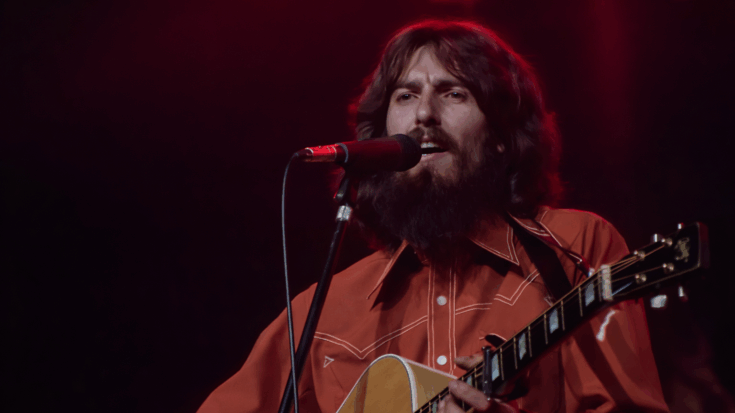
Caught in the middle was George Harrison, who had quietly grown into a formidable songwriter. While the band was changing around him, his patience was wearing thin. What happened next would become one of the most revealing moments of the Beatles’ final chapter.
A Voice That Couldn’t Break Through
Harrison’s transformation as a musician had been impossible to ignore. After studying under Ravi Shankar, he returned with a deeper musical identity, bringing new textures and perspectives into the band’s sound. Songs like “Something” and “Here Comes The Sun” proved he was no longer just the quiet guitarist in the background.
Despite that growth, the internal structure of the band remained unchanged. Lennon and McCartney still dominated the creative direction, often leaving Harrison’s ideas sidelined or reshaped to fit their vision. Even when his songs made it onto albums, they rarely received the same attention or priority.
Tensions escalated further during the rehearsals for the Let It Be project. Filmed at Twickenham Film Studios, the sessions were meant to capture the band returning to their roots. Instead, they exposed just how strained their relationships had become, with disagreements surfacing in nearly every rehearsal.
Walking Out of The Beatles
On January 10, 1969, the frustration finally boiled over. During a rehearsal of “Get Back,” McCartney’s repeated critiques of Harrison’s playing pushed things past the point of repair. What might have once been brushed off now felt like a constant dismissal of his voice.
Harrison’s response was simple and decisive—he walked out. There was no dramatic announcement, no drawn-out confrontation. He left the session and, for the moment, left the band behind. His now-famous diary entry captured the tone perfectly: a matter-of-fact note that he had “left The Beatles,” followed by the mundane detail of having chips later that evening.
That calmness said a lot. For Harrison, this wasn’t just a sudden outburst—it was the result of years of feeling creatively boxed in. The quiet Beatle had reached his limit, and for a brief moment, it seemed like the band might not recover from it.
A Temporary Exit, A Permanent Shift
Harrison’s departure didn’t last long. After a series of discussions, he agreed to return, and the band resumed work—this time moving sessions to Apple Studios. The change in environment helped ease some tension, but it didn’t fix the deeper issues.
The Let It Be project was eventually completed, though not without difficulty. By the time it was released in 1970, the band had effectively already dissolved. The walkout had been a warning sign, one that made it clear how fragile things had become.
In hindsight, Harrison’s brief exit marked more than just a bad day in the studio. It highlighted a shift in balance—he was no longer willing to stay in the background. While The Beatles would soon come to an end, Harrison would go on to prove just how much he had to offer once he was finally given the space to lead.