

’80s Music Videos That Defined the Early Years of MTV

via Cyndi Lauper / YouTube
On August 1, 1981, a cable channel with a bold premise flipped the relationship between music and television on its head. What began as a simple broadcast of a British new-wave clip quietly reset expectations for how songs could be presented, marketed, and remembered. Visuals were no longer an accessory to the music — they became part of the experience itself, shaping how audiences connected with artists in real time.
As MTV gained traction throughout the decade, the format evolved at breakneck speed. Artists quickly realized that standing in front of a camera and miming along wasn’t enough anymore. Budgets grew, concepts got stranger, and storytelling moved front and center. These short films borrowed from cinema, fashion, and pop art, helping define the look of the era while influencing everything from television aesthetics to street style.
That era eventually faded as viewing habits changed and programming priorities shifted, with music videos slowly pushed aside in favor of reality television and nostalgia-driven reruns. With MTV formally closing the curtain on its round-the-clock music channels, it feels like the right moment to look back. These ’80s music videos didn’t just promote hit songs — they helped build MTV itself, frame by frame, during its most influential years.
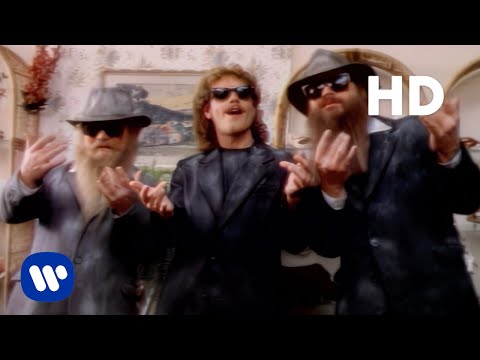
“Legs” by ZZ Top (Eliminator, 1983)
By the early ’80s, ZZ Top understood something many legacy rock acts hadn’t yet grasped: MTV wasn’t interested in dusty blues credentials alone. With Eliminator, the Texas trio sharpened their sound, leaned into synthesizers, and embraced a visual identity that felt tailor-made for television. The album marked a commercial reset, outperforming their entire back catalog and positioning the band squarely in the video age.
Instead of putting themselves front and center, the group played the role of mythical overseers. Billy Gibbons and Dusty Hill drifted through the narrative like rock ’n’ roll spirits, beards intact, guitars spinning, while the story unfolded around the sleek Eliminator hot rod. “Legs” took the formula to its peak, following an overlooked teenage girl who gets rescued — and revamped — by a trio of confident women who flip the power dynamic on its head.
More than a hit clip, “Legs” demonstrated how MTV could rewrite a band’s audience overnight. The video didn’t just sell a song; it sold an attitude and an image that resonated far beyond ZZ Top’s original fan base. For a generation discovering music through television, this was proof that reinvention wasn’t a betrayal — it was survival.
“Walk This Way” by Run-DMC and Aerosmith (Raising Hell, 1986)
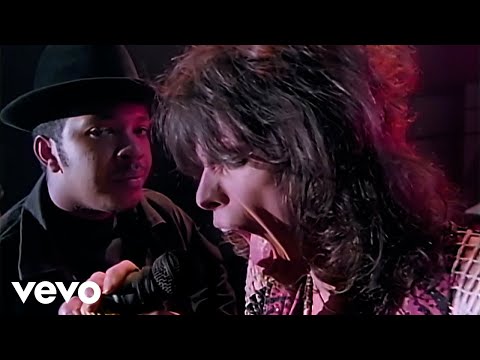
By the mid-’80s, Aerosmith’s glory days felt distant, while hip-hop was fighting for space on a network that barely acknowledged its existence. Those two realities collided when producer Rick Rubin pushed Run-DMC toward a radical idea: reworking a hard-rock song from a band many rap fans barely knew. What followed was less a remix and more a cultural handshake.
The video’s central image — a literal wall dividing the two acts — captured the moment perfectly. On one side, Run-DMC blasted beats through a boombox. On the other, Aerosmith hammered out riffs at ear-splitting volume. When Steven Tyler finally crashed through the wall, it wasn’t subtle, but it didn’t need to be. MTV had rarely broadcast a clearer visual metaphor.
Once in rotation, the clip became unavoidable. It introduced rap to rock audiences who might’ve otherwise dismissed it, while pulling Aerosmith back into relevance almost overnight. “Walk This Way” didn’t just bridge genres — it proved MTV could accelerate cultural shifts in under four minutes of airtime.
“Girls Just Wanna Have Fun” by Cyndi Lauper (She’s So Unusual, 1983)
From its opening moments, Cyndi Lauper’s breakthrough video announced itself as something different. Set in cramped apartments and sunlit city streets, “Girls Just Wanna Have Fun” felt playful, chaotic, and unmistakably human. Lauper’s exaggerated expressions and thrift-store fashion made her instantly recognizable, standing apart from the polished glamour dominating early MTV.
The clip unfolded like a moving block party, pulling friends, strangers, and oddball characters into its orbit. Casting wrestling personality Lou Albano as Lauper’s disapproving father added another layer of pop-culture mischief, grounding the video in humor rather than rebellion for rebellion’s sake. The result was joyful without being glossy, messy without being cynical.
While the song became a global anthem, the video helped define MTV’s appetite for personality over perfection. It showed that charisma could outshine budget, and that relatability could be just as powerful as spectacle. In the network’s formative years, few clips captured that balance as effortlessly as this one.

“Sledgehammer” by Peter Gabriel (So, 1986)
By the time Peter Gabriel released So, his post-Genesis evolution was already well underway, but “Sledgehammer” pushed that transformation into the mainstream. The song itself was immediate and rhythmic, built around a playful groove that felt lighter on its feet than much of his earlier solo work. Still, it was the visual presentation that truly unlocked its reach.
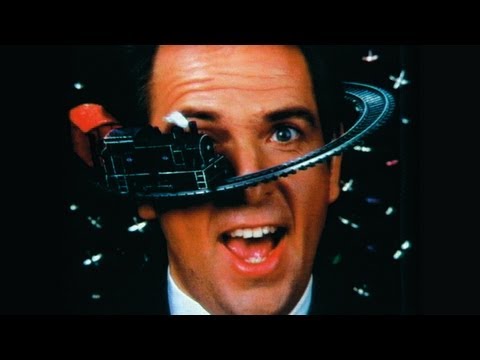
The video broke from nearly every MTV convention at the time. Instead of performance shots or narrative scenes, Gabriel subjected himself to painstaking stop-motion animation, frame by frame, turning his own face and body into a constantly shifting canvas. Fruits exploded, trains ran across his face, and claymation creatures crawled in and out of the frame, blending art-school experimentation with pop accessibility in a way MTV hadn’t quite seen before.
What made the clip resonate wasn’t just technical novelty, but tone. There was humor, self-awareness, and a looseness that surprised viewers who associated Gabriel with seriousness and restraint. “Sledgehammer” proved that innovation didn’t have to feel distant or cold — it could be strange, funny, and welcoming all at once, and MTV rewarded it with relentless airplay.
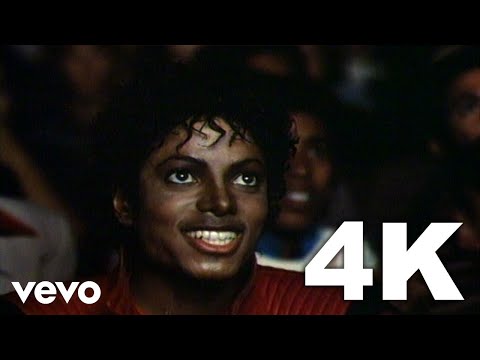
“Thriller” by Michael Jackson (Thriller, 1982)
At a time when most music videos were still treated as promotional tools, “Thriller” arrived like a feature film dropped into regular rotation. Clocking in at over thirteen minutes, it ignored radio-friendly limitations and leaned fully into spectacle. What unfolded was a horror-inspired narrative that blurred the line between music video, short film, and pop event.
Directed by John Landis, the video paired cinematic storytelling with choreography that instantly became iconic. Jackson’s transformation from movie-date heartthrob to undead dance leader wasn’t just a visual hook — it reframed what a pop star could attempt on television. The scale alone was unheard of, with production values that rivaled theatrical releases rather than late-night cable programming.
The impact was immediate and measurable. “Thriller” dominated MTV’s schedule, spilled onto network television, and reignited sales for an album many assumed had already peaked. More than any other clip of the era, it established music videos as cultural milestones in their own right — moments people gathered around the TV to watch, not just background noise between songs.