

5 ’70s Songs That Sound Worse Today

via "Pablo" / YouTube
Time hasn’t been kind to every song that slipped through the cracks in the 1970s. Some were misunderstood on arrival, only to be reevaluated years later with fresh ears and better context. Others, however, carry a different kind of legacy—one that feels more uncomfortable than overlooked, especially when heard today.
There’s a clear difference between a hidden gem and a track that simply didn’t deserve a second chance. In this case, the focus leans toward the latter. While many chart failures came down to bad timing or shifting trends, a handful of songs struggled for reasons that feel more obvious now, particularly in how their lyrics and themes land with modern listeners.
To keep things grounded, the selection centers on songs that fell short of the Billboard Top 40, with a few exceptions for artists who were otherwise dominating the charts at the time. The common thread isn’t just their commercial performance, but how poorly they’ve aged—moments where what once passed without much reaction now raises eyebrows. These are the tracks that haven’t just faded away, but have become harder to sit through with each passing decade.
“Just Seventeen” by Paul Revere & the Raiders (Collage, 1970)
“Just Seventeen” arrived at a time when pop and rock lyrics often flirted with themes that would raise serious concerns today. Built around a catchy melody and a familiar boy-meets-girl setup, the song tells a story that might have passed as harmless back then. But the premise—an adult man drawn to a teenage girl who explicitly says she’s 17—lands very differently now, especially as cultural standards around age and consent have shifted.
What makes the track harder to revisit is how casually it treats the situation. The narrative only introduces consequences when a police officer steps in, implying wrongdoing, yet the tone never fully reflects the seriousness of that implication. Instead, the song leans into its hooks and breezy delivery, almost brushing aside the uncomfortable core of its story.
That contrast is what makes it feel especially dated. There’s no denying the band’s knack for writing memorable tunes, but strong melodies can’t soften subject matter that now feels off-putting. What might have once sounded like playful storytelling now comes across as tone-deaf, leaving modern listeners more uneasy than entertained.

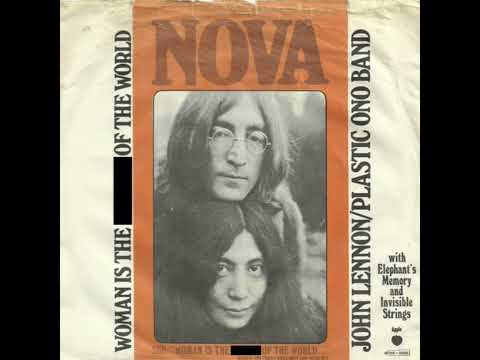
“Woman Is the N***** of the World” by John Lennon and Yoko Ono (Some Time in New York City, 1972)
John Lennon set out to make a statement with “Woman Is the N***** of the World,” aiming to highlight the systemic mistreatment of women. The intent was rooted in social commentary, drawing a parallel between sexism and other forms of oppression. Still, the execution—especially the use of a racial slur in the title—overshadowed whatever message he was trying to convey.
Even at the time of its release, the song faced resistance. Several radio stations refused to play it, and listeners struggled to reconcile the provocative language with Lennon’s broader point. Decades later, that discomfort hasn’t faded. If anything, it has intensified, as conversations around race and language have become more nuanced and less forgiving of shock tactics.
It leaves the song in an awkward position. The message may have been progressive for its era, but the wording makes it difficult to engage with today. Rather than sparking thoughtful discussion, it tends to distract from its own argument, turning what was meant to be a bold statement into something that feels clumsy and poorly judged in hindsight.
“Red Neck Friend” by Jackson Browne (For Everyman, 1973)
“Red Neck Friend” rides on an upbeat groove that initially feels light and easygoing, but the lyrics quickly take it in a different direction. The verses hint at a flirtatious encounter, with the narrator trying to connect with a woman while those around her are distracted. On the surface, it plays like a typical slice of ‘70s storytelling—until the meaning behind the chorus becomes clearer.
That’s where the tone shifts. The repeated invitation in the chorus is packed with innuendo, and once its meaning is understood, it’s hard to hear the song the same way again. Browne later confirmed what many had suspected, removing any ambiguity and leaving the lyrics feeling far more blunt than clever.
In a decade filled with songs about sex and relationships, this one stands out for how awkwardly it handles the subject. There’s a fine line between suggestive and crude, and “Red Neck Friend” leans heavily toward the latter. What might have once come across as cheeky now feels more uncomfortable, especially in a time when listeners expect a bit more nuance in how those themes are expressed.

“Christine Sixteen” by KISS (Love Gun, 1977)
KISS built its reputation on loud hooks, larger-than-life personas, and lyrics that rarely aimed for subtlety. “Christine Sixteen” fits neatly into that formula on the surface, with its stomping rhythm and chant-along chorus. But once you focus on the subject of the song—a grown man addressing a 16-year-old girl—it becomes harder to treat it as just another carefree rock track.
The discomfort isn’t buried in metaphor or clever wordplay either. Lines like “She’s been around / But she’s young and clean” don’t leave much room for interpretation, and that directness makes the song feel more awkward with time. It’s one thing for youthful rebellion to drive a song’s energy, but it lands differently when the perspective clearly comes from someone well past that stage.
What complicates things further is how often the band continued to perform it over the years. Even as attitudes shifted and audiences became more aware of these dynamics, “Christine Sixteen” remained part of the setlist. The hooks still hit, but the lyrics linger in a way that makes it difficult to fully enjoy without a second thought.

“I’ve Never Been to Me” by Charlene (Charlene, 1977)
“I’ve Never Been to Me” didn’t make much of an impact when it first appeared in 1977, only to resurface years later as a massive hit. Its slow build and emotional delivery fit right in with the era’s ballads, leaning heavily into dramatic strings and a reflective tone. On paper, it’s a song about regret and perspective, with a narrator looking back on a life that didn’t turn out as fulfilling as it once seemed.
The issue lies in how that message is delivered. The lyrics frame fulfillment in a very narrow way, especially when addressing another woman described as a “discontented mother” and a “regimented wife.” Instead of opening doors, the song gently nudges her to stay put, reinforced by the spoken-word interlude that feels more like a lecture than a moment of connection.
That spoken segment, even at the time, was already starting to feel outdated, and it hasn’t aged any better. Beyond that, the song’s underlying message—that happiness depends on specific life choices—doesn’t sit as easily with modern listeners. What once aimed to be heartfelt now comes across as overly sentimental and limiting, making it a tougher listen than its later chart success might suggest.