


10 Classic Rock Songs So Disturbing They Still Shock Fans Today

via "PeutEtreDejaVu" / YouTube
Not every great rock song is meant to feel good. Some tracks leave a knot in your stomach, lingering long after the final note fades. Artists have always been drawn to the darker corners of storytelling, and when that instinct meets the raw power of rock music, the result can be something deeply unsettling. Bands like The Beatles, The Doors, and Lou Reed didn’t shy away from that space—they stepped right into it.
There are different ways these songs come to life. Some are built like short horror films, crafted from imagination and filled with disturbing imagery that music only intensifies. The right melody or arrangement can make those fictional moments feel uncomfortably real, turning a simple idea into something that sticks with you. In those cases, the unease is carefully constructed, almost like a deliberate challenge to the listener.
Then there are the songs that don’t feel like stories at all. They come from a more personal place, where artists dig into thoughts and emotions most people would rather keep buried. That kind of honesty can be harder to shake, because it carries a sense of truth. Whether born from imagination or confession, some rock songs go far beyond edgy—they cross into territory that still shocks listeners today, and the ten on this list prove just how far that line can be pushed.
“The End” by The Doors (The Doors, 1967)
There’s a slow, creeping tension that builds from the first notes of “The End,” and it never really lets up. The track stretches past the ten-minute mark, but it doesn’t feel long in the traditional sense—it feels suffocating. Jim Morrison delivers the lyrics in a detached, almost hypnotic tone, leaving space for listeners to project their own meaning onto the song. That ambiguity only makes it more unsettling.
Midway through, the song takes a sharp turn. The music strips back, and Morrison begins reciting spoken-word passages that drift into deeply uncomfortable territory. The infamous Oedipal section—where he describes violent urges toward his parents—pushes the song far beyond typical rock boundaries. It’s not just provocative; it feels invasive, like you’re overhearing something you weren’t meant to hear.
Its use in Apocalypse Now only deepened its reputation. Paired with images of war and psychological collapse, the track became inseparable from a sense of dread and chaos. Even without the film, “The End” stands on its own as a piece that challenges the listener, not with volume or speed, but with atmosphere and deeply disturbing imagery.

“Black Sabbath” by Black Sabbath (Black Sabbath, 1970)
The opening seconds of “Black Sabbath” feel like a warning. That slow, ominous riff—built around a tritone once nicknamed “the devil’s interval”—immediately signals that this isn’t going to be a typical rock song. At a time when most bands leaned into blues or psychedelia, Black Sabbath carved out something darker, heavier, and far more unsettling.
Lyrically, the song reads like a nightmare. Ozzy Osbourne describes an encounter with a shadowy figure, one that feels supernatural and threatening. There’s a sense of helplessness in the delivery, as if the narrator is trapped in a vision he can’t escape. The music mirrors that fear, moving slowly and deliberately, building tension instead of releasing it.
For many listeners, this track wasn’t just scary—it was transformative. Artists like James Hetfield have spoken about how hearing it in the dark felt genuinely terrifying. That reaction wasn’t accidental. “Black Sabbath” helped define heavy metal by proving that music could tap directly into fear, not just excitement, and that shift changed rock history in a major way.

“Lullaby” by The Cure (Disintegration, 1989)
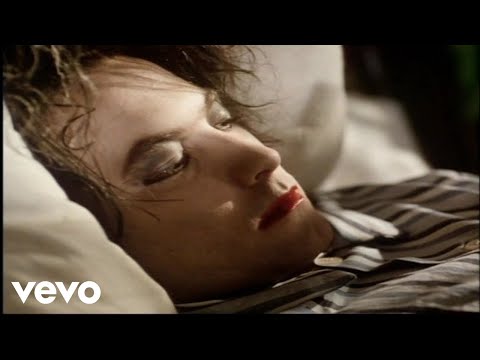
“Lullaby” begins almost gently, with a soft, swaying rhythm that feels deceptively calm. That sense of comfort doesn’t last. Robert Smith sings in a hushed voice, as if telling a bedtime story, but the imagery quickly turns dark. The contrast between the delicate sound and the disturbing lyrics is what gives the song its lasting impact.
The central image is simple but deeply unsettling: a giant spider creeping into a bedroom. As the song unfolds, the situation becomes more horrifying, with the narrator seemingly unable to escape. Lines like “don’t struggle” repeat like a command, stripping away any sense of control. It’s not just fear of the creature—it’s the feeling of being trapped and consumed.
Even within The Cure’s catalog, which often leans into melancholy and darkness, “Lullaby” stands apart. It doesn’t romanticize sadness or longing; it leans fully into nightmare territory. That’s why it still catches listeners off guard—it sounds inviting at first, but by the end, it leaves a lingering sense of unease that’s hard to shake.
“Scentless Apprentice” by Nirvana (In Utero, 1993)
There’s a raw, almost violent energy running through “Scentless Apprentice” that sets it apart even within Nirvana’s catalog. Built on pounding drums and abrasive guitar work, the track feels claustrophobic from the start. Kurt Cobain drew inspiration from Patrick Süskind’s novel Perfume, a story centered on obsession, scent, and murder, and that influence seeps into every corner of the song.
What makes it more than just a literary reference is how Cobain filters that concept through his own perspective. The lyrics don’t follow a clean narrative—they feel fragmented, agitated, and deeply personal. There’s a sense of someone unraveling, caught between identity and isolation. The repeated line “You can’t fire me because I quit” hits with a strange finality, like a defensive statement that doubles as surrender.
Dave Grohl later admitted that hearing that line in context gave him chills, especially in hindsight. It’s one of those moments that feels heavier the more you sit with it. “Scentless Apprentice” isn’t just disturbing because of its source material—it’s unsettling because it sounds like someone trying to hold themselves together and failing in real time.

“Heroin” by The Velvet Underground (The Velvet Underground & Nico, 1967)
“Heroin” doesn’t rely on shock tactics or graphic imagery to unsettle the listener. Instead, it unfolds slowly, almost casually, as Lou Reed describes the experience of drug use with a kind of detached honesty. The structure mirrors that cycle, starting soft and controlled before spiraling into chaotic bursts that feel unpredictable and overwhelming.
The discomfort comes from how direct it is. There’s no clear moral stance, no attempt to warn or glorify—it simply presents the experience as it is. That ambiguity left many listeners unsure how to process it. For some, it became more than a song; it became a soundtrack to real-life behavior, something Reed later found deeply troubling.
He would eventually reflect on how people told him they used the song while taking drugs, a connection he struggled with. The idea that music could unintentionally reinforce something so destructive weighed on him. “Heroin” remains powerful because it refuses to guide the listener—it leaves you alone with the subject, and that silence can be harder to face than any explicit message.

“Frankie Teardrop” by Suicide (Suicide, 1977)
“Frankie Teardrop” feels less like a song and more like an experience you endure. Stripped down to a relentless electronic pulse, the track stretches close to ten minutes without offering relief. Alan Vega delivers the story in a voice that shifts between monotone narration and piercing screams, making the tension almost unbearable.
The narrative itself is bleak. Inspired by a real news story, it follows a factory worker pushed past his limits, leading to a horrifying act of violence against his own family before turning the gun on himself. There’s no dramatization to soften it, no distance created by metaphor. The details are stark, and the repetition makes it feel inescapable.
Listeners and fellow musicians alike have reacted strongly to it. Bruce Springsteen once called it one of the most powerful records he had ever heard, even drawing inspiration from its storytelling approach. That influence speaks volumes, but it doesn’t make “Frankie Teardrop” any easier to sit through—it remains one of the most harrowing pieces ever recorded in rock.

“The Ocean Doesn’t Want Me” by Tom Waits (Bone Machine, 1992)
There’s barely a melody to hold onto in “The Ocean Doesn’t Want Me,” and that’s exactly what makes it so unsettling. Tom Waits leans fully into atmosphere here, building a track that feels closer to a soundscape than a traditional song. The sparse instrumentation and distant, echoing textures create the sense of being alone somewhere vast and unforgiving.
Waits delivers the lyrics in a low, almost ghostly tone, as if the thoughts are drifting in and out rather than being sung. The central idea—walking into the ocean and never returning—hangs over the track like a quiet confession. There’s no dramatic build or release, just a steady immersion into something bleak and deeply personal.
What lingers isn’t just the imagery, but the mood it creates. It feels less like a performance and more like overhearing someone’s darkest thoughts without any filter. That lack of distance makes it difficult to sit with, and even harder to forget once it’s over.

“Hell Awaits” by Slayer (Hell Awaits, 1985)
“Hell Awaits” opens with a chilling effect that immediately sets the tone—voices that seem to whisper from somewhere just out of reach. Slayer were already known for pushing boundaries, but this track goes further, leaning heavily into themes of damnation and the occult. The slow, creeping intro gives way to a relentless assault that never fully lets up.
Lyrically, the song paints a vivid picture of descent and torment, delivered with snarling intensity. It’s not subtle, and it’s not meant to be. The imagery is designed to provoke a reaction, whether that’s fascination or outright discomfort. Combined with the aggressive instrumentation, it creates a sound that feels oppressive rather than energizing.
Part of the song’s reputation comes from the rumors surrounding it. Listeners have long pointed out that playing the intro backwards reveals a repeated “join us,” adding another layer to its already eerie presence. Whether intentional or not, that detail helped cement “Hell Awaits” as one of the most disturbing entries in thrash metal, a track that thrives on making people uneasy.

“Revolution 9” by The Beatles (The White Album, 1968)
Dropping the needle on The White Album can feel like a journey through every corner of The Beatles’ creativity—until “Revolution 9” arrives and pulls the rug out from under everything. There’s no melody to follow, no structure to lean on, just a collage of sounds that feel disjointed and strangely intrusive. It’s less a song and more an audio experiment that demands patience from the listener.
John Lennon approached it like a piece of avant-garde art, piecing together tape loops, reversed recordings, and fragments of speech. The repeated phrase “number nine” echoes throughout, turning into something hypnotic and unnerving the longer it plays. Instead of building toward anything familiar, the track drifts in unpredictable directions, creating a sense of unease that never resolves.
For many fans, it’s the moment that breaks the album’s flow. The beauty and warmth found elsewhere are replaced by something cold and disorienting. Even decades later, “Revolution 9” remains difficult to sit through—not because it’s loud or aggressive, but because it strips away everything people expect from a Beatles track and replaces it with something far more unsettling.

“Every Breath You Take” by The Police (Synchronicity, 1983)
At first listen, “Every Breath You Take” feels gentle, almost comforting. The clean guitar line and steady rhythm give it the shape of a love song, which is exactly why it’s been used in so many romantic settings. That surface-level impression doesn’t hold up once you actually pay attention to the words.
Sting wrote the song during a turbulent period in his personal life, and the lyrics reflect something far more controlling than affectionate. Lines about watching every move and tracking every step turn what could have been tender into something obsessive. There’s a possessiveness woven through the song that becomes harder to ignore the more closely you listen.
Sting himself has described it as a “nasty little song,” pointing out that it deals with jealousy, surveillance, and control rather than love. That disconnect between sound and meaning is what makes it so unsettling. It’s easy to mistake it for something warm, but underneath, it tells a story that feels far more uncomfortable than most people realize.