4 Rock Songs You Didn’t Realize Featured Members of Grateful Dead

via @gratefuldead / YouTube
The Grateful Dead occupy a strange space in rock history. They’re famous enough to feel unavoidable, yet oddly anonymous once you move past the most familiar names. To many listeners, the band blurs into a single idea—long jams, tie-dye imagery, and an intensely loyal following—rather than a group of individual musicians with distinct voices. Outside of figures like Bob Weir, even key contributors often fade into the background of the larger myth.
That shared identity helped define the Dead’s appeal, but it also masked how far their members reached beyond the band itself. Despite being so closely tied to one scene and sound, Dead musicians regularly stepped into other projects, sessions, and collaborations. Some were obvious side paths, while others slipped quietly into the broader rock world, unnoticed by listeners who never thought to look twice.
This piece also stands as a tribute to Bob Weir, whose passing marked the end of a singular chapter in American rock music. As a founding member of the Grateful Dead, Weir embodied the band’s restless spirit and openness to collaboration. The four songs that follow spotlight moments where members of the Dead—sometimes unexpectedly—left their mark well outside the band’s familiar terrain.
“Teach Your Children” by Crosby, Stills, Nash & Young (Déjà Vu, 1970)
By the time Crosby, Stills, Nash & Young began work on Déjà Vu, the Los Angeles studio scene was unusually fluid, with musicians drifting in and out of each other’s sessions. During one such moment in 1969, Jerry Garcia happened to be working in a neighboring studio while CSNY were refining “Teach Your Children.” The band was looking for a pedal steel part, and Garcia—still new to the instrument—was invited to give it a try.
Garcia’s contribution wasn’t labored over or endlessly revised. He sat down, played a gentle, melodic steel line, and that first spontaneous take became the version heard on the final record. The part fits the song so naturally that many listeners never question where it came from, even though pedal steel was far from Garcia’s primary role at the time.
The collaboration also sparked a small but lasting piece of rock lore. As a thank-you, Graham Nash gifted Garcia a vintage Fender Stratocaster, which Garcia later customized with an alligator sticker. That guitar became known as “Alligator,” one of his most recognizable instruments and a quiet reminder of how casually Grateful Dead history sometimes slipped into other classic records.
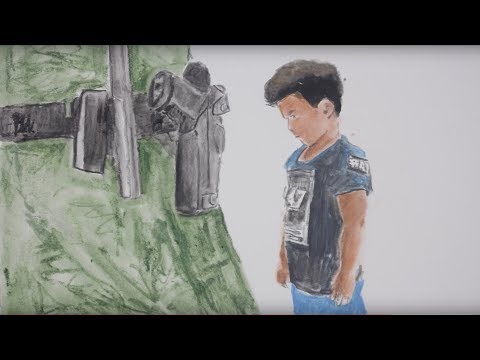
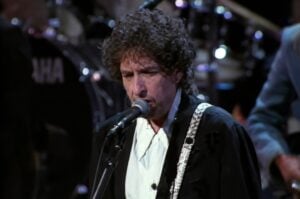
“Silvio” by Bob Dylan (Down in the Groove, 1988)
Bob Dylan’s connection to the Grateful Dead ran deeper than their well-documented 1987 tour together. Before that partnership produced the live album Dylan & the Dead, Dylan had already brought Dead collaborators into the studio for “Silvio,” a track that carried the influence of both camps from its earliest stages.
The song was co-written with Robert Hunter, whose narrative style aligned easily with Dylan’s lyrical instincts. In the studio, the collaboration expanded further, with Jerry Garcia, Bob Weir, and Brent Mydland contributing backing vocals. Rather than sounding like a novelty crossover, the result feels cohesive and deliberate.
“Silvio” went on to become one of the more visible moments of Dylan’s late-’80s period, peaking at No. 5 on Billboard’s Mainstream Rock chart. For listeners unaware of the personnel involved, it plays like a straightforward Dylan track, quietly masking the presence of several core members of the Grateful Dead behind the chorus harmonies.

“Suspicious Minds” by Elvis Presley (single, 1969)
This entry comes with an important technicality, but it’s no less revealing. When Elvis Presley recorded “Suspicious Minds” in 1969, one of the backing vocalists was Donna Jean Godchaux. At the time, she wasn’t yet associated with the Grateful Dead, though that would change just a few years later.
Before joining the Dead, Godchaux was a respected session singer working out of Muscle Shoals, Alabama. Her résumé included high-profile recordings across soul, pop, and rock, and her voice appears on several major hits from the era. “Suspicious Minds,” which became one of Elvis’ final No. 1 singles, was among the most enduring of those sessions.
Godchaux later joined the Grateful Dead alongside her husband, keyboardist Keith Godchaux, becoming part of the band’s evolving vocal blend in the early 1970s. Her presence on “Suspicious Minds” offers a rare backward glance at a future Dead member embedded within one of rock’s most iconic recordings, years before her name became tied to the band.

“Lay of the Sunflower” by Gov’t Mule (The Deep End, Volume 2, 2002)
Jam bands have always shared a loose sense of musical kinship, and that connection helped bring Phil Lesh into Gov’t Mule’s orbit in the early 2000s. Following the death of bassist Allen Woody, the band launched The Deep End project, inviting musicians Woody admired to appear across two companion albums.
Lesh joined the second volume, contributing bass to “Lay of the Sunflower.” Rather than dominating the track, his playing complements Gov’t Mule’s sound, adding texture and weight while respecting the song’s structure. It’s a measured appearance, shaped more by feel than flash.
The collaboration functioned as both tribute and continuation. By inviting Lesh—one of rock’s most influential improvisational bassists—Gov’t Mule honored Woody’s musical heroes while reinforcing the shared lineage between generations of jam-oriented bands. It’s a moment where Grateful Dead influence surfaces naturally