
When John Lennon Was Threatened at Knifepoint — The Terrifying Story

via @Rui Angelo A. Sampilo / YouTube
John Lennon is remembered for championing peace, yet the man behind the message carried his own edges, shaped by the volatile era he lived in. Those who worked closely with him often saw that duality—an artist who believed in nonviolence but refused to be naïve about the world around him. That contrast came into sharp focus one night in the early 1970s during a tense gathering that would later surface in stories shared by people who witnessed it firsthand.
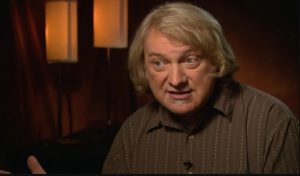
Producer Jack Douglas, a longtime friend and collaborator, recounted the event during an appearance on The Magnificent Others with Billy Corgan. According to him, Lennon reached out late one evening, uneasy about attending a party filled with political radicals he didn’t personally know. Douglas tagged along not as security, but as someone Lennon trusted to sense trouble when he couldn’t. What followed was a moment that rattled everyone in the room.
That night placed Lennon in the middle of a heated conversation about revolution, violence, and ideology—topics that often swirled around activist circles at the time. But this particular exchange went too far, even for someone who had spent years navigating the intersections of art and politics. What happened next revealed how quickly Lennon could react when confronted with rhetoric that crossed a personal line.
Lennon Steps Into a Radical World
The gathering Lennon attended wasn’t just a casual party. It was a small pocket of political fervor tied to figures like Abbie Hoffman, a well-known activist whose involvement in protests, counterculture movements, and anti-war demonstrations made him one of the most polarizing voices of the era. Hoffman and Lennon had crossed paths before, their shared interests in social change naturally drawing them into the same orbit. But those connections also put Lennon under intensified government scrutiny, eventually contributing to the FBI’s lengthy investigation into him.
By the early ’70s, Lennon wasn’t new to heated political environments. He had participated in rallies, spoken out against the Vietnam War, and collaborated with activists who pushed for sweeping social reforms. Yet he often approached these issues from a place of idealism, believing change could come without violence or bloodshed. That set him apart from some in Hoffman’s circle, who saw confrontation—or even force—as a necessary tool.
Douglas noted that when Lennon entered the apartment that night, he already sensed an energy that didn’t sit right with him. The conversations around the room grew sharper, angrier, and filled with calls that glorified violence against authority. As Lennon drank and listened, the mood shifted from spirited debate to something darker and far more aggressive.
The Moment Lennon Reached His Breaking Point
According to Douglas, the turning point came when a woman loudly repeated calls to “off the pigs,” echoing extremist rhetoric that had been circulating during that era. Lennon, already uncomfortable, became visibly agitated. The tension in the room climbed as voices grew louder and the language harsher. Lennon wasn’t hearing activism anymore—he was hearing people celebrate violence as if it were a symbol of courage.
Douglas recalled Lennon growing more upset the longer the conversation went on. Alcohol magnified his frustration, and the hypocrisy of preaching peace while cheering brutality struck a nerve. Eventually, Lennon snapped. He stormed into the kitchen, grabbed a knife, and confronted the woman who had been shouting the most incendiary remarks. “You want violence? I’ll show you violence!” he shouted, making it clear he wasn’t endorsing her stance—he was calling out how reckless and absurd it was.
The room froze. Lennon wasn’t trying to harm anyone, but the gesture was enough to send shockwaves through the group. His anger revealed how deeply he despised the celebration of violence disguised as activism. After shaking the room into silence, Lennon and Douglas quickly left, with the evening ending just as abruptly as it had escalated.
Aftermath and Lennon’s Complicated Ties to Activism
Despite the disturbing exchange, Lennon remained connected to Hoffman for several years. Their shared interests in political reform and social justice kept them aligned on more grounded issues, even if Lennon rejected the more extreme voices surrounding Hoffman. Their conversations and activism shaped parts of Lennon’s work—notably the politically charged album Some Time in New York City, where Lennon and Yoko Ono tackled themes inspired by real-world events and movements.
Lennon’s involvement with activists like Hoffman contributed to one of the most turbulent chapters of his life: his prolonged battle with the FBI, which viewed him as a potential agitator capable of influencing young voters. Government surveillance, immigration struggles, and political pressure followed him throughout the early ’70s, all rooted in the company he kept and the causes he publicly supported.
The knife incident remains a reminder of Lennon’s complex relationship with radical politics. He believed in peace with conviction, but he wasn’t afraid to confront extremism—especially when people used the language of liberation to justify harm. That night, his reaction wasn’t a contradiction to his message; it was an unfiltered expression of how much he loathed violence in all forms, whether it came from governments or from activists claiming to fight them.