

The Only Musician Who Ever Frightened Steve Lukather
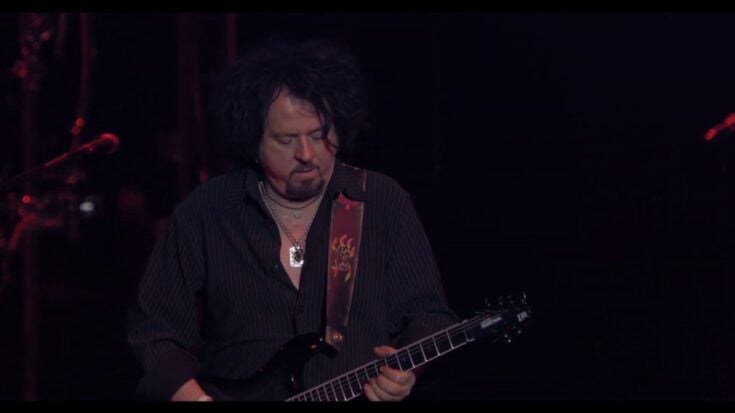
via YouTube / Luc Finella Vidéo-Resistance Studio
Steve Lukather has played alongside giants, anchored some of the biggest pop and rock records of the past forty years, and handled pressure in studios where the wrong take could cost a fortune. Yet even with all that experience, he still remembers the one musician who could shake him to the core: Eric Clapton. When he talked about it in a Forbes interview, you could hear both admiration and a lingering sense of awe.
Lukather didn’t grow up idolizing dozens of players; Clapton was one of the few whose sound rewired the way he heard the guitar. That early obsession carried into his professional life, and years later, he suddenly found himself in a studio with the very person who pushed him to pick up the instrument. The weight of that moment hit him much harder than he expected.
What unfolded during that recording session wasn’t a tale of clashing egos or artistic tension. Instead, it became a story about hero worship, nerves that refused to quiet down, and the kindness of a musician who understood what it meant to be placed on a pedestal. Lukather still talks about it with equal parts embarrassment and gratitude.
The Session That Stopped Him in His Tracks
The collaboration happened during the making of Clapton’s 1985 album Behind the Sun. Lukather had talked his way into the project because he simply wanted to be in the same room as his lifelong hero. He didn’t negotiate a fee, didn’t ask for credit—he wanted the experience, and that was enough. It was a rare moment where someone as accomplished as Lukather willingly placed himself in the role of student again.
Once the session began, everything Lukather knew about staying cool under pressure disappeared. They launched into “Forever Man,” and instead of delivering his usual confident touch, he froze. He felt himself tightening up, second-guessing every note. For a guitarist of his caliber, who had saved entire sessions with improvised brilliance, the sudden anxiety felt almost surreal.
What made the moment more striking was how it contrasted with his normal studio behavior. Lukather was used to fast, precise takes; producers leaned on him because he didn’t choke. Yet being in the presence of Clapton—the same man whose Cream-era solos he learned by lifting and dropping a needle countless times—turned the situation upside down. His hero wasn’t just in the room; he was listening.
Clapton’s Unexpected Kindness
Despite the tension Lukather felt, Clapton himself made the atmosphere easier than anyone could have predicted. Rather than towering over the young session player, he disarmed him with warmth. At their very first meeting, Clapton even examined his hands and complimented him on his tone and technique. It was the kind of gesture that could have come off as condescending, but it landed as genuine respect.
Clapton also singled out Lukather’s solo on Toto’s “Rosanna,” a moment that caught him completely off guard. Hearing praise from the musician whose work he had studied note by note was almost too much to process. It didn’t erase the nerves, but it softened the edges enough for Lukather to get through the session without feeling like he was in over his head.
That generosity stayed with him. Clapton didn’t have to validate him; Lukather was already at the top of the session world. But hearing it from the person who shaped his playing made a lifelong impression. The session became more than a job—it became one of the moments Lukather carried with him as a reminder that even legends can offer grace.
A Debt to the Past That Never Fades
Lukather has explained many times that his reaction in the studio wasn’t just about star power. As a teenager, he practically lived inside Cream records, learning Clapton’s solos by manually rewinding vinyl until the grooves wore thin. Those marathon practice sessions defined his musical vocabulary. Standing next to the man responsible for all that made the experience feel like stepping into a memory.
That deep connection to Clapton’s playing also explains why he didn’t want to overstep during the Behind the Sun session. He kept his parts minimal, almost hesitant, because he felt the last thing he should do was clutter the space Clapton was shaping. In his mind, it wasn’t his place to compete—he was there to contribute quietly and respectfully.
Even today, Lukather talks about Clapton as the one musician who could still unsettle him. Not because Clapton tried to dominate the room, but because his presence unlocked decades of reverence and gratitude. For someone as confident as Lukather, that reaction says everything about the depth of influence one artist can hold over another.