
The Major Events of 1986 That Changed The World
via NBC News / YouTube
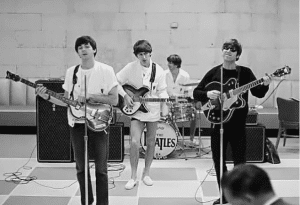
1986 carried a strange intensity that set it apart from the years around it. Trend-setting cultural moments unfolded beside long-anticipated scientific milestones, giving the year an energy that felt both celebratory and uncertain. Crowds tuned in as the Rock & Roll Hall of Fame introduced its inaugural class, debates followed when its choices sparked criticism, and millions watched another global spectacle as Prince Andrew and Sarah Ferguson exchanged vows in a ceremony broadcast across continents. Even Halley’s Comet added to the sense of occasion, sweeping past Earth for the first time since 1910 and reminding people how rarely such sights return.
Those moments captured attention, yet they didn’t reach into everyday life in the way that history-shifting events often do. Beneath the headlines about celebrity, tradition, and spectacle, the year held a darker and far more complicated story. The sense of excitement that colored its early months stood in contrast to the growing tension around global safety, scientific risk, and the fragile systems people believed they could trust.
By the time the year ended, the world had been forced to confront that fragility in devastating ways. The tragedies of Chernobyl and the Space Shuttle Challenger became defining memories for an entire generation, not only because of their scale but because they exposed vulnerabilities many had never considered. And they were far from the only moments that left lasting marks. 1986 reshaped lives and policies, altered public confidence, and set the stage for long-term changes that reached far beyond the year itself.
January 28: The Challenger Launch Turns Into Unthinkable Tragedy
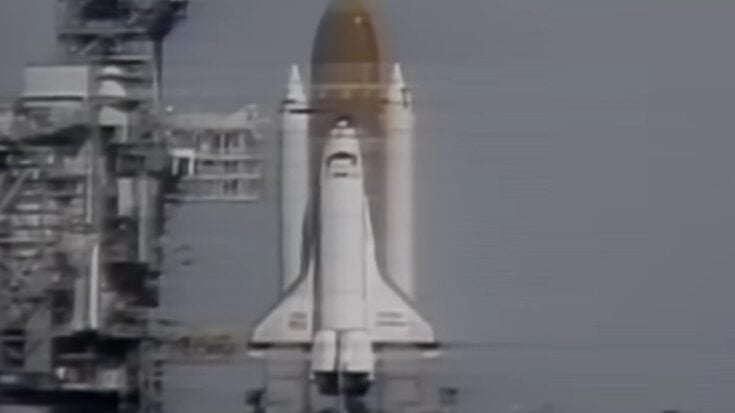
The Challenger mission carried a sense of pride and anticipation from the moment its crew was introduced. Alongside the five seasoned astronauts were payload specialist Gregory Jarvis and Christa McAuliffe, the schoolteacher chosen to represent the “Teacher in Space” initiative. She had spoken often about wanting to bring the excitement of space exploration back to her students, and that sentiment drew people to the launch in unusually personal ways. Millions watched the coverage with the expectation that this flight would mark something hopeful and new.
That sense of optimism shattered only seconds after liftoff. The shuttle broke apart in full view of the cameras, and the silence that followed became one of the defining memories of the decade. People who witnessed it, whether on live television or in classrooms, often described the moment as a loss of innocence. NASA faced a reckoning of its own, forced to confront the decisions and pressures that had allowed the mission to move forward despite concerns raised beforehand.
The shock lingered long after the initial news cycle faded. President Ronald Reagan addressed the nation with an emotional tribute, speaking not only of grief but of the unity that the moment unexpectedly created. The Challenger disaster reshaped how the public viewed space travel, forcing governments, educators, and engineers to rethink the risks behind every mission. The tragedy became one of 1986’s most enduring turning points, marking the end of one chapter in space exploration and setting stricter foundations for the years that followed.
February 22: The People Power Revolution Brings Down a Dictatorship
For Filipinos who lived under Ferdinand Marcos, the years leading to 1986 were marked by fear, censorship, and the quiet persistence of those who refused to accept dictatorship as a permanent reality. Marcos had first risen to power in the 1960s, but martial law transformed his presidency into authoritarian rule, leaving countless victims in its wake. Stories of torture, disappearances, and corruption circulated widely, even when they were too dangerous to say aloud.
The murder of opposition leader Benigno Aquino Jr. in 1983 pushed the country to a breaking point. When Marcos called a snap election three years later and declared himself the winner, the public saw the move as one manipulation too many. Crowds gathered on EDSA in the hundreds of thousands, forming a peaceful human wall that stunned even the officials who were planning a military rebellion behind the scenes. Diplomats observing the moment realized it had grown far beyond a political contest; it had become a national awakening.
Over four tense days, the momentum swelled until the regime simply could not stand anymore. Marcos fled, and the world watched as Filipinos reclaimed their democracy without firing a single shot. The People Power Revolution became a symbol of what mass, nonviolent resistance could accomplish. It restored not only a government but a collective belief that ordinary citizens could force change even after years of oppression.
February 25: Gorbachev’s Glasnost and Perestroika Shift the Cold War
When Mikhail Gorbachev stepped before the Soviet leadership in February 1986, few expected him to redefine the direction of an entire superpower. His announcement that the USSR would move toward glasnost and perestroika signaled a dramatic break from the rigid systems that had shaped the communist state for decades. The speech was long, dense, and startlingly candid, challenging entrenched political habits with a tone Soviet leaders were unaccustomed to hearing from one of their own.
Western analysts reacted with a mix of shock and guarded optimism as transcripts made their way to Washington. Officials who had grown used to predictable Soviet rhetoric suddenly saw signs of a leader willing to confront both corruption and stagnation. Inside the State Department and intelligence agencies, the speech triggered urgent discussions about what this new direction could mean for global tensions that had defined world affairs since the end of World War II.
The relationship between Gorbachev and U.S. President Ronald Reagan added another layer to the unfolding transformation. Their meetings were often difficult, yet each encounter softened the Cold War in ways that once seemed impossible. By opening Soviet society and restructuring its political and economic system, Gorbachev accelerated the weakening of long-standing barriers. These moves eventually hastened the collapse of the USSR itself, making 1986 a pivotal year in the unwinding of one of the 20th century’s greatest geopolitical standoffs.
February 28: The Assassination of Olof Palme Leaves Sweden Searching for Answers
Olof Palme built his reputation on accessibility, often choosing to move through Stockholm without the protection many world leaders insisted upon. On a February evening in 1986, that openness cost him his life. After leaving the cinema with his wife Lisbeth, the Swedish prime minister was shot on the street, leaving the nation in shock. The lack of immediate answers set the stage for one of Europe’s most perplexing political mysteries.
Early investigations led nowhere, and the initial conviction of a suspect collapsed under scrutiny. As years passed, speculation grew rather than faded. Theories involving foreign powers, extremist groups, and lone gunmen circulated constantly, each one convincing to different corners of the public. The uncertainty created a national wound that seemed impossible to close, especially for a country proud of its stability and low levels of political violence.
More than three decades later, prosecutors revisited the case with fresh determination. Their conclusion pointed to Stig Engström, a man long connected to the crime scene but no longer alive to be tried. The announcement offered some sense of direction, yet it also sealed the case without giving Sweden a true courtroom resolution. Palme’s assassination remained a defining scar from 1986, shaping political discourse and reshaping how the nation approached security and public life.
April 13: The First Gestational Surrogacy Birth Redefines Family Building
The arrival of Jill Rudnitzky in April 1986 signaled a major shift in reproductive medicine. While IVF had already changed what was possible, her birth marked the first time a child carried by a surrogate was not biologically related to the woman delivering her. It showed that gestational surrogacy could move from theory to reality, offering a path for families confronting medical complications that once felt insurmountable. The moment carried a quiet revolution with it — one that would ripple across fertility clinics for decades.
As Jill grew up, she became aware of how unusual her story was. Classmates pointed out the connection when pop culture referenced surrogacy, and her family found themselves explaining it long before it became familiar to the general public. Her place in medical history was something even children could grasp, and it shaped how she understood her own identity. The story wasn’t just scientific; it belonged to her childhood as much as it belonged to headlines.
Years later, when she sought fertility help herself, her doctors reacted with amazement as she casually shared her background. She joked about feeling like a celebrity in the exam room, but her experience showed how far the field had come since 1986. What was once a medical milestone had become an accepted option for many families. Her journey, from groundbreaking birth to navigating her own challenges, traced the entire arc of surrogacy’s mainstream acceptance.
April 26: Chernobyl Becomes the Defining Nuclear Disaster of the Century
Hours after the Chernobyl reactor malfunctioned during a late-night safety test, it was clear the situation had spiraled beyond anything operators had imagined. Investigators later pointed to a tangle of misjudgments, rule-breaking, and flawed engineering that allowed the reactor to surge out of control. The explosion that followed tore open the facility and released massive amounts of radiation, forcing the world to confront the hazards of a system many had assumed was safely contained.
The immediate toll was devastating. Two workers died the night of the accident, while dozens more succumbed to radiation exposure in the months that followed. Entire towns were emptied as families were evacuated with little warning, many never to return. In the years after, thousands of thyroid cancer cases emerged among those exposed as children. Each statistic carried a personal story, turning the disaster into far more than a technical failure — it became a human tragedy that stretched across generations.
Even today, the affected region remains a stark reminder of what was lost. Some residents returned to live near their former homes, unwilling to abandon the land entirely, while visitors arrive on controlled tours to see the silent remains of Pripyat. Despite pockets of life, the area’s stillness reflects the scale of the catastrophe. Chernobyl left a scar on the global psyche, reshaping nuclear policy and reminding the world how quickly small errors can lead to unimaginable consequences.
May 25: Hands Across America Creates a National Moment of Unity
Hands Across America took the familiar format of 1980s charity spectacles and turned it into something unusually participatory. Instead of relying solely on celebrity performers, the event invited ordinary people to physically form a coast-to-coast human chain, if only for a few seconds. Millions turned out with the simple goal of linking hands, creating a symbolic bridge stretching across states, cities, and small towns. Even without perfect continuity, the scale and ambition captured the spirit of the decade.
Participants remembered the day with a mix of amusement and affection. Local organizers scrambled with walkie-talkies to close gaps, families lined rural roads, and groups of strangers shifted around to help the chain hold together as best it could. The success didn’t hinge on flawless execution; it rested on the feeling that people could stand together for a shared purpose. Those who took part recalled the cheerfulness more than the logistical challenges, leaving the moment lodged in memory as a bright, communal pause.
After expenses, the event raised $15 million for anti-hunger initiatives — a significant achievement for a spectacle built mostly on human presence rather than star power. Whether it changed lives permanently is harder to measure, but it did give the country a day when millions acted together in genuine goodwill. In a decade known for excess, Hands Across America stood out as an earnest attempt at unity, forever linked to 1986’s most memorable public moments.
June 22: Maradona’s “Hand of God” Leaves an Indelible Mark on Sports History
The World Cup quarterfinal between England and Argentina in 1986 should have been remembered as just another intense matchup, but Diego Maradona ensured it became something else entirely. When he realized he couldn’t outjump goalkeeper Peter Shilton, he flicked the ball into the net with his fist — a move invisible to the referee but crystal clear to nearly everyone else watching. The goal stunned the English bench and ignited a controversy that would follow Maradona for the rest of his life.
Yet the drama didn’t end there. Minutes later, Maradona delivered one of the most astonishing solo runs the sport had ever seen, weaving past defender after defender to score what would be named the “Goal of the Century.” The contrast between the two goals — one illicit, one sublime — cemented the match as legend. For Argentina, the moment carried both sporting pride and emotional weight, unfolding in the shadow of political tension left by the Falklands War.
The ripple effects didn’t stay confined to soccer. Elsewhere in sports that year, Mike Tyson began building his own legend, claiming the heavyweight title with a knockout victory in November. Between Maradona’s dual-faced brilliance and Tyson’s explosive rise, 1986 delivered unforgettable moments that defined athletic greatness in very different ways. It was a year when the world saw how sport could be both deeply flawed and impossibly beautiful.
September 7: An Assassination Attempt Exposes the Crumbling Power of Pinochet’s Regime
By 1986, Augusto Pinochet’s hold on Chile had begun to weaken under the weight of repression, economic strain, and growing public defiance. Those tensions erupted on September 7, when his motorcade was ambushed by armed rebels who had planned the attack with military precision. Gunfire and explosives tore through the vehicles, killing several bodyguards and injuring others. Pinochet survived — a fact he would later emphasize in interviews, recounting how he shielded his young grandson in the chaos.
The attack carried far more political meaning than military force. It showed a dictator who was no longer untouchable, and a population increasingly willing to resist the government that had ruled them for over a decade. Yet Pinochet responded with the bravado expected of a former general, insisting he was ready to face any threat. Within days, he appeared at a public military event, projecting confidence even as the world understood the symbolism behind the attempt on his life.
The incident became one of the clearest signs that Chile was nearing a breaking point. Momentum for change continued to build until a 1988 national referendum dealt the Junta a decisive blow. Two years later, the country began its transition back to democracy, and the ambush — once seen as an isolated act — came to be viewed as a turning marker in the long unraveling of Pinochet’s rule.
September 8: Oprah Winfrey’s National Debut Redefines Daytime Television
When Oprah Winfrey’s talk show premiered nationally on September 8, it was still unclear just how transformative her presence would become. She had already grown popular in Chicago, but taking the show to a wider audience required a leap of faith — one encouraged by film critic Roger Ebert, who recognized her potential long before the rest of the country caught on. The first episode focused on relationships, a topic that would become a recurring anchor throughout the show’s long run.
Viewers gravitated to Oprah’s mix of warmth, candor, and curiosity. Within a year, the show dominated ratings in a category historically shaped by celebrity hosts and rigid formats. What emerged instead was a platform where personal stories, social issues, and cultural conversations could coexist. By the time the show ended in 2011, Oprah had become a global figure whose influence extended into publishing, philanthropy, and business, reshaping what a talk-show host could achieve.
Entertainment in 1986 delivered more than one lasting cultural moment. Top Gun soared into theaters and built a legacy strong enough to inspire a blockbuster sequel decades later, while London welcomed The Phantom of the Opera, a musical that would go on to define modern theater. Oprah’s debut shared the year with these iconic milestones, yet her impact would echo across generations in ways few could have predicted on that first September broadcast.
October 9: Fox Broadcasting Arrives and Sets the Stage for a Media Revolution
The launch of the Fox Broadcasting Company in 1986 marked a bold attempt to challenge the long-standing dominance of ABC, NBC, and CBS. Rupert Murdoch had already begun reshaping the studio landscape with his acquisition of 20th Century Fox, and the purchase of Metromedia’s TV stations gave him the foundation for a national network. In an era when traditional broadcast television appeared to be losing momentum, Fox saw opportunity where others saw decline.
Barry Diller, Fox’s chairman and CEO, understood that audiences were shifting toward independent stations and niche programming. Instead of chasing the familiar formulas of the Big Three, he envisioned a network that embraced fragmentation and built loyalty through unconventional strategies. He publicly declared that Fox would not imitate the existing networks — a promise reflected in the edgier, risk-taking programming that would soon define the channel’s early years.
This gamble paved the way for later ventures, including the creation of Fox News, which would alter the American media landscape a decade later. But the foundation was laid in 1986, when Murdoch and Diller pushed Fox into a space many believed was already overcrowded. Their move expanded the boundaries of broadcast television and set the course for a new, more combative era of media competition.
November 3: The Iran-Contra Affair Becomes One of Washington’s Biggest Scandals
When a Lebanese magazine published allegations on November 3, few anticipated that the story would unravel into a crisis that shook the Reagan White House. The report claimed that U.S. officials had secretly sold weapons to Iran despite sanctions and had funneled the profits to the Contra rebels in Nicaragua — a move explicitly prohibited by Congress. The revelation clashed sharply with the administration’s public stance and triggered immediate outrage both domestically and abroad.
The scandal accelerated when Attorney General Edwin Meese confirmed key details during a tense White House press briefing. His admission that proceeds from the arms sales had been diverted to anti-government forces in Central America stunned the country. What emerged was a tangled web of covert operations, competing agendas, and internal maneuvering that dominated news cycles and damaged trust in the administration.
Hearings the following year exposed the full extent of the covert activities and produced unforgettable public testimony. While some officials faced charges, the final chapter arrived when President George H.W. Bush issued pardons to several key figures involved. The Iran-Contra affair left an enduring mark on American politics, illustrating how secrecy, ideology, and foreign policy ambitions could combine to produce one of the most consequential scandals of the 1980s.