

Rock Bands from the ’70s That Faded Too Fast

via "RamJamVEVO" / YouTube
The 1970s didn’t just produce rock giants—it created an environment where bands could rise fast, burn bright, and disappear just as quickly. While some groups turned early success into decades-long careers, others never made it past their first few flashes of brilliance. Their stories sit in the margins of the era, overshadowed but no less compelling.
A number of these bands left behind only a handful of records, yet their impact stretched far beyond their short lifespans. Acts like Big Star and Joy Division didn’t need massive catalogs to shape future music; what they created in a short time carried weight that only grew after they were gone. Others, such as Labelle, Ram Jam, and the Raspberries, managed to break through with memorable hits before circumstances pulled them apart.
What connects these groups isn’t just that they ended early—it’s how much promise was left hanging when they did. Internal struggles, industry pressures, and sheer bad luck all played their part, cutting off creative runs that felt like they were only just beginning. Looking back now, their brief time together feels less like a failure and more like a glimpse of what could have been if things had held together a little longer.
Big Star’s Brilliant Songwriting Was Undone by Industry Failures
Big Star came together in Memphis in 1971, built around the contrast between Chris Bell’s fragile precision and Alex Chilton’s looser, instinctive style. That tension gave their music a spark that felt both polished and unpredictable at the same time. Their debut, #1 Record, earned glowing reviews, but it never reached the audience it deserved, largely because of poor distribution from Stax.
The disappointment hit hard. Bell stepped away not long after the first album, worn down by the lack of commercial response and the growing spotlight on Chilton, who already had recognition from his earlier work. The remaining members pushed forward, releasing Radio City, which again impressed critics but struggled to sell, repeating the same frustrating cycle.
By the time a third record was delayed and shelved, the band’s momentum had already slipped away. They quietly dissolved just before wider recognition finally started to build. Bell’s death in 1978 closed the door on any full reunion, and while later musicians championed Big Star’s legacy, the original chemistry that made them special never truly returned.

Labelle’s Bold Reinvention Collapsed Under Internal Strain
Labelle didn’t just evolve—they reshaped their entire identity in the early 1970s. What began as a traditional girl group turned into something far more daring, blending rock, soul, and glam with themes that pushed against social boundaries. Patti LaBelle, Nona Hendryx, and Sarah Dash leaned into a new sound that felt both theatrical and deeply personal.
Their breakthrough came with Nightbirds, powered by the success of “Lady Marmalade,” which brought them into the mainstream without sacrificing their edge. The album captured a moment where experimentation and accessibility met in just the right way. For a brief period, it seemed like Labelle had found a lane no one else could occupy.
That balance didn’t hold. Follow-up releases failed to match the same impact, and creative differences began to surface behind the scenes. By the time Chameleon arrived, the group was already pulling apart, eventually choosing separate paths. Each member found success in different ways, but the unified energy that defined Labelle never fully came back.

Joy Division’s Short Run Left a Lasting Shadow Over Modern Rock
Joy Division’s career was brief, but its reach has never really faded. Emerging from Manchester in the late ’70s, the band carved out a sound that stripped punk down to something colder and more introspective. Their debut, Unknown Pleasures, felt stark and distant, yet intensely human, shaped by Ian Curtis’ voice and lyrics.
The follow-up pushed even further into darker territory, layering in new textures while holding onto that sense of isolation. It wasn’t just the sound that set them apart—it was the atmosphere they created, where every note seemed to carry weight. Even in their early recordings, there was a feeling that the band was heading somewhere deeper.
That trajectory ended abruptly with Curtis’ death in 1980, just as the group was preparing to expand beyond the UK. The remaining members moved forward under a new name, exploring a different direction that leaned into rhythm and electronics. Still, the emotional core that defined Joy Division remained tied to those two albums, leaving behind a legacy that feels unfinished but complete at the same time.

Ram Jam’s One Big Hit Couldn’t Hold the Band Together
Ram Jam arrived with momentum already in motion, but not entirely their own. “Black Betty” had a history long before the band’s name existed, and even their version traced back to an earlier recording tied to Bill Bartlett. By the time it was repackaged and released, the song had the energy of a hit—but the identity behind it felt less defined.
The track climbed the charts and pulled their debut album along with it, giving Ram Jam a brief moment in the spotlight. Musically, the record leaned in several directions, borrowing from Southern rock grooves and classic rock swagger without settling into a clear signature sound. There was skill in the playing, but it felt like a band still searching for its center.
That uncertainty became more apparent with their follow-up. While the second album pushed toward a heavier style, it didn’t connect in the same way, and the initial buzz quickly faded. With no strong foundation to build on, the group dissolved almost as quickly as it had formed, leaving behind a sense that something more cohesive might have emerged with time.

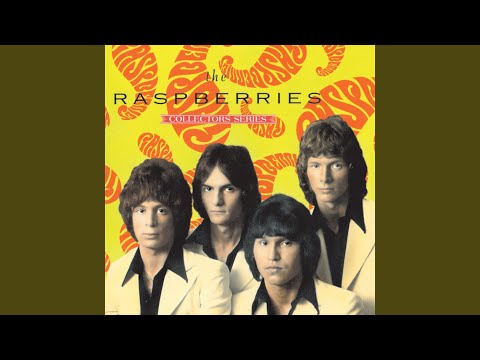
The Raspberries Had the Sound, but Not the Stability to Last
The Raspberries didn’t struggle to make an impression early on. Their debut produced a major hit with “Go All the Way,” a song that captured everything they did well—bright melodies, sharp guitars, and a clear nod to British pop influences. Across their early records, they showed a knack for writing songs that felt both familiar and fresh.
Behind that sound, though, the band was dealing with growing strain. Disagreements over creative direction began to surface, particularly around Eric Carmen’s increasing control, and outside pressures didn’t help. Constant touring, uneven support from their label, and management frustrations created an environment that was hard to sustain.
By the mid-’70s, key members had already stepped away, and the group quietly came to an end after one final album. Carmen moved into a successful solo career, proving the songwriting strength that had driven the band from the start. Even with later reunions, the original spark belonged to a short window of time that closed sooner than it should have.