

From Obscure to Iconic: ’70s Tracks That Only Became Hits Years Later
via Elton John / YouTube
The 1970s were a golden era for rock — a time when the genre evolved beyond its rebellious roots into something vast, experimental, and deeply cultural. With guitar riffs that defined generations and artists who pushed the limits of creativity, the decade produced an avalanche of music that continues to shape popular sound today. Established icons like The Rolling Stones and Neil Young shared the airwaves with ambitious newcomers like Led Zeppelin, whose bombastic energy helped redefine what rock could be.
But not every gem of the era found its audience right away. Beneath the wave of platinum-selling albums and sold-out arenas, countless songs slipped through the cracks, their brilliance overlooked amid the noise of the mainstream. Some were too ahead of their time, others simply got lost in the flood of new releases — but great music has a way of resurfacing.
As nostalgia deepened and rediscovery became easier through films, TV, and streaming, many of these forgotten ’70s tracks have found new life. What was once obscure now feels timeless, echoing across generations with fresh meaning and admiration. These are the songs that refused to stay buried — the ones that finally claimed their place in rock history years after the last note was recorded.
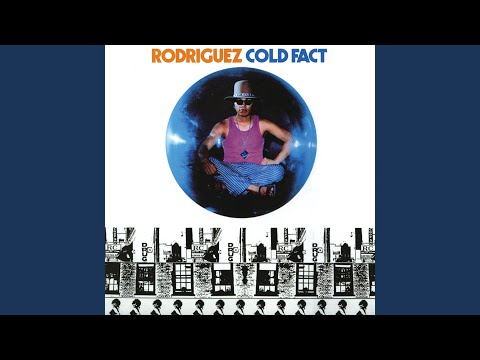
1. “Sugar Man” – Rodriguez (Cold Fact, 1970)
Sixto Rodriguez’s story remains one of rock’s most improbable legends. A gifted songwriter from Detroit, he poured his heart into socially conscious folk-rock, only for his debut Cold Fact to be met with silence in 1970. After his second record failed, he disappeared from music altogether, taking on construction work and studying philosophy — convinced his dream was over.
Unbeknownst to him, his music found an audience halfway around the world. In South Africa, “Sugar Man” became a symbol of defiance during apartheid, cherished by young listeners who didn’t even know if Rodriguez was alive. Myths spread that he had died onstage — until fans tracked him down in the late 1990s, leading to an emotional return tour.
It wasn’t until the Oscar-winning 2012 documentary Searching for Sugar Man that Rodriguez’s name reached the global stage he always deserved. “Sugar Man” became his lasting legacy — a haunting, guitar-laced folk anthem that proved timeless music can outlast fame, charts, and decades of silence.
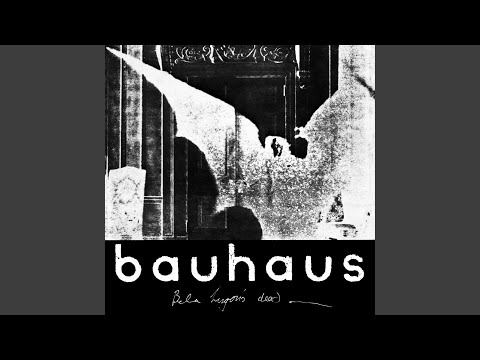
2. “Bela Lugosi’s Dead” – Bauhaus (Bela Lugosi’s Dead, 1979)
When Bauhaus recorded “Bela Lugosi’s Dead,” they didn’t set out to start a movement — but that’s exactly what happened. With its eerie bassline, echoing guitars, and cryptic atmosphere, the nine-minute song laid the foundation for goth rock before the term even existed. Recorded after a single rehearsal, it captured a kind of raw, shadowy energy that couldn’t be replicated.
At the time, it was far from a hit. Mainstream radio had no room for a dirge inspired by an old horror film star. But underground DJs like John Peel championed it, and its reputation spread among listeners who found beauty in its gloom. Bauhaus had unknowingly written the anthem for the outsiders.
Over the decades, “Bela Lugosi’s Dead” became a rite of passage for every new generation drawn to the dark and dramatic. Its influence echoes through Nine Inch Nails, The Cure, and countless others — proving that even a single haunting riff can cast a spell that never fades.
3. “The Man Who Sold the World” – David Bowie (The Man Who Sold the World, 1970)
Before David Bowie became the cosmic icon of Ziggy Stardust, he was still searching for his audience. His 1970 album The Man Who Sold the World showcased a heavier, more psychedelic edge that puzzled listeners at the time. It slipped through the cracks, overshadowed by his later glam rock triumphs.
But the title track had something magnetic — a mesmerizing riff and cryptic lyrics that hinted at identity and duality. It quietly endured until Nirvana resurrected it during their 1993 MTV Unplugged performance, stripping it down to its bare emotional bones. Kurt Cobain’s aching delivery reintroduced the song to an entirely new generation.
That moment transformed “The Man Who Sold the World” into one of Bowie’s most revered works. Bowie himself later embraced the song’s revival, performing it live with renewed pride. Its winding guitar line remains one of rock’s most haunting — proof that a song can wait decades to find the audience it was meant for.

4. “Long Red” (Live) – Mountain (Mountain Live: The Road Goes Ever On, 1972)
When Mountain took the stage in the early ’70s, guitarist Leslie West’s massive tone and soulful voice made the band one of the loudest and most electrifying acts on the festival circuit. Their live album The Road Goes Ever On captured that raw power, but its modest chart showing in 1972 gave little hint of what was to come.
Buried within that record was “Long Red,” a fiery live cut featuring shouted cues, explosive drums, and one of the tightest guitar grooves of the decade. The song didn’t make waves at the time, but years later, hip-hop producers discovered its irresistible energy. Its beats and vocal snippets were sampled by everyone from Kanye West to A Tribe Called Quest, making it one of the most reused rock tracks in hip-hop history.
“Long Red” became the bridge between two worlds — hard rock and hip-hop — united by rhythm and attitude. What started as a festival jam turned into a goldmine of influence, its guitar riff and percussive drive proving that real rock grit never goes out of style.

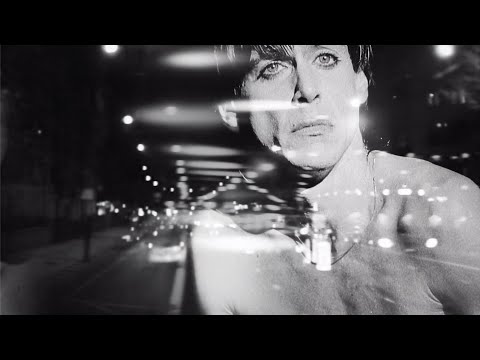
5. “The Passenger” – Iggy Pop (Lust for Life, 1977)
By the late 1970s, Iggy Pop had survived the chaos of The Stooges and was reinventing himself with help from his close friend David Bowie. Together, they escaped the excess of Hollywood for the stark, creative energy of Berlin — a city that inspired two of Iggy’s finest albums, The Idiot and Lust for Life. It was on the latter that “The Passenger” appeared, quietly tucked away as a B-side.
The track’s hypnotic guitar riff, steady rhythm, and Iggy’s detached vocal delivery gave it an almost cinematic feel. Yet RCA Records didn’t think it had single potential, choosing to release “Success” instead — a move that left “The Passenger” overlooked despite its infectious pulse. The song’s cool detachment mirrored Iggy’s own transformation from reckless punk to reflective artist.
Decades later, its resurgence came through the 1998 film Trainspotting and a Toyota ad campaign, propelling it to the U.K. charts for the first time. Today, “The Passenger” stands as one of Iggy’s most enduring anthems — a late-blooming classic whose wandering spirit captures everything rock ‘n’ roll was meant to be.
6. “September Gurls” – Big Star (Radio City, 1974)
Big Star’s “September Gurls” is one of those songs that didn’t need time to sound great — only time for the world to catch up. The brainchild of Alex Chilton and Chris Bell, the Memphis-based band perfected the blueprint for American power pop: chiming guitars, sweet melodies, and melancholy lyrics. Yet when Radio City arrived in 1974, the record label’s lack of support left it languishing in obscurity.
What makes “September Gurls” remarkable is its clarity — that sparkling Rickenbacker sound and Chilton’s wistful voice weave something both bright and bruised. It’s the kind of song that captures young heartbreak so vividly that it never grows old. Critics loved it, but radio largely ignored it, and Big Star disbanded before they could see its influence take root.
Over the years, musicians like R.E.M. and The Replacements carried Big Star’s torch, citing them as the unsung heroes of alternative rock. The latter even paid homage with the track “Alex Chilton.” Today, “September Gurls” is revered as a cornerstone of power pop — a song that proved brilliance doesn’t always come with instant reward.

7. “Pink Moon” – Nick Drake (Pink Moon, 1972)
“Pink Moon” is the sound of quiet brilliance — spare, intimate, and almost painfully beautiful. Nick Drake recorded it alone over two late-night sessions, armed only with his guitar and a lifetime’s worth of introspection. The song’s fragile melody and haunting simplicity reflected an artist retreating from the world, even as he poured his soul into the music.
Despite his extraordinary gift, Drake remained largely unknown during his lifetime. His records sold in the low thousands, his performances were rare, and his shyness made fame nearly impossible. He died just three years later at the age of 26, long before Pink Moon could earn its due.
It wasn’t until 2000 that “Pink Moon” reached the audience it always deserved, after Volkswagen used it in a commercial for the Cabrio. The ad introduced Drake’s music to millions, sparking a massive revival and cementing his reputation as one of the most influential singer-songwriters of the 1970s. Today, his voice continues to drift through generations, delicate but unforgettable.

8. “Marquee Moon” – Television (Marquee Moon, 1977)
When Television released Marquee Moon in 1977, the world wasn’t ready. In an era dominated by punk’s raw aggression, Tom Verlaine and Richard Lloyd’s intricate twin-guitar interplay offered something different — cerebral, poetic, and technically daring. The title track, stretching over ten minutes, defied convention and demanded patience, but rewarded it with hypnotic beauty.
Despite critical acclaim, Television struggled commercially, especially in the U.S. Their blend of punk energy and jazz-like precision confused listeners who wanted something simpler. Still, the band’s reputation grew quietly overseas, particularly in the U.K., where audiences embraced their avant-garde edge.
Decades later, Marquee Moon is considered one of the greatest rock albums ever recorded, and its title track a cornerstone of alternative guitar music. Television’s influence can be traced through generations of post-punk and indie bands — proof that real innovation sometimes takes years to be understood.

9. “Another Girl, Another Planet” – The Only Ones (The Only Ones, 1978)
When The Only Ones released “Another Girl, Another Planet,” it should have been a hit. With Peter Perrett’s yearning vocals and one of the most instantly recognizable riffs of the decade, the song captured punk’s restless spirit but wrapped it in pop sophistication. It had everything — melody, energy, and emotion — but somehow, it never caught fire commercially.
The band’s melodic take on punk stood out amid the snarling chaos of 1978, but despite glowing reviews, their albums failed to sell. They disbanded in 1981, leaving behind a small catalog that would later be hailed as criminally underrated. For years, “Another Girl, Another Planet” lived on only through word of mouth and cult admiration.
That changed in 2006 when Vodafone featured the song in a global ad campaign, exposing it to a new generation and reviving its fame. Today, it’s regarded as one of the best British rock singles of the ’70s — a perfect collision of punk swagger and pop melody that finally found its place decades late.

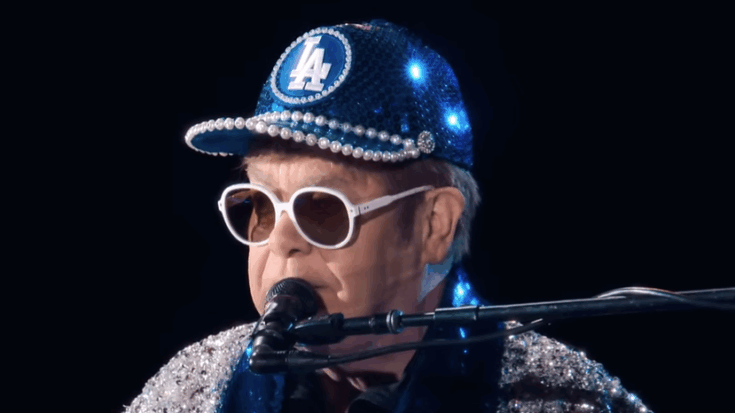
10. “Tiny Dancer” – Elton John (Madman Across the Water, 1971)
It’s hard to imagine a time when “Tiny Dancer” wasn’t beloved, but when Elton John first released the song in 1971, it barely made a ripple on the charts. The lush, piano-driven ballad — inspired by lyricist Bernie Taupin’s reflections on life in California — was deemed too long for radio play, and its single version failed to break into the Top 40.
Yet the song’s emotional build and cinematic grace made it unforgettable for those who truly listened. Over the years, it became a quiet favorite among fans, simmering below the surface of John’s many hits until its defining moment arrived in 2000. Cameron Crowe’s film Almost Famous featured the song in a now-iconic bus singalong scene, reintroducing it to millions.
That single scene transformed “Tiny Dancer” into one of Elton John’s most celebrated works — not just as a love song, but as a snapshot of a golden musical era. Its slow-burning journey from overlooked ballad to timeless anthem perfectly captures what makes rediscovered ’70s music so enduring: great songs never fade, they just wait to be heard again.