Former KISS Guitarist Bruce Kulick Reacts to Band’s Kennedy Center Recognition
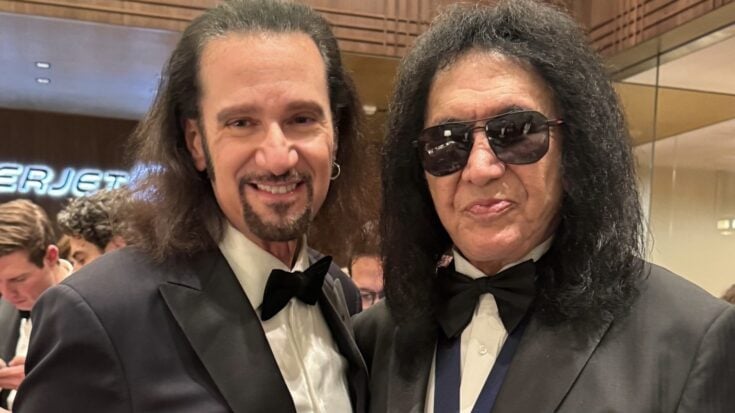
via @brucekulick / X
KISS being awarded the Kennedy Center Honor Medals marks a rare moment where loud, theatrical rock intersects with one of America’s most respected cultural institutions. The honor places the band alongside a group of artists celebrated not only for fame, but for sustained influence and creativity across decades. It’s a formal nod to the impact KISS has had on music, stagecraft, and pop culture since the early ’70s.
When the medals were presented in the Oval Office, the moment carried a symbolic weight for longtime fans. Paul Stanley, Gene Simmons, and Peter Criss were present, while Monique, daughter of the late Ace Frehley, represented her father. The visual alone spoke to KISS’s complicated but enduring history, showing how its different eras continue to shape its narrative.
Bruce Kulick’s reaction added another layer to the celebration. As a guitarist who played through some of the band’s most musically adventurous years, his words highlighted both gratitude and pride. His statement acknowledged that while he didn’t wear the iconic makeup, he still played a vital role in shaping the band’s legacy—one now recognized on one of the biggest cultural stages in the country.
Gratitude and a Quiet Sense of Belonging
Bruce Kulick shared his thoughts on X, offering a steady and heartfelt response to the news. His message didn’t attempt to overshadow the founding members; instead, it reflected a musician who has long understood where he fits within the KISS universe. He was gracious, direct, and clearly proud to be part of the moment.
He emphasized the honor of being included in the festivities, noting that he would attend the event alongside Eric Singer and Tommy Thayer. This was a meaningful detail for longtime followers who have watched the band rotate through lineups, sometimes with controversy. Here, however, Kulick framed the gathering as a celebration rather than a debate about eras or authenticity.
His tone carried the perspective of someone who lived through transitions that helped sustain the band through different musical climates. Kulick was part of the non-makeup era, a chapter that kept KISS active on the charts and on the road. Having him present at such a prestigious recognition underscores just how intertwined each incarnation of the band has become within the larger story.
A National Spotlight on KISS’s Influence
The Kennedy Center Honors ceremony is one of the few cultural events where artists from entirely different backgrounds stand on equal footing. For KISS to receive this recognition shows how their theatrical brand of rock reached far beyond album sales or concert spectacle. It acknowledges the band’s ability to define a visual and musical language that inspired countless performers.
The 2025 ceremony was notable for another reason: President Trump hosted the event, becoming the first sitting president to do so. While politically charged headlines often overshadow cultural moments, this gathering managed to shift public attention back to the honorees and the artistry being celebrated. Musical tributes at the Opera House followed the formal presentation, offering a chance to revisit KISS’s catalog through fresh interpretations.
The program doubled as a reminder of how deeply the band’s influence has seeped into American entertainment. From arena staging to merchandising, their fingerprints are everywhere. The ceremony didn’t just celebrate individual songs or albums—it recognized an entire blueprint of spectacle and fan culture that other artists have followed ever since.
Why Kulick’s Presence Matters
Kulick attending the event with Singer and Thayer sent a quiet but meaningful message about unity within the extended KISS family. Fans often divide the band’s history into chapters—makeup vs. non-makeup, classic lineup vs. replacements—but the Kennedy Center moment blended those eras into a single narrative of contribution and evolution.
Seeing current and former members gather in support of the honor gave the celebration a sense of continuity. It emphasized the band’s resilience and adaptability, qualities that allowed KISS to stay active for more than five decades. Kulick’s presence was particularly significant because he represents a musically respected period that doesn’t always get the same nostalgic spotlight as the original lineup.
For Kulick, being invited wasn’t just a gesture—it was recognition of years spent keeping the identity of KISS alive during transitional times. For the band, it showed that the legacy being honored belongs to more than the founding four. And for fans, it served as a reminder that the story of KISS is bigger, broader, and more intertwined than any single lineup could ever capture.